


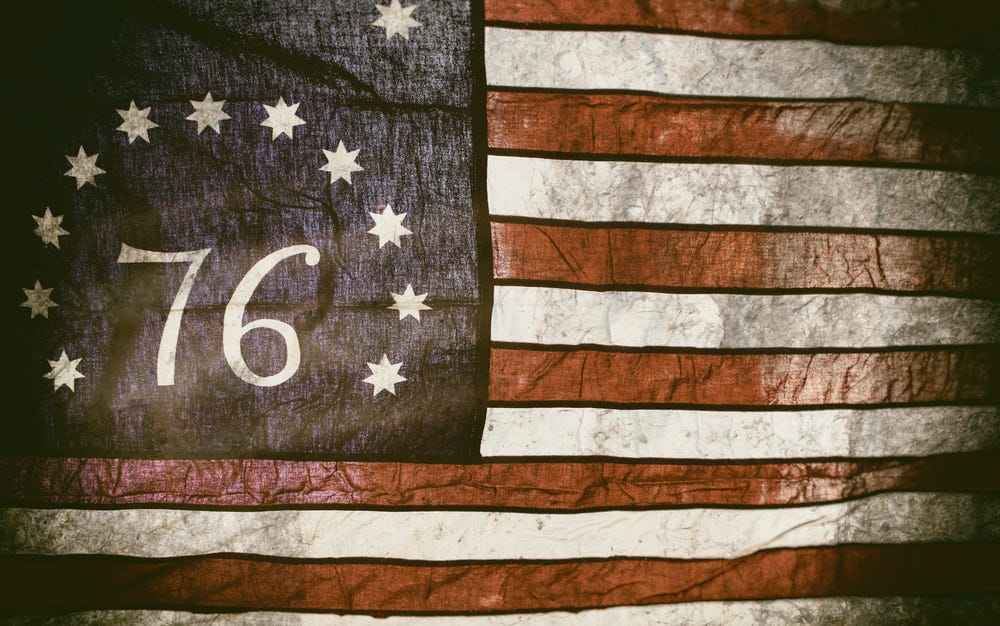
A quarter of a millennium ago, the American project began in FIRE’s birthplace of Philadelphia.
In a boarding house at Market and South 7th Streets, Thomas Jefferson drafted a document that would usher in a new nation and a new era. In the short term, the Declaration of Independence added fury to an already brewing revolution. But it also ignited an endeavor that continues to this day, and which remains just as revolutionary now as it was then: the pursuit and preservation of liberty.
Of course, people have been fighting for freedom since time immemorial. But what makes America unique is that this struggle was enshrined in its founding. The bedrock of our country wasn’t blood and soil, but the ideas and ideals — chief among them being the freedom to speak, to hear, and to engage in the open exchange of ideas — that make democracy possible.
This is why Philadelphia is neither a surprising nor a coincidental birthplace for these American principles. William Penn strove for religious toleration and liberty of conscience as fundamental tenets of his newfound colony of Pennsylvania. In the years leading up to the Declaration, Philadelphia became a center of colonial pamphleteering, newspapers, and political debate, renowned as the “Cradle of Liberty.”

It was home to Benjamin Franklin, who wrote that “freedom of speech is a principal pillar of a free government.” It was home to the defense attorney Andrew Hamilton, who would be instrumental in the establishment of truth as a defense against claims of libel. And it was where Thomas Paine published his legendary pamphlet Common Sense, which called for the American colonies to not only separate from Britain but to construct a government based on the natural rights that all people possess, no matter the station of their birth.
These influences and many others were in the air when Jefferson put pen to parchment in 1776.
The First Amendment was ratified in 1791, guaranteeing that Congress shall make no law abridging our freedom to speak, publish, assemble, worship, and petition the government. But as anyone with a passing knowledge of our history knows, the fight was far from over then.
In fact, it was only just beginning — and Philadelphia was ground zero for much of it.
It is where the hellishly censorial Alien and Sedition Acts were passed in 1798. It was where Pennsylvania Hall, built by abolitionists and suffragists as a “temple of free discussion,” was burned to the ground in an act of violent suppression. It was where labor organizer and activist Emma Goldman had her lectures and demonstrations shut down by police under orders from the city’s director of public safety.
These incidents and many others highlight how tumultuous our struggle to defend and live up to our founding ideals has been, and continues to be. It also underscores the importance of having individuals and organizations that are willing to protect and promote those ideals.
A quarter century ago, FIRE’s project began in America’s birthplace of Philadelphia. Its mission is to ensure that our courts, campuses, and broader culture live up to America’s promise. To guarantee that everyone on American soil enjoys the inalienable right to free expression enshrined in our founding documents. To fight for and defend these ideals when it is most difficult and altogether thankless — because that’s what the principle demands, and what freedom entails.
We’re proud to join the revolutionary struggle that is core to our country’s founding and all humanity’s dignity. It remains revolutionary two and a half centuries later, and will undoubtedly stay revolutionary forever.
Thanks for doing your part in this glorious tradition. It's never easy but it's particularly hard right now. Thank you and Happy 4th of July!!!
God Bless the USA
For friendly Christian advice for a happy life visit:
gentleinspiration.substack.com