


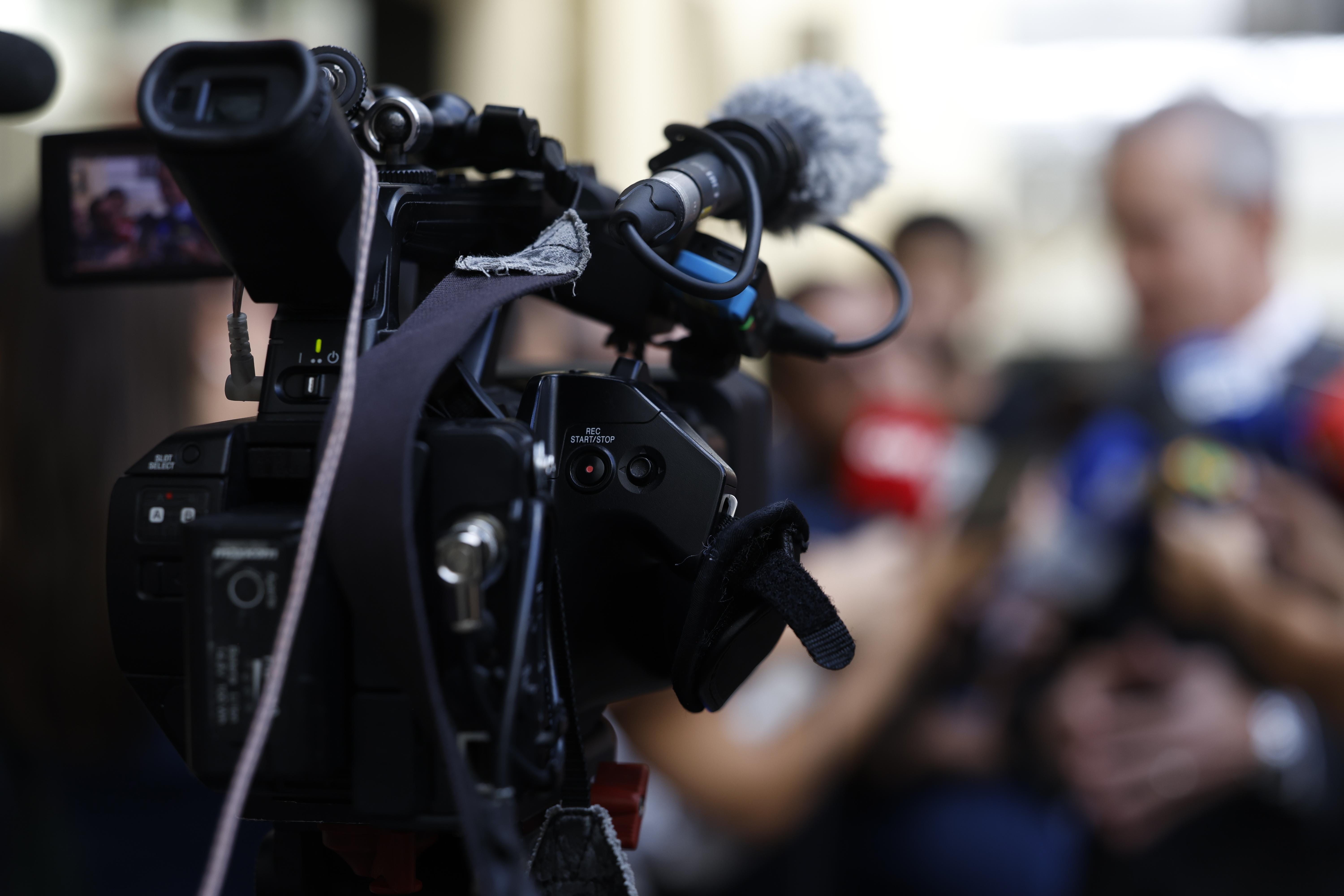
When a congressman tried to stop her from recording a press conference, student journalist Cat Murphy stood her ground. The congressman, U.S. Rep. Andy Harris, mistakenly claimed that Maryland’s all-party consent law allowed him to ask Murphy to turn off her cameras, even going so far as to ask the police to intervene, but the law didn’t actually apply in that context. Murphy knew this and asserted her First Amendment right to continue documenting the event.
Surreptious recording can be a legally risky move. Every state except Vermont has at least one law that restricts wiretapping, eavesdropping, or recording private conversations. Likewise, so does the federal government. These statutes go by many names, like “wiretap statutes” and “intercepted communication laws.” Their goal is to protect private conversations from being secretly overheard or recorded.
When can student journalists record a conversation?
Recording laws differ based on who must give permission to record, but luckily, the nicknames for these laws largely speak for themselves.
As you might guess, in an all-party consent state (sometimes called a “two-party consent” state), each party to the conversation must give permission prior to recording. Meanwhile, a one-party consent statute requires only one participant to consent, even if the other party doesn’t know the recording is being made. (This could, however, raise some journalism ethics issues. In that case, we refer student journalists to the Society of Professional Journalists’ free ethics hotline for further guidance.)
In practice, being governed by a one-party consent law means that if you are a party in that conversation, you can legally give yourself “consent” and record even if that conversation is an interview. But if you aren’t a part of the conversation, you will still need permission from at least one participant in order to avoid legal pitfalls.
Most states and the federal government have one-party consent recording statutes. But 12 states are all-party consent states: California, Connecticut, Delaware, Florida, Illinois, Massachusetts, Montana, Nevada (for phone calls and text messages, but not in-person conversations), New Hampshire, Pennsylvania, Washington, and — as Rep. Harris made clear — Maryland.
So Rep. Harris wasn’t wrong when he called Maryland’s wiretapping statute a two-party consent law. His mistake was applying it in the context of a press conference.
Reasonable expectation of privacy required
Generally, for in-person conversations, recording statutes only require consent if the participants have a reasonable expectation of privacy. This is true of Maryland’s all-party consent law. Maryland courts determine whether that expectation exists through a two-pronged inquiry: first, whether the person with the privacy interest had an actual, subjective expectation of privacy; and second, whether that expectation of privacy was reasonable.
The interaction between Harris and Murphy occurred during a public press gaggle, in which a public official invited reporters to ask questions and multiple cameras were plainly recording. As a result, this conversation is not the type Maryland’s recording law was meant to protect, and Murphy was right to stand her ground.
Right, and courageous. Calls to involve law enforcement or invoke prosecution for protected newsgathering undermine the protection promised by the First Amendment. Murphy showed a spine of steel. Not only did she know her rights, she explained them to a government official. Student journalists unfortunately can’t expect government officials to always know — or uphold — their rights. It’s up to student journalists to know and assert them.
“[Murphy] recorded openly in a public space alongside other news outlets, and that is her legal right,” said Philip Merrill College of Journalism Dean Rafael Lorente. “I’m proud of how she handled herself in a difficult situation.” At a time when student journalists are facing administrative pressures from their institutions, it is gratifying to see a college administrator defend student journalism.
Student journalists make a difference for democracy by serving as watchdogs and holding power to account. Roadblocks are inevitable, but the best way student journalists can protect their rights is to know them thoroughly. That’s why FIRE’s Student Press Freedom Initiative (SPFI) is at the forefront of censorship battles across the country, and is available to answer student press questions on its free 24/7 hotline.
Your ability to do journalism depends on your ability to know and articulate your rights. And when those in power push back, you can stand up like Cat Murphy to courageously assert those rights and continue asking the tough questions.
