


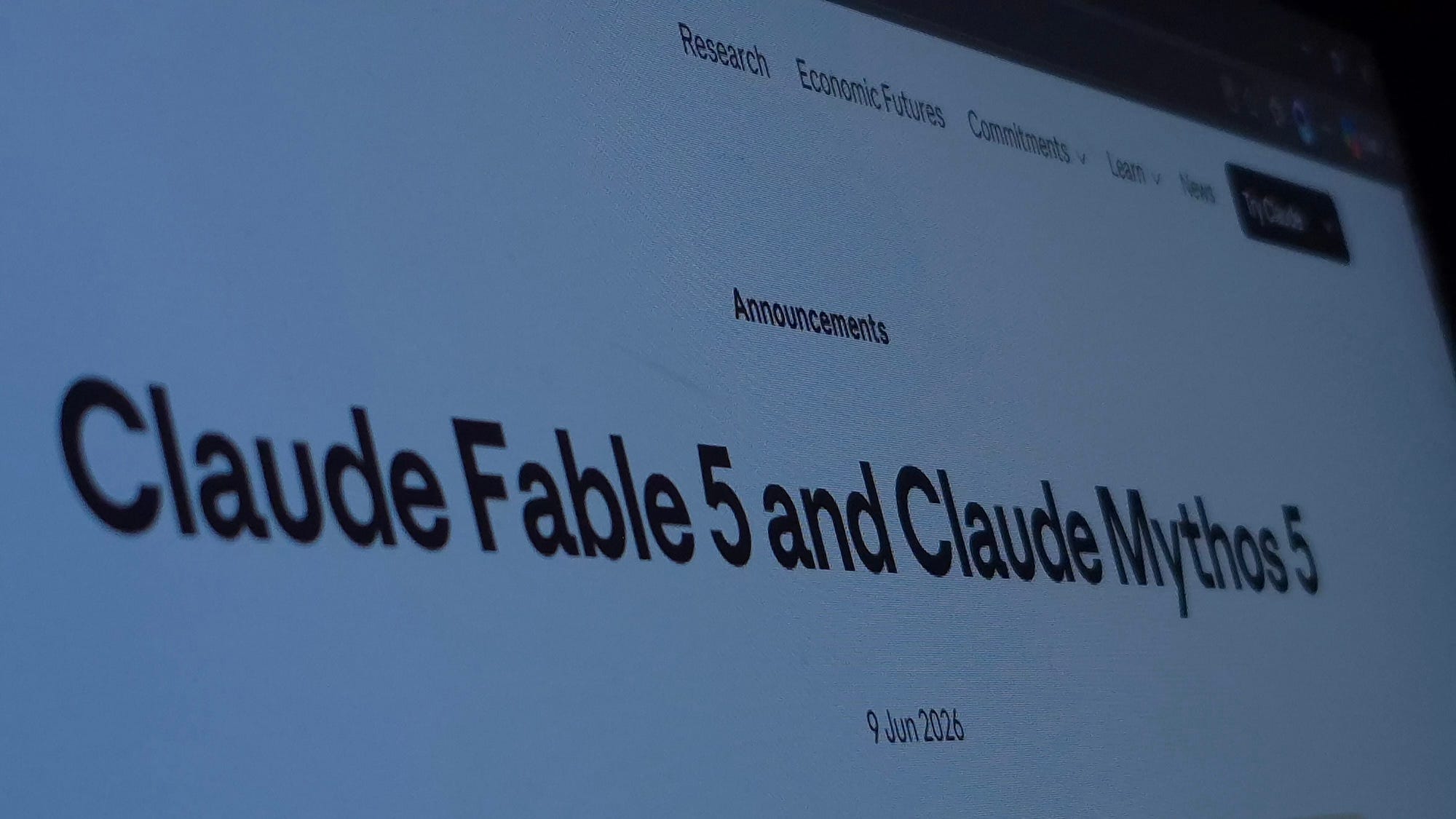
“We are complying with the government’s legal directive and are removing access to Fable 5 and Mythos 5 for all users. However, we disagree that the finding of a narrow potential jailbreak should be cause for recalling a commercial model deployed to hundreds of millions of people. If this standard was applied across the industry, we believe it would essentially halt all new model deployments for all frontier model providers.”
— Anthropic statement on the forced shutdown of AI models
Governments are coming to regulate AI
For over a year, FIRE has been sounding the alarm that the federal and state governments are taking steps to regulate artificial intelligence in ways that will potentially violate the expressive rights of all Americans, even though FIRE polling shows a majority are more worried about government censorship. In addition to numerous bills under consideration in Congress, last week the Trump administration imposed export controls on Anthropic’s Fable 5 and Mythos 5 artificial intelligence models, citing national security concerns. In response, Anthropic suspended access to these systems for all users, regardless of nationality or location. The government’s demand that Anthropic effectively shut down its models to comply with the export controls threatens core First Amendment rights.
Read FIRE’s statement on the Anthropic shutdown
New York wants warning labels on AI in the news
Meanwhile in state governments, a bill pending with the New York governor would require media and digital content providers to provide warning labels on AI-assisted news content — which is written broadly to include newspapers, magazines, journals, periodicals, websites, newsletters, television or cable, radio or podcasts, and internet or satellite — if the content was “substantially composed, authored, or otherwise created through the use of generative artificial intelligence.”
Known as the FAIR News Act, this bill would set a terrible precedent by placing extraordinary power in the hands of the New York attorney general, who would be given the authority to enforce it. That’s bad news for constitutionally protected speech.
What does AI have to do with the First Amendment?
We’re kicking off a series of essays answering your questions about free speech and AI. The introductory essay explores a bedrock reality at the center of the First Amendment’s relationship with AI: The technology is increasingly influencing the future of communication, information exchange, and knowledge creation.
Supreme Court Justice Stephen Johnson Field once wrote, “The Constitution deals with substance, not shadows.” That matters here. If the substance of an AI regulation controls what ideas an expressive technology may be used to generate, transmit, suppress, or prioritize, the First Amendment interest cannot be overridden by framing AI as novel, technical, or as a mere ‘product.’ The medium may be novel. The constitutional problem is not.
The online ‘safety’ trap
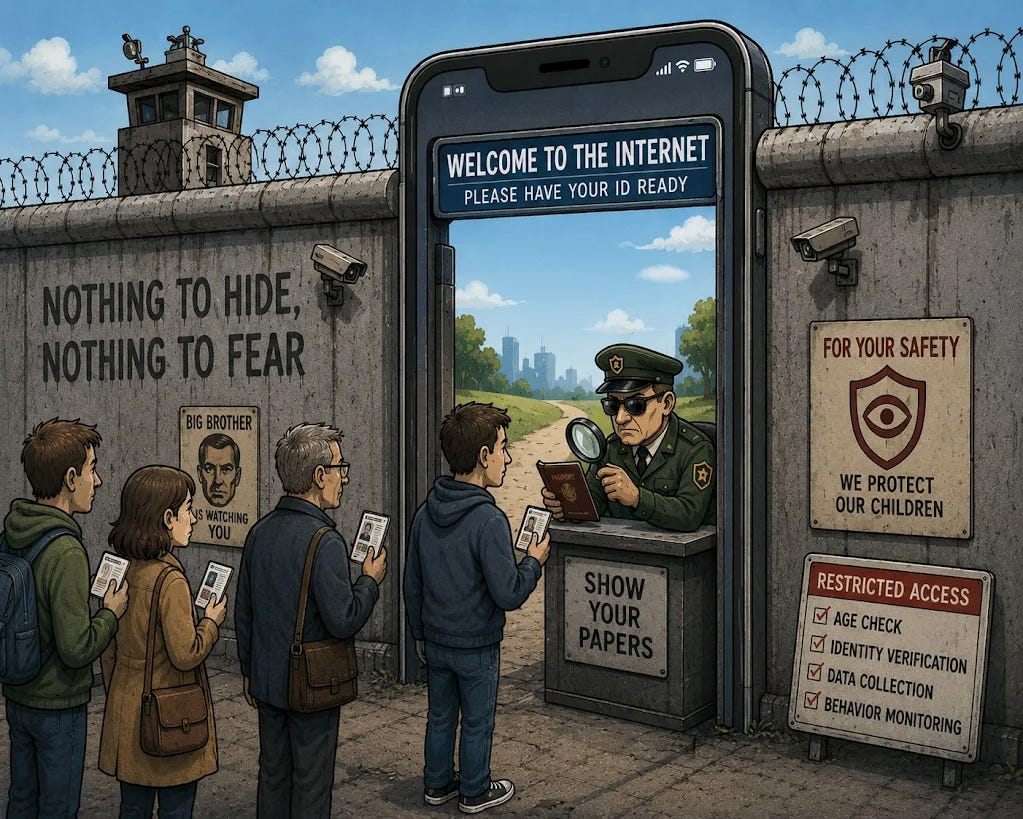
Writing on his Substack newsletter The Eternally Radical Idea, FIRE President and CEO Greg Lukianoff explores one of the more common justifications for regulating digital technology, from artificial intelligence to social media: It’s all in the name of safety. But as Greg correctly points out, all too often these “online safety” bills show how “protect the children” ultimately becomes “show me your papers.”
Everyone knows we must protect children, but that doesn’t mean governments should build a national identity-checking system for the internet, give governments a foot in the door for controlling artificial intelligence, or create broad new liabilities that pressure platforms to suppress lawful expression in the name of protecting minors.
Brits may soon say goodbye to an anonymous internet
Speaking of social media . . . writing for Yascha Mounk’s Persuasion this week, FIRE Senior Scholar for Global Expression Sarah McLaughlin analyzes the implications of England’s proposed social media ban for anyone under 16. The problem? These “under-16” policies will require all users to prove their age in order to post on social media. This raises significant privacy concerns. The process of age verification will cut away vital firewalls around users’ anonymity. The truth is that we don’t need to pit our speech rights against youth safety.
Below the fold
Wisconsin school board backs away from ban on criticism during public comment: Residents do not need to agree with public officials to speak at a government meeting. That’s the message the St. Croix Central School Board in Hammond, Wisconsin, has now received loud and clear. After FIRE warned that the board’s public comment restrictions violated the First Amendment, the board confirmed it will not enforce them moving forward.
Telegram challenges India block, saying it will hurt free speech rights: India’s temporary block on the Telegram messaging app to prevent exam fraud undermines constitutional protections and the free speech rights of its users, and must be quashed, according to the company’s filing to a New Delhi court seen by Reuters.
This year, the United States celebrates its 250th anniversary. To commemorate the occasion, FIRE is proud to present the limited series “Figures of Speech,” looking at the heroes and villains of free speech in American history. We began with Joseph McCarthy, the senator who scared America silent. Then we looked at Thomas Paine, American history’s winter soldier, and Woodrow Wilson, our worst president for free speech. Today we turn to Ida B. Wells, a journalist, activist, civil rights icon, and free speech hero.
In 1892, a mob destroyed a Memphis newspaper after it published an anti-lynching editorial. Through death threats and violence, they tried to erase journalist Ida B. Wells’s message. Instead, they made her fight impossible to ignore.
Born into slavery, Wells became one of the most powerful voices in American journalism. After the attack, she didn’t retreat. She helped launch the first sustained anti-lynching campaign in U.S. history and fought for women’s suffrage, even defying efforts to push black women to the back of the 1913 march in Washington, D.C.
Threats followed her everywhere, but she refused to be silenced. Continue reading...
PODCAST: Stress-testing the limits of the First Amendment
So to Speak: The Free Speech Podcast takes an uncensored look at the world of free expression through the law, philosophy, and stories that define your right to free speech. Hosted by FIRE’s Nico Perrino.
Debates over religious freedom have shaped American life for centuries. From Quakers facing persecution in colonial America to The Crucible to South Park, fights over religious expression have repeatedly tested the country’s commitment to free speech and religious liberty.
At the heart of these debates are a few difficult questions: Does the Constitution protect only popular beliefs, or all of them? If the government opens the door for one form of religious expression, does it have to allow every form? And if not, where does the Constitution draw the line?

By the numbers
Why do so many law professors believe one thing, but teach another?
Many think judges are politically biased, but tell their classes otherwise. In our recent Law Faculty Survey, we asked law professors whether they believe that judges are politically neutral or politically biased, and we ask them what they teach their students. Professors’ personal views are listed on the right, with what they say they teach on the bottom. Each row adds up to 100%, showing what professors with a given opinion teach:
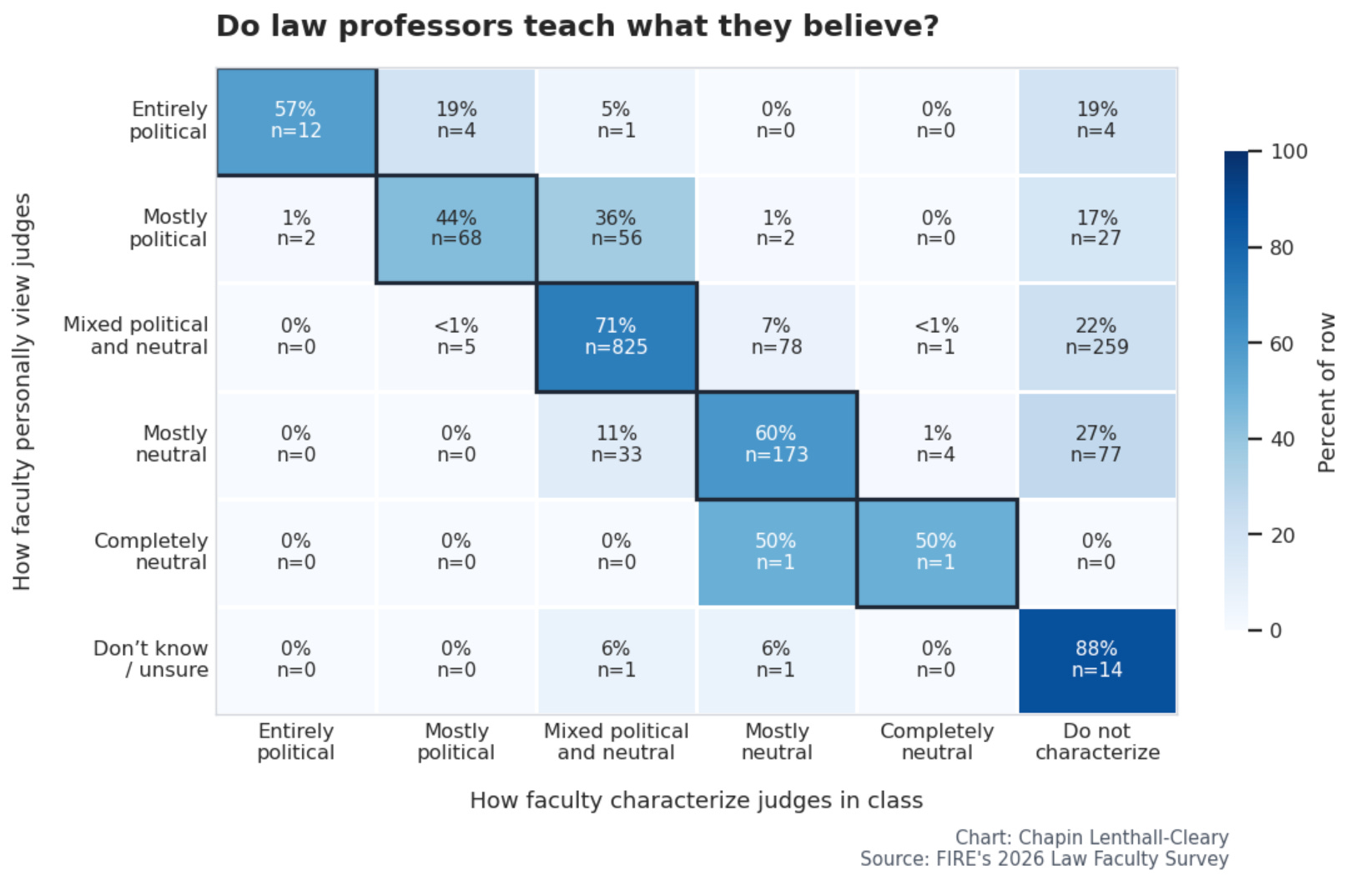
Unsurprisingly, there’s a concentration on the main diagonal, corresponding to those who teach what they believe. But the deviations from the main diagonal are striking: among law professors who think the judges are mostly politically motivated, over a third say they tell their classes otherwise, usually that judges’ motivations are mixed. If we exclude those who just don’t talk about the issue, over 40% of professors who believe judges are politically motivated teach their students something else.
The code, data, and codebook used to generate the plot above can be found on Github.