


“Analyzing such distinctions in a classroom — guided by facts, context and reasoning — would give young people the civic tools they’ll need long after graduation. Encouraging open inquiry prepares them to weigh evidence and form independent opinions.”
— A Washington Post letter writer on how to teach critical thinking.
Judge weighs Pentagon press restrictions
A federal judge is considering whether a Pentagon policy forcing journalists to sign new access terms violates the First Amendment, after outlets including The New York Times and the Associated Press refused to comply and lost credentials.
The policy requires reporters to accept limits on contact with military personnel and other rules critics say would restrict independent reporting, raising concerns about government transparency during wartime.
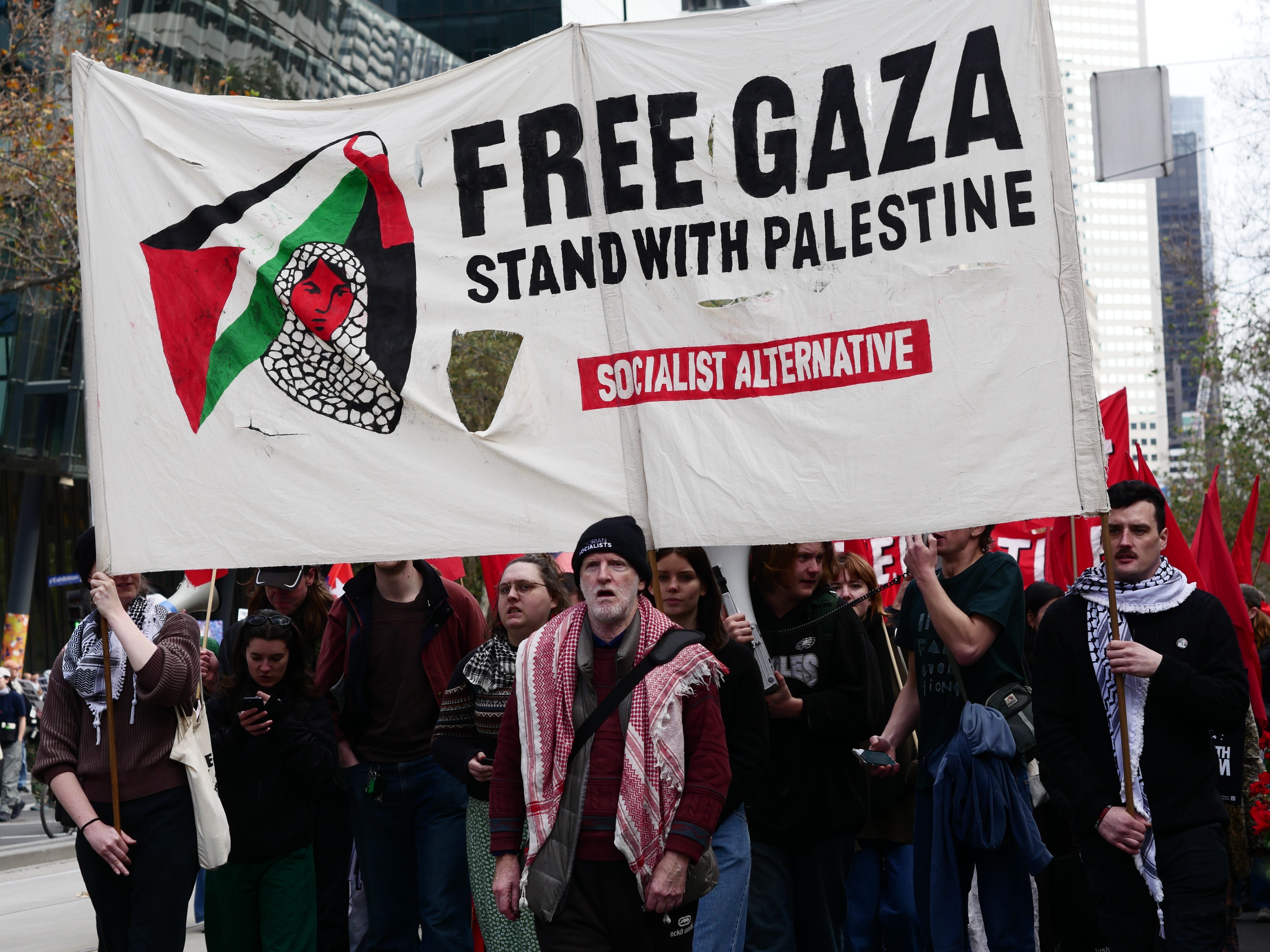
Australia charges pro-Palestinian protesters
Authorities in Queensland charged protesters for using phrases including “from the river to the sea,” marking the first arrests under newly enacted hate-speech legislation.
Civil liberties advocates say the law criminalizes political expression and predict constitutional challenges in Australia’s High Court.
Germany probes historian for criticizing … Hitler
German writer Rainer Zitelmann is under criminal investigation in Berlin after retweeting a Ukrainian post comparing Vladimir Putin to Adolf Hitler.
But it wasn’t the Putin attack that got him into trouble — it was the fact that the post included a swastika, even though he used it as an insult, because it potentially violates Section 86a of Germany’s criminal code, which bans Nazi symbols.
Below the fold
New York Mayor Mamdani defended hosting activist Mahmoud Khalil for dinner as a matter of protecting free speech rights, while the Anti-Defamation League and others criticized the invite over Khalil’s previous remarks about October 7. This week, Khalil wrote about his experience in an op-ed for Fox News.
In the frame
In this episode of So to Speak, host Nico Perrino breaks down the Pentagon’s targeting of the AI company Anthropic, the push for government-mandated age verification technologies, and the Department of Justice’s raid on a Washington Post reporter’s home. He is joined by Jennifer Huddleston, senior fellow in technology policy at the Cato Institute, as well as Mike Godwin, AI and privacy expert at the Electronic Frontier Foundation, and Greg Lukianoff.
Terms of service
FIRE filed two separate friend-of-the-court briefs arguing that the Pentagon violated Anthropic’s First Amendment rights by labeling the AI company a “supply chain risk.” The dispute began when the Defense Department demanded that Anthropic allow its AI system Claude to be used for any “lawful purpose,” which the Pentagon says could include fully autonomous weapons and mass domestic surveillance.
After Anthropic refused, citing safety concerns and its internal usage policies that place guardrails on how Claude can be used, the Pentagon designated the company a supply-chain risk, a sanction that could severely harm its ability to do business with the government and with other partners. FIRE, along with a coalition of free speech advocates, argues this designation is retaliatory and violates the First Amendment.
Know your rights
Obscenity is one of the few categories of speech the Supreme Court has held is not protected by the First Amendment — but defining it has long been notoriously difficult. Early courts used the broad Hicklin test, which allowed censorship based on whether isolated passages might corrupt susceptible readers, leading to bans on works by authors like James Joyce and D.H. Lawrence. In the 1957 case Roth v. United States, the Court narrowed the concept, holding that obscenity lacks constitutional value and creating a test based on whether the work’s dominant theme appeals to a prurient interest according to community standards.
The Court ultimately established the modern Miller test in the 1973 case Miller v. California, which asks whether the average person applying community standards would find the work appeals to prurient interests, depicts sexual conduct in a patently offensive way defined by law, and lacks serious literary, artistic, political, or scientific value. Although prosecutions are relatively rare today, obscenity doctrine still influences debates over pornography regulation, book bans, drag shows, and online age-verification laws, including the Supreme Court’s 2025 decision in Free Speech Coalition v. Paxton, which upheld Texas’ requirement that users verify their age before accessing adult websites. For all that and more, see our explainer on the obscenity exception to the First Amendment.
This week in history
On March 9, 1964, the Supreme Court ruled in the landmark case New York Times v. Sullivan, establishing First Amendment limitations on public officials’ ability to sue for defamation. The Times ran an ad raising funds to defend Martin Luther King Jr. from perjury charges for allegedly signing false tax returns. The ad had several factual errors, including about the number of police arrests in Montgomery, Alabama. L.B. Sullivan, the city commissioner overseeing the police department, demanded a retraction. When the Times refused, Sullivan sued for defamation.
The Court reversed the Alabama judgment against the paper, holding that public officials must prove “actual malice” to win a defamation case. The Court defined actual malice as either knowing a statement is false or showing “reckless disregard” for the truth. Justice Brennan famously wrote that “debate on public issues should be uninhibited, robust, and wide-open.”