


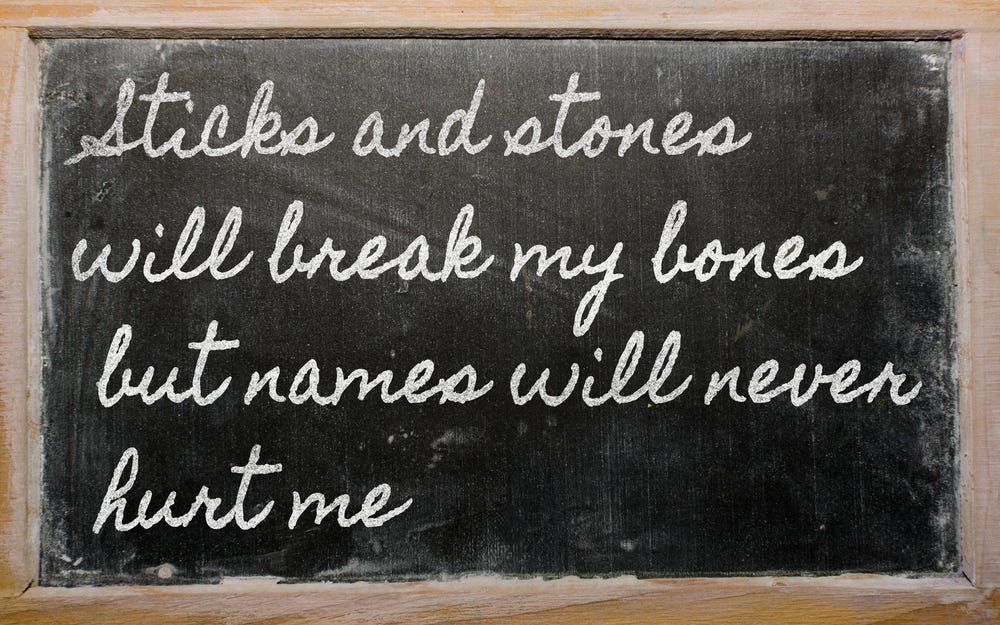
“We’re Americans. We get to do that.”
— First Amendment attorney Gary Edinger, commenting on the Florida wildlife agency accessing driver’s license records of critics, citing safety concerns, and the apparently radical proposition that Americans may criticize their government.
First things first
Free speech dies by inches, not bonfires. A city council decides two words are too ugly for democracy. A government meeting decides five claps are five claps too many. College students become convinced there’s simply no value in listening to bigots. Foreign nations discover that passports and app stores make pretty good speech regulations. Meanwhile, AI manages to make an old First Amendment question sound new again: If bad info hurts someone, can we punish the person who supplied it?
Free speech has never promised the answers will be pleasant. It promises something far more useful. Namely, that government doesn’t get to make those decisions for us. If this all sounds a little heavy for August, look below the fold. We’ve also got teens proving their skin is thicker than most of ours. There’s hope for civilization yet.
Two words
Los Angeles City Hall officials banned citizens from saying the words “nigger” or “cunt” during public comment, not even to quote someone or protest the ban itself. But the real issue, Angel Eduardo argues, is not the words but the sweeping authority the council is claiming to decide which words citizens may use in a public forum.
When asked if the ban was only a first step, Council President Marqueece Harris-Dawson said, “Absolutely. This is as much a step as we can take at this moment, we believe. But we think it will open us up to take additional steps in the future.”
Five claps
Police arrested high school physics teacher Lux Claridge for clapping five times at a city commission meeting in Emporia, Kansas. Attendees were discussing a proposed data center when officials told them to stop applauding between speakers. Emporia’s rules allow for removing disruptive people, but as Isabelle Brito writes, Claridge was nothing of the kind. On the contrary, the most significant disruption was the arrest.
“Officials can require order — the First Amendment does not force them to let meetings become ungovernable,” Brito writes, “but they can’t demand monastic silence and perfect stillness from everyone in the room.”
Below the fold
Black blues musician Daryl Davis once met a KKK leader and his armed bodyguard in a hotel room — and walked out of the encounter to later become friends. Davis now travels with a collection of Klan and Nazi regalia given to him by people who say conversations with him helped pull them out of racism. That was the opening lesson for nearly 200 high school students at FIRE’s third annual Free Speech Forum, where Willa Mack and Isaac Apple report students spent a week debating hard questions, and “learned that sometimes the first step toward defeating an idea is having the courage to speak with the person who holds it.”
ICE has built a 24/7 social-media surveillance program that scans nearly 20 platforms, uses contractors and AI to gather “anticipatory threat intelligence,” which sounds like a line out of Minority Report, and has prompted hundreds of subpoenas and at least 131 doxxing/threat investigations, even though reportedly no charges have been filed in the dragnet.
International
This week’s dispatch from Sarah McLaughlin reads like a nightmare atlas of censorship tools. Australia is taking legal action against Telegram over allegedly extremist content. Russia charged the platform’s founder Pavel Durov with aiding terrorism and put him on an international wanted list. Germany turned away (and reportedly later relented on) the frontman of British punk-rap duo Bob Vylan. Argentina gave its government new power to exclude foreigners who “insult national symbols,” France approved an under-15 social-media ban, India targeted the source code for Jack Dorsey’s decentralized messaging app Bitchat, and Italy is holding a journalist responsible for comments other people posted on his Facebook page.
Tech
Nearly 40 years ago, two mushroom hunters followed an encyclopedia’s advice, ate poisonous mushrooms, and needed liver transplants. They sued the publisher. The Ninth Circuit said no, ideas are not defective products in the same way exploding appliances are. Now Tyler Tone asks what happens when the encyclopedia talks back. Nearly 100 tort cases reportedly have been filed against AI developers, including lawsuits alleging chatbots supplied dangerous medical information or encouraged users toward suicide and violence.
But if every harmful chatbot answer can turn its developer into the manufacturer of a “defective product,” the obvious incentive is to make chatbots say much less. Goodbye mushroom identification. Goodbye home-repair tips. Goodbye medical information. Tyler’s proposed dividing line is a useful one: Ask whether liability targets what AI said or what AI did. Books, records, video games, conversations, and now chatbots can contain terrible ideas without becoming defective toasters. But when the toaster learns to pick locks, tort professors may finally get their revenge.
Culture
Podcasts
The Blessings of Liberty explores constitutional history, Supreme Court debates, and the “American Idea,” hosted by bestselling author and constitutional scholar Jeffrey Rosen.
In this episode, journalist Joanne Lipman moderates a conversation with legal affairs correspondent Nina Totenberg and host Jeffrey Rosen about the overarching themes, historical context, and future developments of the biggest cases from the Supreme Court’s most recent term.
Today in history with Sheridan Macy
Before the First Amendment existed, a jury told the government where it could put its censorship. On Aug. 4, 1735, a New York jury acquitted printer John Peter Zenger of seditious libel for publishing attacks on colonial Gov. William Cosby, who had tried to crush Zenger’s opposition newspaper, ordered issues burned, and jailed him for more than eight months. Zenger had plainly printed the offending material, and truth was no defense under the law. But lawyer Andrew Hamilton urged jurors to look beyond the rule and ask whether a man should be punished for publishing truthful criticism of government. Their answer: Not guilty.
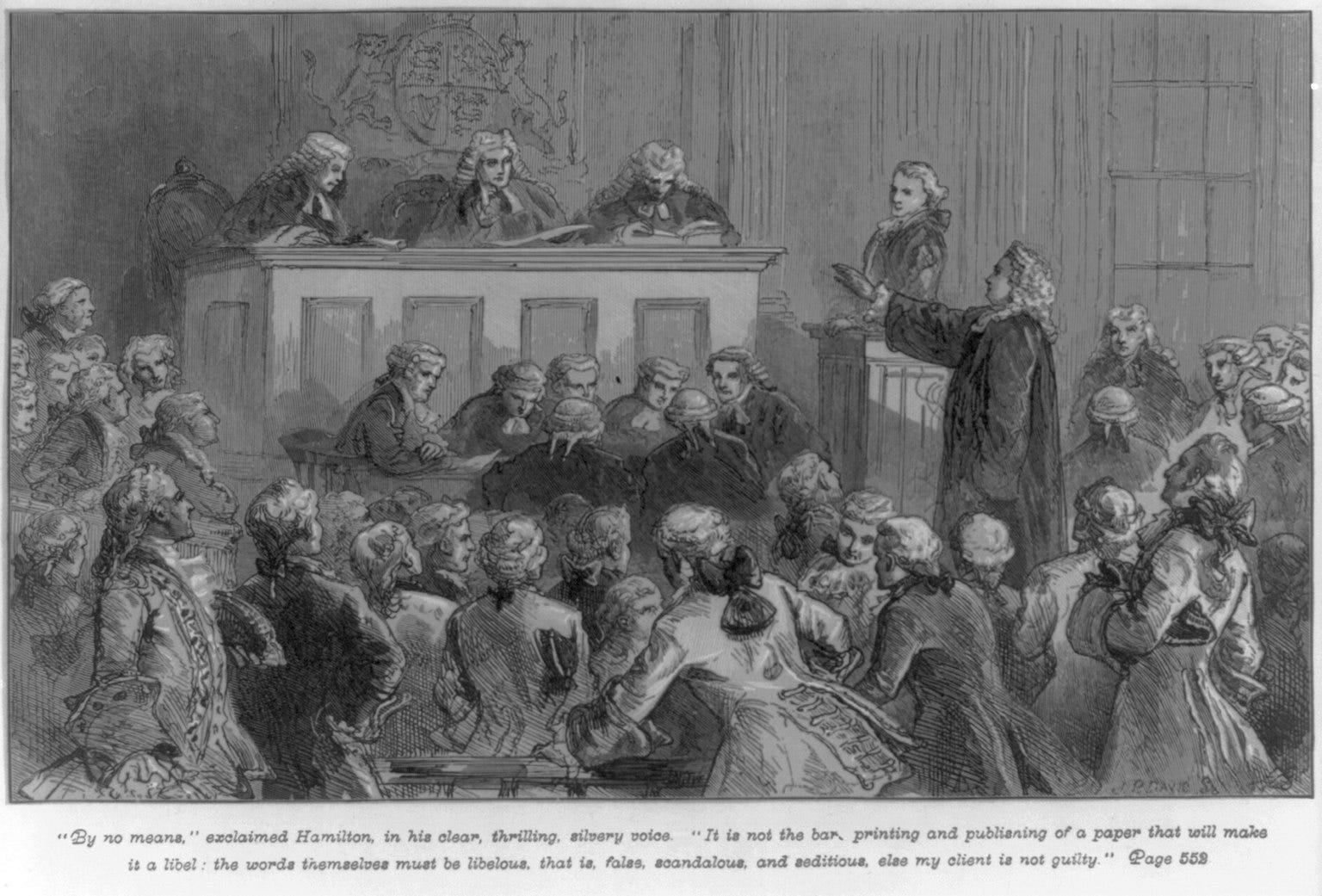
The verdict did not change libel law overnight. But it helped establish a distinctly American principle: Government officials should not be able to punish people merely because criticism stings. Three centuries later, technology has changed, but the temptation has not. This week, Los Angeles officials defended a list of words citizens may not utter at City Hall, while police in Kansas arrested a teacher after he applauded criticism of local government. The official complaint remains remarkably durable: You may criticize us, just not like that. Sometimes the most American answer is still the simplest: “We’re Americans. We get to do that.”
By the numbers
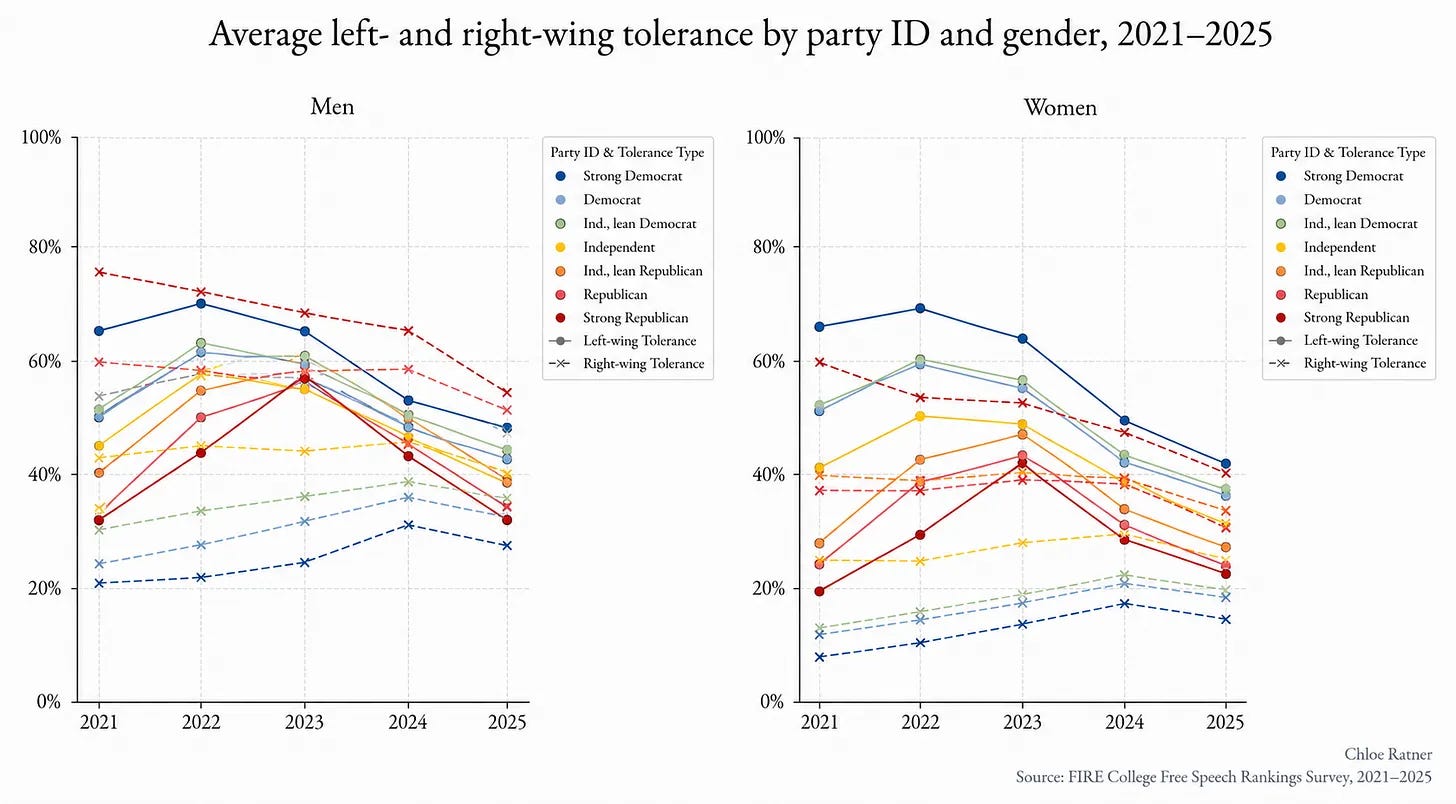
Tolerance for right-wing speakers on campus has always been thin, but now tolerance for left-wing speakers is plunging, dragging the overall average to a five-year low. One reason could be that the right has decided to fight fire with fire (paging Chris Rufo). But a darker possibility is that we are witnessing a generational retreat from the liberal notion that part of education is confronting offensive ideas. Tread carefully, Chloe Ratner’s analysis may keep you up at night.
Where is the copy under the "Culture: segment of the post?
Thank you for highlighting Zenger, Andrew Hamilton and the principle that the lawyer and the jury established in Zenger.
Zenger's case is an excellent illustration of a principle stated by Justice Scalia writing for SCOTUS in District of Columbia v. Heller in 2008 (and reiterated in Bruen in 2022):
"Constitutional rights are enshrined with the scope they were understood to have when the people adopted them, whether or not future legislatures or (yes) even future judges think that scope too broad."
"[I]t has always been widely understood that the Second Amendment, like the First and Fourth Amendments, [merely] codified a pre-existing right. The very text of the Second Amendment implicitly recognizes the pre-existence of the right and declares only that it “shall not be infringed.” As [SCOTUS] said in United States v. Cruikshank [ in 1876], “[t]his is not a right granted by the Constitution. [Nor] is it in any manner dependent upon [the Constitution] for its existence."
The First Amendment uses similar text to recognize the pre-existence of rights, i.e., “make no law . . . abridging.”
Almost exactly 230 years after Zenger, SCOTUS put the Zenger principle into precedent, and even improved on it significantly in two decisions in 1964 (New York Times Co. v. Sullivan and Garrison v. Louisiana).
As SCOTUS emphasized in Sullivan, "Authoritative interpretations of the First Amendment guarantees have consistently refused to recognize" the propriety of "any test of truth" that "puts the burden of proving truth on the speaker." "The constitutional guarantees require" a "federal rule that prohibits a public official from" penalizing or punishing criticism "relating to [any] official conduct" for its content until someone "proves that the statement was" a "falsehood" and that it was "made with ‘actual malice’—that is, with knowledge that it was false or with reckless disregard of whether it was false or not."
As SCOTUS emphasized in Garrison, such “speech concerning public affairs” is “the essence of self-government,” and it “should be uninhibited, robust, and wide-open,” and it may “include vehement, caustic,” and “unpleasantly sharp attacks on government and public officials.” Garrison (a lawyer) publicly implied eight judges were criminally corrupt. Even so, the “public interest in a free flow of information to the people concerning public officials, their servants” is “paramount,” so “anything which” even “might touch on an official’s fitness for office is relevant” and protected, including judges’ “dishonesty, malfeasance, or improper motivation.” “Truth may not be the subject of” any type of content-based “sanctions” “where discussion of public affairs is concerned,” so “only” those “statements” proved “false” may be punished with “either civil or criminal sanctions.”