


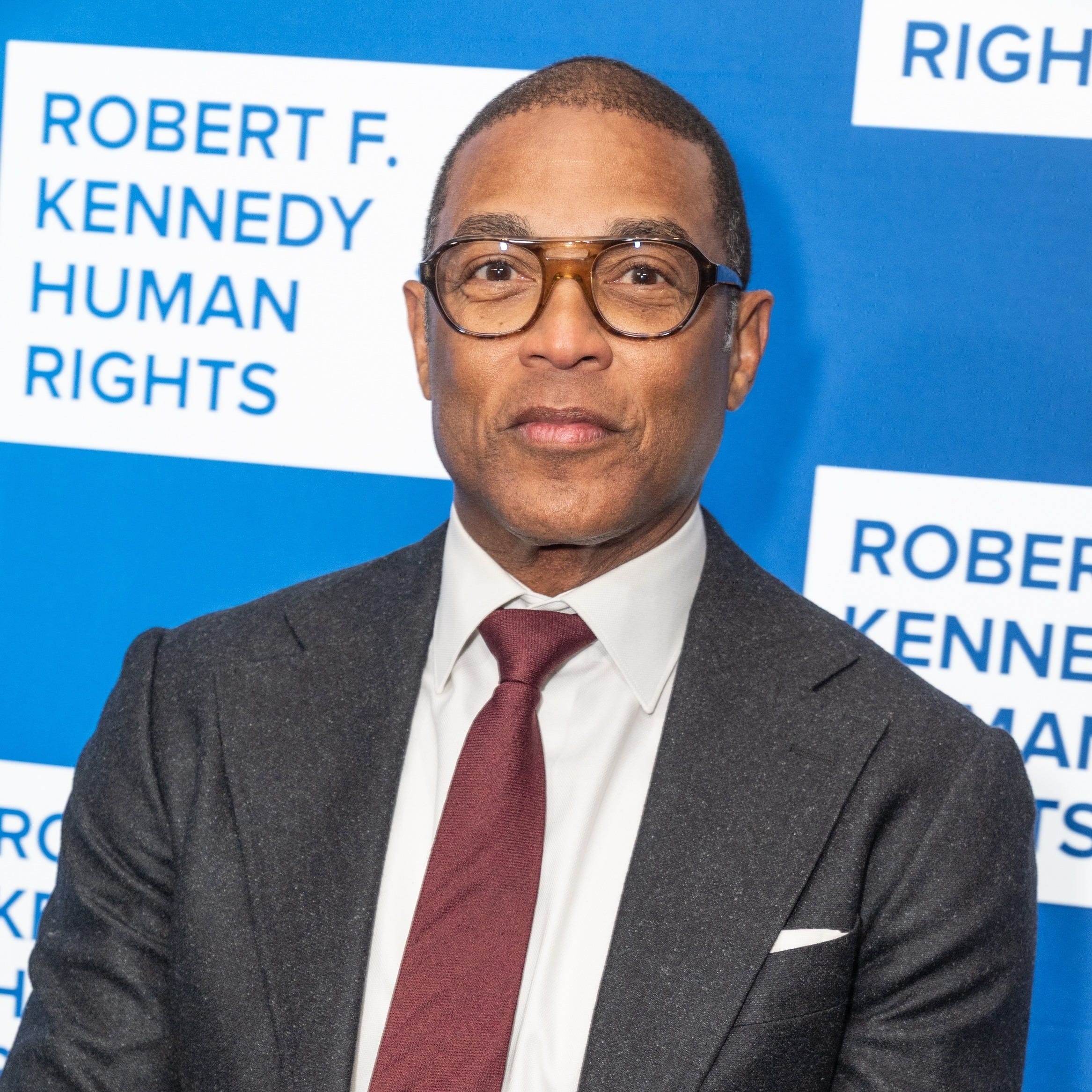
Last night, federal agents arrested journalist Don Lemon in connection with an anti-ICE protest inside a Minnesota church earlier this month. The Department of Justice charged him with violating federal statutes — primarily 18 U.S.C. § 241 and the Freedom of Access to Clinic Entrances (FACE) Act — that protect people exercising their constitutional rights.
These are serious charges, and the federal government bears a heavy burden of proof. Let’s break it down.
Section 241 criminalizes conspiring to “injure, oppress, threaten, or intimidate any person . . . in the free exercise or enjoyment of any right or privilege secured to him by the Constitution or laws of the United States.” It’s unclear whether the government has ever invoked § 241 to protect First Amendment religious exercise. Supreme Court precedent suggests that when the government moves to protect First Amendment rights under similar civil rights statutes, the prosecution must prove that state actors were involved. If so, the government faces a steep uphill battle proving the § 241 charge.
The FACE Act makes it a crime to use force, threats, or physical obstruction to intentionally interfere with anyone seeking to exercise their right of religious freedom at a house of worship or to intentionally damage the property.
It appears the grand jury believed the evidence presented by prosecutors established probable cause to return an indictment. But given the fraught political situation and Lemon’s own video, the charges, at least with regard to Lemon, deserve strong skepticism.
The DOJ previously failed to obtain an arrest warrant for Lemon and his producer after a magistrate judge found no probable cause. (Notably, the magistrate did sign arrest warrants for several protestors.) Prosecutors then appealed to U.S. District Judge Patrick J. Schiltz, who refused to immediately grant their request, writing:
The government lumps all eight protestors together and says things that are true of some but not all of them. Two of the five protestors were not protestors at all; instead, they were a journalist and his producer. There is no evidence that those two engaged in any criminal behavior or conspired to do so.
That doesn’t instill confidence that the government has a strong case. After being rebuffed by two judges, prosecutors secured the grand jury indictment against Lemon — an alternative procedural route that bypasses the need for a judge to approve a criminal complaint. Some career DOJ prosecutors reportedly refused to be involved in charging Lemon and other journalists who covered the protest because they also believe the evidence is insufficient.
Journalists do not have a special license to break generally applicable laws. When the pastor of Cities Church asked Lemon to leave, he no longer had the right to stay. FIRE recently explained that the First Amendment does not protect the protesters’ act of commandeering private property for their own ends, even if they did so to send a political message. Not only is such conduct unprotected, but it interferes with others’ ability to exercise their own rights to free speech and freedom of religion.
But that doesn’t mean the federal government’s charges against Lemon — civil rights charges that require evidence he was threatening or physically obstructing congregants or coordinating such activity — are warranted. There’s a good reason why, as Politico reports, “[c]riminal charges against journalists over their work activities are extraordinarily rare.”
In a free society, journalists play a vital role in documenting and reporting on events of public concern, including illegal conduct. Manufacturing federal crimes out of the facts we’ve seen so far chills that core function. Considered in light of the administration’s online taunts and demonstrated hostility to the press, that appears to be the point.
FIRE will be watching closely.

I’m curious to know what Lemon meant when he said, “So that’s what we’re doing here, and after we do this operation, you’ll see it live, these operations are surprise operations… “ That makes me wonder in what capacity he was involved. That does not sound like the language of a neutral observer. It sounds like he’s part of the “we” which is the activist group. “After we do this operation.” I’d like to hear what Lemon knew and when he knew it. “The operation” involved disrupting church services. Are we to believe a journalist who worked at CNN is not aware peaceful protest and disrupting a church service are not the same? Lemon also made statements on a podcast after the event that raised eyebrows, potentially indicating motive, which you do not report on here. Those statements could have been presented to the grand jury, which may have impacted their decision.
I'm tracking that by the effective of Lemon's own videos he was actively involved in planning this illegal activity, that he included himself among the "protestors", and that he engaged in illegal "protest" inside the church. In short, he knowingly conspired to commit a premeditated illegal act as part of an organized group. He's every bit as guilty as any of them. Filming yourself committing the crime is NOT a "get out of jail free card".