


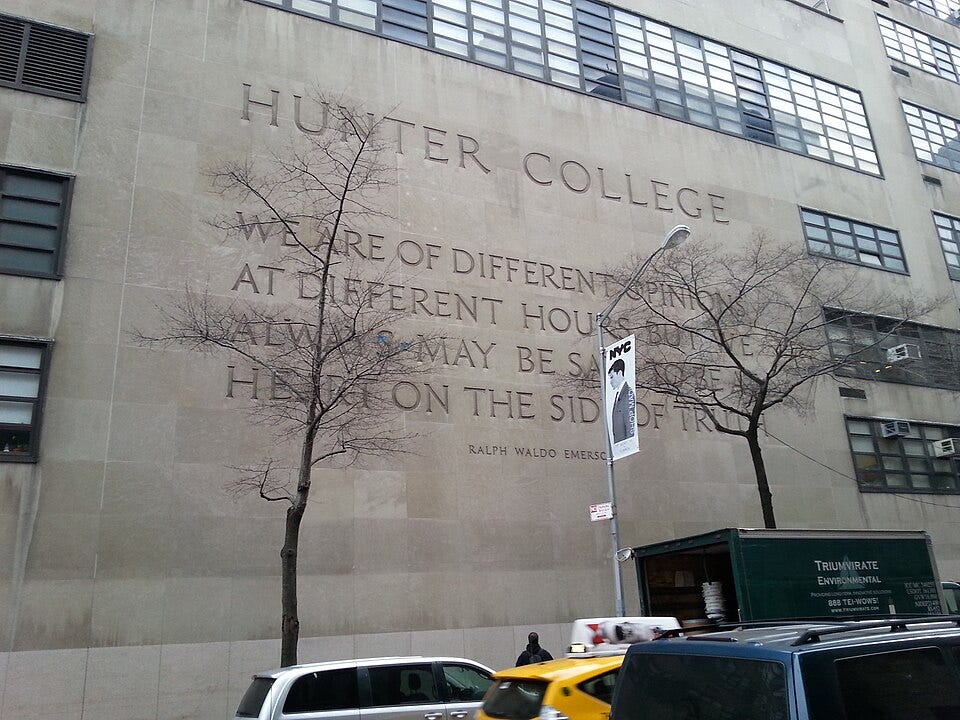
“They’re too dumb to know they’re in a bad school,” associate biology professor Allyson Friedman said during a public Zoom meeting at Hunter College. “If you train a black person well enough, they’ll know to use the back. You don’t have to tell them anymore.”
Her remarks were accidentally picked up on a hot mic while speaking to her daughter, and short clips of her comments quickly went viral, igniting a media firestorm and outrage online, including from Mayor Mamdani. Critics portrayed the remarks as racist and called for her firing, leading the college to suspend her and consider termination.
And yes, in isolation, these comments would make any New Yorker’s blood boil, especially coming from a city college professor. But while many seized on her unintentionally viral commentary to demand the policing of offensive speech, the full context of Friedman’s remarks perfectly demonstrates one of the main reasons why the First Amendment protects offensive speech — and why that’s a good thing.
Professors are inviting dialogue. That’s not the same as free speech.

I regularly teach a freshman seminar at Sarah Lawrence College. And every semester, without fail, the same scene plays out. A student lingers after class, or appears at my office door, or sends a carefully worded late-night email, sharing a view they would never dream of voicing to their peers. Sometimes it’s a defense of Israel, or abortion…
As Friedman explained, she was trying to educate her child on what she saw as the problem of systemic racism in education by paraphrasing an argument found in the 1933 essay “The Mis-Education of the Negro,” by pioneering black historian Carter G. Woodson. Woodson wrote, “When you control a man’s thinking you do not have to worry about his actions . . . You do not need to send him to the back door. He will go without being told.”
Clearly, Friedman was paraphrasing these lines. Why exactly? Because the school’s superintendent had shared Woodson’s famous remarks earlier in the very same meeting. That’s why Friedman was explaining it to her nearby child when she accidentally unmuted herself. But this context went entirely missing as critics demanded her firing. And they may get what they want too, because despite her long and successful academic track record, she was immediately suspended by Hunter and now faces termination.
The rush to burn Friedman at the stake is precisely why the First Amendment protects our free speech rights, including those of public college faculty members. And even if this wasn’t a misunderstanding and she had actually been saying something racist, Hunter College is still legally bound to uphold her right to discuss local issues outside of work. If free speech means anything, it’s the right to voice concerns about the problems facing our community, even if you’re being rude while you do it.
Imagine yourself in Friedman’s place. Do you want your employer to find the worst thing you said, or that people think you said, and fire you for it? Should someone’s livelihood be up to the whims of lawmakers and social media mobs? A mother is facing unemployment for discussing systemic racism with her child — what kind of message does that send to the working parents of NYC?
The four kinds of Trump voters

Since 2018, More in Common, a nonprofit focused on reducing political polarization, has tried to explain American politics less by demographics and more by the core values that shape how people see the country. That approach matters because it shifts the conversation fro…
But the First Amendment shows us another way. We can stand on principle. Hunter can live up to its First Amendment obligations by upholding faculty free speech rights. New Yorkers do not surrender the fundamental right to discuss political issues when they go to work for the city. On the contrary, public college faculty should share their expertise and criticism, even when it may upset City Hall. That’s why the First Amendment protects state college professors when they speak on matters of public concern outside work. Friedman’s commentary on systemic racism falls squarely within this protection. And if you disagree with her, it’s an act of good citizenship to debate those ideas rather than trying to shoot the messenger.
Academic freedom is under attack across America. You may think it should give way in the name of fighting racism or DEI, but it’s important to remember that tools that limit speech are tools anyone can use. From the many professors punished for criticizing TPUSA founder Charlie Kirk after his assassination to the proliferating bans on teaching “divisive concepts” such as race, gender, and other supposedly “controversial” topics, faculty face ever-evolving threats to their pedagogy and expression. In fact, more scholars have been punished for their speech in the last few years than during the entire Red Scare.
Nearly a century after that dark chapter of American history, Friedman’s suspension demonstrates why faculty are still afraid to speak up. Because taking yourself off mute — even for a few seconds — could be the end of a decades-long career.
Hunter College, defend your faculty. Defend the First Amendment. For whatever ails New York City or this nation as a whole, censorship is not the answer.

I fear she will be sacrificed for "the cause". There is nothing more invigorating than self-righteously burning someone at the stake as an indication of your moral superiority. Cruelty passed off as virtue.
Context used to matter at one time. It reminds me of the Donald McNeil at the NY Times situation over use of the "N" word.