


“Free speech should never become a conservative issue any more than it ever should have been a liberal issue. It is an issue for all . . . Everybody agrees with free speech in theory. But when you ask, should you defend the free speech of — and fill in whatever blank you want — the vast majority of Americans believe in free speech for me, but not for thee.”
— Alan Dershowitz on why modern liberalism appears to have turned against free speech, speaking at RealClearPolitics’ Samizdat Prize gala on Feb. 11.
CUNY investigates professor over ‘racist’ remarks
Hunter College is investigating biology professor Allyson Friedman for allegedly making racist remarks during a school district meeting without realizing her mic was on. “If you train a black person well enough,” she said, “they’ll know to use the back. You don’t have to tell them anymore.”
But Friedman says she was simply explaining the mentality of racists to her daughter by paraphrasing the black historian Carter Woodson, who famously wrote, “When you control a man’s thinking . . . you do not need to send him to the back door. He will go without being told.”
Here’s Zach Greenberg, FIRE’s director of Faculty Legal Defense:
FIRE is alarmed at Hunter College’s investigation of Professor Allyson Friedman for her comments at a NYC school district meeting. Discussions of systemic racism fall squarely within the First Amendment rights this public college is legally required to uphold. Faculty have the right to discuss political issues off-hours, especially those related to their children’s schooling and local communities.
Below the fold
In this week’s Free Speech Dispatch, Sarah McLaughlin reports how governments are using hate speech laws, anti-terror statutes, cybercrime rules, and platform regulations to silence political expression — from barroom posters in Australia and gender commentary in Canada and Brazil to protests in the UK, internet access in Russia and India, satire in Asia, and journalism pretty much everywhere.
U.S. Attorney Jeanine Pirro has dropped the case against six Democratic lawmakers who urged military and intelligence personnel to refuse illegal orders.
Amid campus tensions over controversial political speech, Columbia University’s Knight First Amendment Institute launched its “Reconstructing Free Expression” research initiative to “reinforce First Amendment protections.”
Know your rights
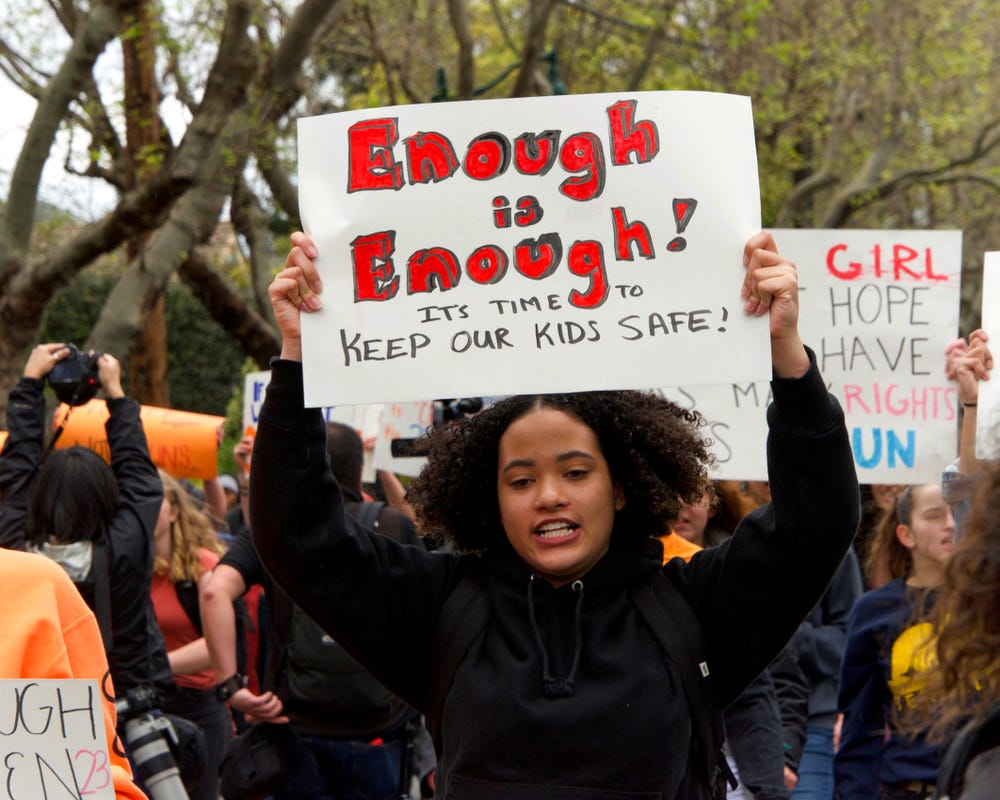
In the last month, we’ve seen anti-ICE student walkouts at secondary schools in Oklahoma, Illinois, Virginia, Texas, Washington state, Ohio, Florida, and more. In Texas, the state is investigating whether school employees encouraged the walkouts. In Florida, the state teachers union has openly said their members don’t support walkouts. This week, Adam Goldstein answers the question:

In the frame
This week we turn to a classic, the 2020 documentary Mighty Ira, about the longtime executive director of the ACLU, Ira Glasser, and his unapologetic defense of free speech — even for people almost everyone hated. Directed by FIRE’s Nico Perrino, Aaron Reese, and Chris Maltby, the film centers on the ACLU’s 1977 decision to defend the right of American Nazis to march in Skokie, Illinois, a town with many Holocaust survivors. But rather than a mere history lesson, this is a meditation on the nature of free speech itself and what its advocacy looks like in the modern age.
Today in history
On Feb. 24, 1969, the Supreme Court heard the landmark case Tinker v. Des Moines Independent School District, involving a public school principal who suspended four students (the three Tinker siblings and one friend) for wearing black armbands at multiple schools to protest the Vietnam War. The Court held that officials can only censor students if their speech significantly interferes with school discipline, or if school authorities reasonably think it will, which the armbands did not. This became known as the Tinker test. As Justice Abe Fortas famously wrote, “It can hardly be argued that either students or teachers shed their constitutional rights to freedom of speech or expression at the schoolhouse gate.”
By the numbers
Americans’ confidence in U.S. colleges and universities remains near historic lows. Though some have suggested public opinion about higher education may be stabilizing or rising, our latest survey finds little evidence of meaningful recovery. Instead, Nate Honeycutt explains, it shows that almost a third of Americans say they have little or no confidence in American higher education.