“If it is protected, we will defend it … If you are a censor, we will fight you.”
– Bob Corn-Revere on maintaining principle in a time of polarization, Delaware Inns of Court keynote, March 2026.
Supreme Court revives protester’s lawsuit
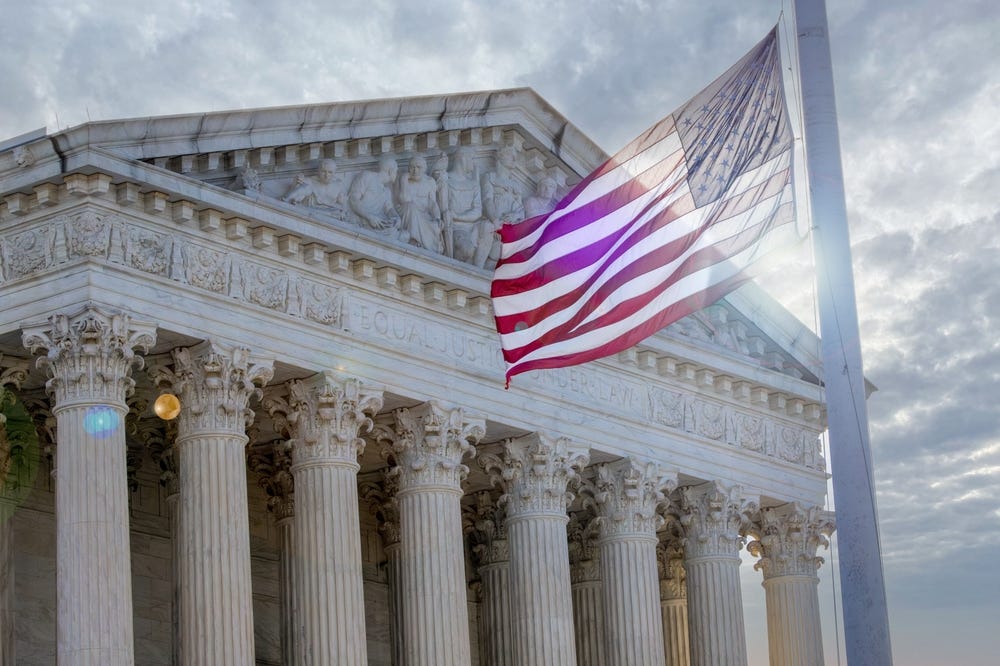
The U.S. Supreme Court unanimously allowed a Mississippi man to proceed with a First Amendment challenge against a law restricting demonstrations to designated zones.
The ruling clarifies that individuals can challenge speech restrictions prospectively — even if they were previously convicted under them — potentially expanding avenues for constitutional litigation.
Big Tech verdicts threaten speech
Recent verdicts in California and New Mexico, targeting social media platforms’ algorithms and design features, signal a push to treat online speech as a defective product despite longstanding First Amendment protections for editorial judgment.
No matter how you feel about social media, the minute we start treating speech as if it were just another physical product is the minute we hand the government the power to decide what we can read, watch, and say.
Below the fold
Two protesters in Australia were arrested — and could face up to two years in prison — on the first day of Queensland’s ban on the slogan “From the river to the sea,” as part of new rules regulating protest speech related to the Israeli-Palestinian conflict.
Terms of service
In his essay “The great chatbot panic,” Tyler Tone argues that the current wave of lawsuits blaming AI chatbots for suicides and violent behavior echoes past moral panics over media like Dungeons & Dragons, music, and video games, where courts ultimately rejected attempts to hold creators liable for harmful ideas rather than tangible defects. He warns that treating chatbot outputs as a “product” subject to liability would undermine First Amendment protections and push AI companies to sterilize speech to avoid risk.
This week in history
On March 23, 1775, Patrick Henry delivered a speech at the Second Virginia Convention urging the American colonies to take up arms against Great Britain. The speech is best known for the line, “Give me liberty or give me death.” He began by emphasizing the value of open debate and the right to express differing opinions. His remarks helped persuade the convention to adopt a resolution calling for the mobilization of troops, a pivotal step toward the American Revolution.
By the numbers
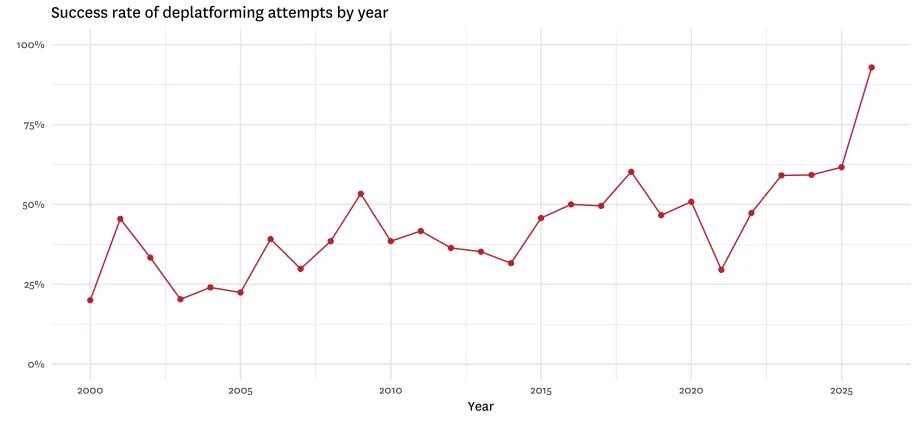
Only three months into the year, campus deplatforming is already on pace to set a disturbing new record, and if current trends hold, 2026 won’t just be a bad year for campus free speech. It’ll be the worst year on record for campus deplatformings.
In just the first three months of this year, there have been 70 such attempts. Even worse, 65 of those attempts succeeded — the highest success rate we’ve ever recorded in any year with 10 or more attempts.