


“The First Amendment stands there like a block of stone against the efforts of would-be government censors.”
— George Packer, “When Writers Lose Faith in Free Speech,” The Atlantic, Nov. 8, 2026.
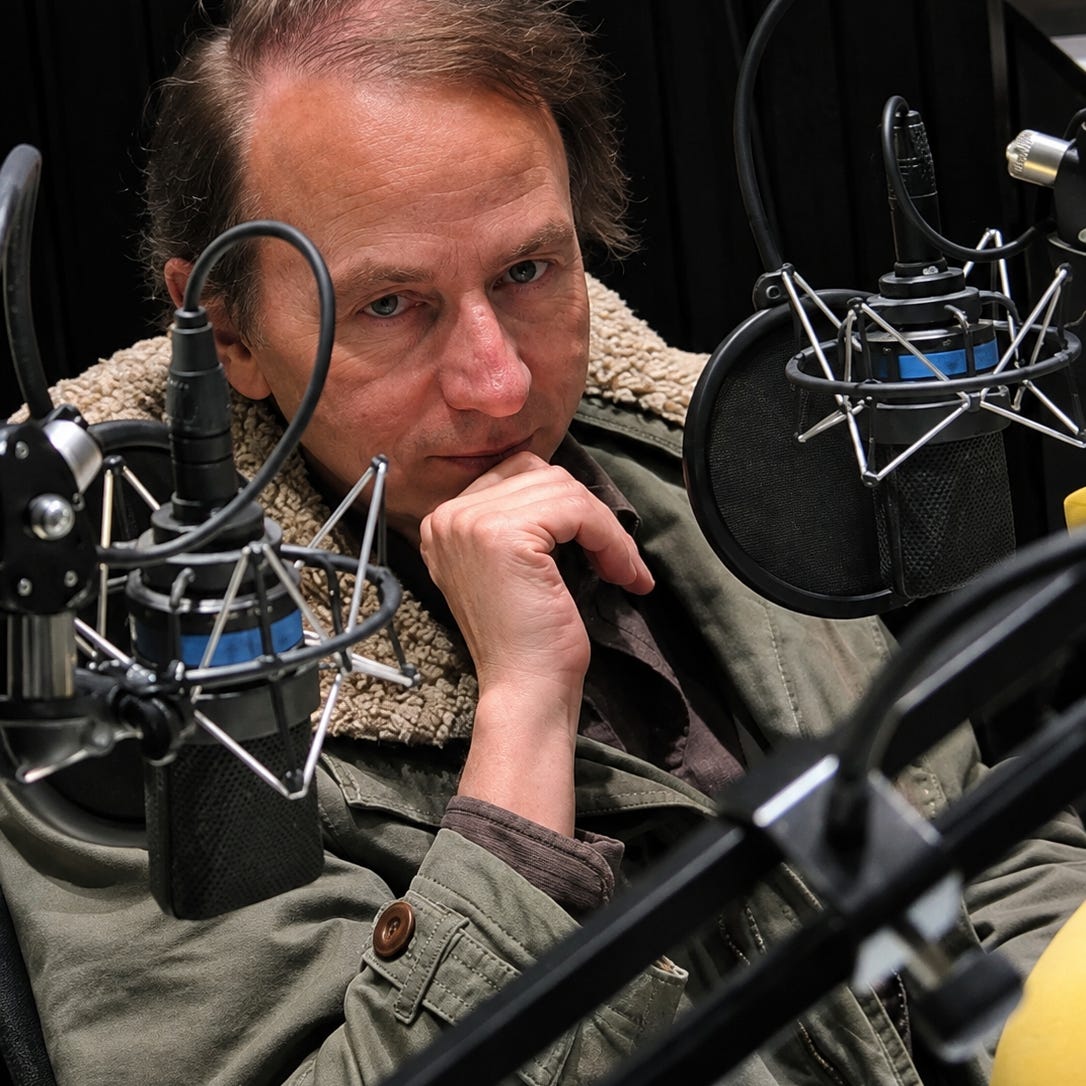
Houellebecq faces French censorship
French novelist Michel Houellebecq faces a judicial investigation over controversial comments about Muslims made in a 2022 interview. But Sarah McLaughlin argues that prosecuting offensive speech years after the fact threatens free expression and risks turning political and religious disagreements into criminal matters.
“Houellebecq’s comments, and the critics who want to challenge him on them,” writes McLaughlin, “belong in the court of public opinion. Not a court of law.”
Below the fold
Appeals court limits government access to journalists’ communications after the Fourth Circuit ordered a judge to narrow a sweeping demand for LinkedIn records that could expose reporters’ confidential sources.
Trump’s $10 billion defamation lawsuit against BBC advances after a federal judge allowed his claim over misleading edits to his January 6 speech to proceed while dismissing a separate unfair trade practices claim.
Algerian journalist sentenced to three years in prison after a court convicted Abdelali Mezghiche on charges stemming from his expression, prompting the Committee to Protect Journalists to demand his release.
Russia bans two French journalists and two lawmakers in retaliation for France’s expulsion of a Russian media figure, prompting French officials to condemn the restrictions as intimidation.
Around the World
In her latest Free Speech Dispatch, McLaughlin reports that British police arrested 325 demonstrators on Halloween for peacefully displaying signs supporting the banned activist group Palestine Action, bringing the total number of arrests over such protests to more than 4,000. Elsewhere, Hong Kong and Macau handed lengthy prison sentences to government critics, a Georgian journalist received another jail sentence for insulting politicians, and courts in Iran and Pakistan imposed death sentences in blasphemy cases. She also examines expanding social media restrictions, the prosecution of an American writer in Germany, and growing threats to independent journalism.
Tech
In the latest episode of FIRE’s Free Speech Future series, moderator Kmele Foster joins FIRE’s Sarah McLaughlin, technology attorney Preston Byrne, and Techdirt founder Mike Masnick to explore how foreign regulations threaten online speech worldwide. Using Australia’s attempt to force X to remove content globally as a starting point, the panel examines how governments can pressure platforms through fines, ID verification requirements, and other regulatory measures, potentially allowing the world’s most restrictive speech laws to dictate what Americans can say and see online.
Required reading
In Racket News, Matt Taibbi reflects on FIRE’s inaugural Soapbox conference in Philadelphia. Bringing together defenders of free expression from across the political spectrum, the gathering offered reasons for optimism even as the movement faces mounting challenges. Taibbi’s reflections suggest that defending free speech requires more than legal victories: It also requires intellectual humility, curiosity, and a willingness to engage with people who disagree.
There’s a bigger problem we rarely talk about, even at events like the FIRE conference. Supporters of civil liberties are becoming a subculture. We’re aging out of the era when Americans reflexively understood why free speech is important.
In When America Knew What It Was Defending, FIRE senior fellow Samuel J. Abrams explores a Poster House exhibition examining how Americans used posters, books, and the written word to defend democratic ideals during World War II. His essay recalls an era when reading and the free exchange of ideas were understood not merely as cultural pursuits, but as essential defenses against authoritarianism.
That contrast is awe-inspiring. The Nazis burned books while Americans printed them and sent them into war zones. The American response to an attempt to destroy ideas and dissent was to distribute more ideas. To me, this was Justice Louis Brandeis’s argument in his 1927 concurrence in Whitney v. California put into practice: “more speech, not enforced silence.”
Podcasts
The Blessings of Liberty explores constitutional history, Supreme Court debates, and the American idea, hosted by constitutional scholar Jeffrey Rosen.
In this episode, constitutional law and religious liberty scholars Stephanie Barclay and Robert Tuttle join to discuss the underlying merits and recap the oral arguments in the important Supreme Court case St. Mary Catholic Parish v. Roy, which explores whether Catholic preschools are religiously exempt from Colorado’s LGBT nondiscrimination requirements as a condition of public funding.
This week in history with Sheridan Macy
On Nov. 10, 1919, five individuals were charged with violating the Espionage Act after they circulated pamphlets critical of U.S. military intervention in Russia during WWI and called for a general strike at ammunition plants to undermine the war effort. The Supreme Court upheld their convictions, arguing that the First Amendment does not protect speech designed to undermine the U.S. in war. This case is best known for the dissenting opinion written by Justice Oliver Wendell Holmes, which argued that the defendants had received prison sentences “not for what the indictment alleges but for the creed that they avow.”
He also wrote that “the ultimate good desired is better reached by free trade in ideas — that the best test of truth is the power of the thought to get itself accepted in the competition of the market.” While he didn’t use the term himself, this is the foundation of the “marketplace of ideas” theory of First Amendment jurisprudence, which holds that truth will emerge through the competition of ideas. The restrictive approach to political advocacy reflected in the majority’s decision was largely superseded in 1969 by Brandenburg v. Ohio.
By the Numbers
45%
That’s the share of women journalists surveyed worldwide who reported self-censoring in 2025, up from 30% in a comparable earlier survey. The findings underscore the pressures facing women journalists and the consequences for freedom of expression.