


FIREwire is a roundup of the free speech stories shaping the news — including curated essays, podcasts, history, and data — delivered weekly.
“Nothing could be less compatible with the Communications Act and the First Amendment limits embedded therein than the spectacle of an FCC chairman, at the president’s behest, calling out particular news reports and specific reporters and threatening regulatory repercussions, including license revocation.”
— Robert Corn-Revere on the FCC’s campaign against ABC.
ABC campaigns against FCC probe
ABC’s The View became the week’s most significant media free speech story by transforming its FCC investigation into an on-air First Amendment campaign. The show aired ads featuring Barbara Walters encouraging viewers to “use your voice” and submit comments opposing the FCC inquiry, making the regulatory dispute itself part of the program’s editorial content and prompting widespread debate over government oversight of broadcast journalism.
Supreme Court considers age-gating case
The Supreme Court is deciding whether to reinstate a pause on Texas’ App Store Accountability Act while a constitutional challenge to the act is litigated. The law requires parental consent and age verification before minors can download apps, potentially redefining how First Amendment protections apply to children in the digital era.
Below the fold
Algeria’s media regulator is warning outlets to blunt their criticism of the country’s World Cup team after its 3-0 defeat at the hands of Lionel Messi and Argentina “and to prioritise institutional support for the national team.”
Japan’s ruling party is pushing a bill criminalizing “publicly damaging, removing, or defacing” Japan’s flag in a “way or situation that evokes significant discomfort or disgust in people.”
This year, the United States celebrates its 250th anniversary. To commemorate the occasion, FIRE is proud to present the limited series “Figures of Speech,” looking at the heroes and villains of free speech in American history. We began with Joseph McCarthy, the senator who scared America silent. Then we looked at Thomas Paine, American history’s winter soldier, and Woodrow Wilson, our worst president for free speech. Today we turn to Ida B. Wells, a journalist, activist, civil rights icon, and free speech hero.
In 1964, Martin Luther King Jr. received a suspicious package. Inside was an audio recording and a letter denouncing him as “a complete fraud and a great Liability to all of us Negroes.” The letter accused King of “countless acts of adultery and immoral conduct lower than that of a beast,” before ending with a chilling message: “King, there is only one thing left for you to do. You know what it is. You have just 34 days.”
The package had not come from a disillusioned admirer. It came from the Federal Bureau of Investigation. King suspected as much and understood the ultimatum as an invitation to kill himself before his private life was exposed.
The episode was part of the FBI’s broader campaign of surveillance and harassment against King, which included wiretapping his home and offices and planting hidden microphones in his hotel rooms. Whether the bureau hoped King would take his own life or merely withdraw from public life, it was attempting to silence the nation’s leading voice for racial equality.
This was J. Edgar Hoover’s FBI. Continue reading...

Terms of service
Artificial intelligence is far from an authorless machine, argues Tyler Tone in his latest essay, “How does the First Amendment apply to AI?,” but rather a long chain of human editorial and creative decisions — from selecting training data to writing system prompts — and it therefore deserves First Amendment protection as expressive speech.
Far from a simple probabilistic machine, AI models are the direct result of human judgments about what information they should absorb, what values they should prioritize, what tone they should adopt, and what kinds of answers they should avoid.
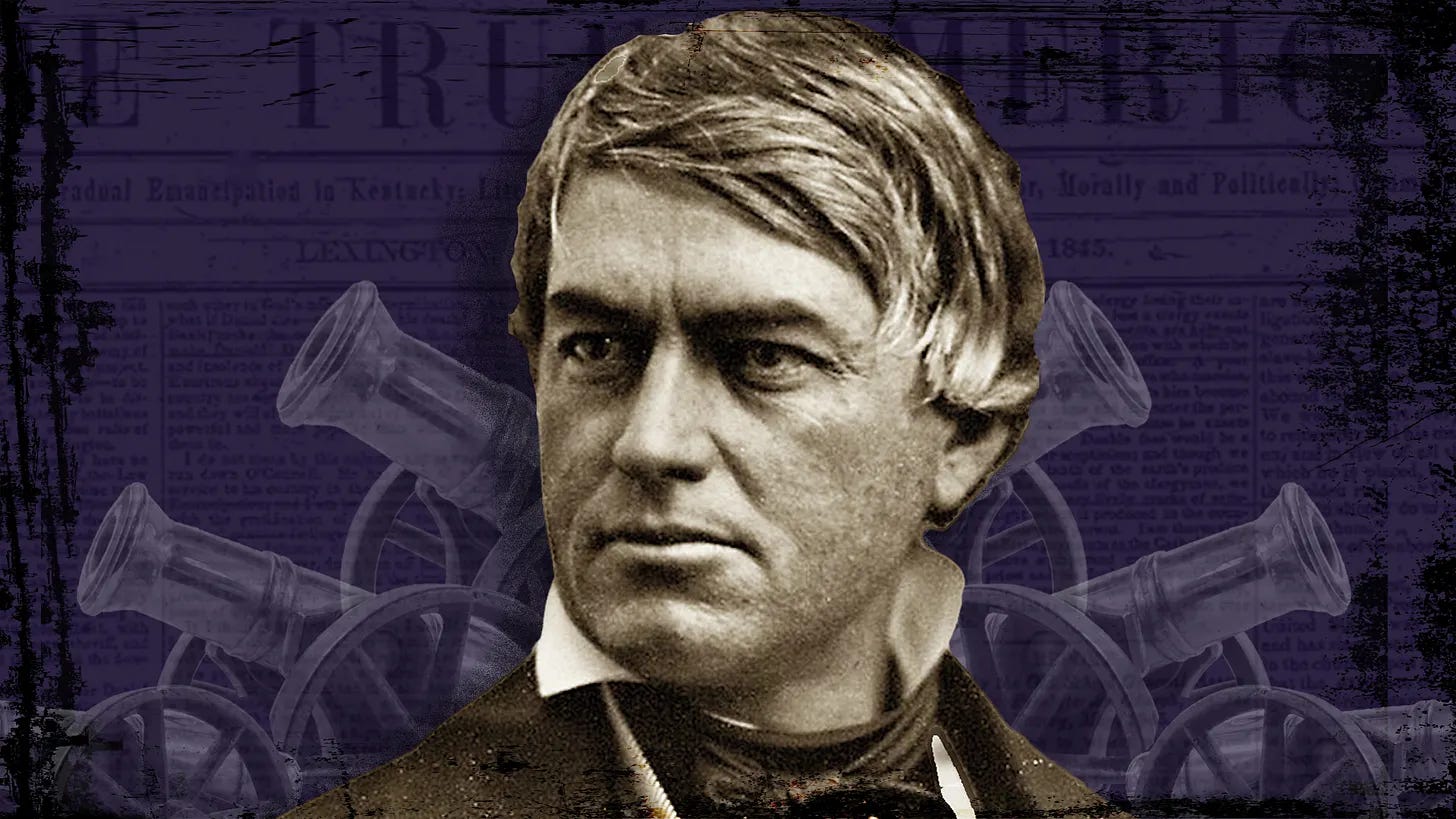
In 1845, abolitionist Cassius Clay founded an anti-slavery newspaper in Lexington, Kentucky, just one block from one of the nation’s largest slave markets. Clay knew it would make him a target. But as threats mounted, he didn’t back down. Instead, he turned his newsroom into a fortress, defending the freedom of the press and keeping the fight against slavery alive by any means necessary. As Angela Erickson writes, that included “two brass cannons, iron-barred windows, and an arsenal of Mexican lances and pikes.” Read his incredible story here.
In the frame
The Secret Service has reportedly contacted shock-metal band Gwar over its latest stage show, in which performers theatrically disembowel a fake President Donald Trump. But as Angel Eduardo carefully explains, this is a decades-old satirical routine the band has previously inflicted on figures ranging from Barack Obama and Joe Biden to Queen Elizabeth and Elon Musk.
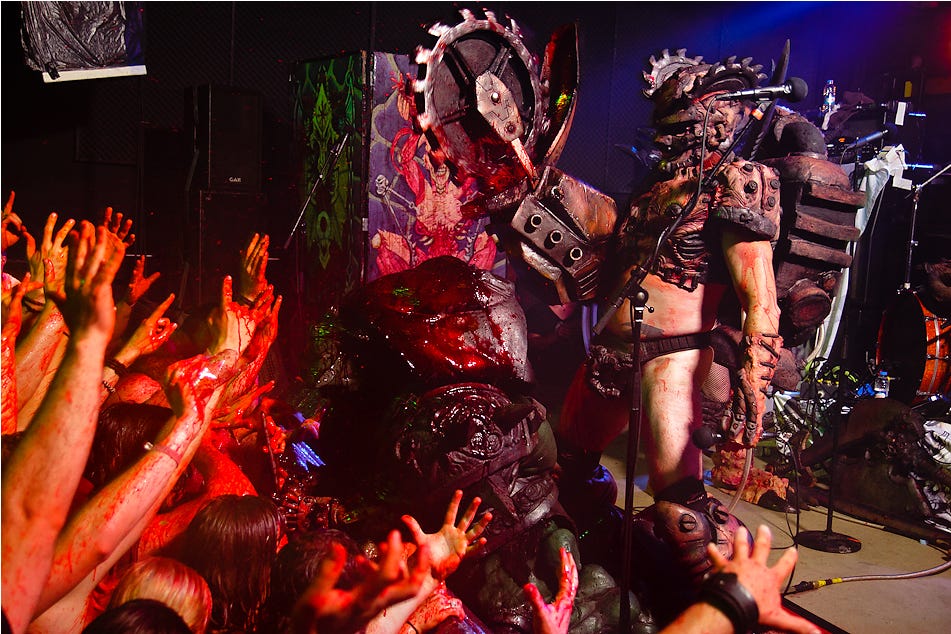
“Mock executions may be crude, offensive, or disturbing,” Eduardo writes, “but they are hardly new. Americans have used symbolic depictions of violence against political figures for centuries to express dissent.”
Where there’s smoke…
ICE agents tracked down Syracuse resident Paigelynne Gonyea on Tuesday, reportedly warning that her Instagram post identifying the ICE agent who shot and killed protester Renee Good might lead to “federal or state prosecution.” The information about the ICE agent had already been widely reported in news outlets, including the Minneapolis Star Tribune, before Paigelynne’s post. Here’s Adam Steinbaugh:
A free America doesn’t dispatch federal law enforcement agents to intimidate someone for an Instagram post of publicly available information. Free speech is the bedrock of a free society, and the First Amendment squarely prohibits ICE agents from intimidating Americans for nothing more than repeating information from a newspaper report. As we approach the 250th anniversary of our independence from England, where police now hassle residents over social media posts, let’s not follow their lead.
You can see FIRE’s original statement here.
So to Speak
So to Speak: The Free Speech Podcast takes an uncensored look at the world of free expression through the law, philosophy, and stories that define your right to free speech. Hosted by FIRE’s Nico Perrino.
What happens when someone uses satire to test the limits of religious freedom? In this episode, activist T. Chaz Stevens explains how his provocative campaigns — from founding the satirical Church of Satanology to challenging government displays of religion — have forced courts and public officials to confront difficult First Amendment questions about free speech, religious equality, and whether the Constitution protects unpopular beliefs as vigorously as popular ones.
Blessings of Liberty
Bestselling author and constitutional scholar Jeffrey Rosen’s new podcast, The Blessings of Liberty, explores constitutional history, Supreme Court debates, and the “American Idea.”
In this episode, award-winning historian H. W. Brands joins to discuss his new book, American Patriarch: The Life of George Washington. From his early military career to his leadership during the American Revolution and reluctant return to public service as the first president of the United States, American Patriarch brings to life the man who was called to lead time and again by his peers.
This week in history with Sheridan Macy
On June 29, 1927, as public outrage and state censorship laws mounted, Hollywood’s major studios took a decisive step toward self-censorship by adopting a list of “Don’ts” and “Be Carefuls” that would become the foundation of the Hays Code.
The film industry faced growing pressure from reformers and state legislatures to curb what many considered morally objectionable content. With states adopting inconsistent censorship laws, studios hoped voluntary self-regulation would stave off government intervention and create a single national standard. At the urging of Will H. Hays, president of the Motion Picture Producers and Distributors of America (MPPDA), a committee drafted the guidelines, informally dubbed the industry’s “Magna Charta.” Three years later, they were incorporated into the Motion Picture Production Code, better known as the Hays Code.
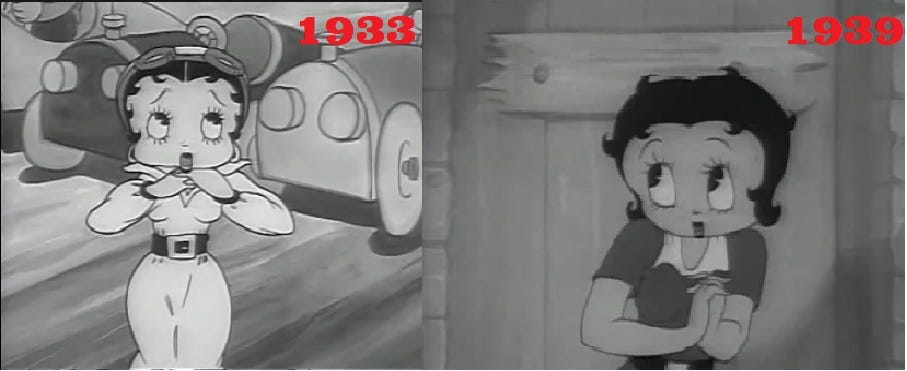
The “Don’ts” flatly prohibited depictions of profanity, nudity, illegal drug use, and what the code called “sex perversion,” among other subjects. The “Be Carefuls” instructed filmmakers to treat topics such as religion, marriage, crime, firearms, the American flag, sedition, and international relations with restraint and “good taste.” Many great films ran afoul of the Hays Code, either by being heavily edited, denied approval until changed, or effectively banned from mainstream theatrical distribution. Some of the best-known examples include:
A Streetcar Named Desire (1951) – Elia Kazan’s adaptation of the 1947 play by Tennessee Williams, starring Marlon Brando, removed references to his character’s brother-in-law being gay, which is a central element of the play.
Psycho (1960) – Alfred Hitchcock battled censors over the famous shower scene, toilet-flushing shot (the first in a major American film), and sexual content.
Who’s Afraid of Virginia Woolf? (1966) – The film’s profanity and sexual themes forced negotiations with censors and marked one of the final blows to the Code.
By the mid-1960s, filmmakers increasingly ignored the Code, and audiences were becoming receptive to more mature subject matter. In 1968, the Hays Code was abandoned and replaced by the MPAA ratings system, which later evolved into G, PG, PG-13, R, and NC-17 ratings. Still, the Hays Code may be gone, but the argument over who gets to edit culture is still playing to packed houses.
By the numbers
FIRE’s new survey of 1,959 law professors at 192 ABA-approved law schools finds that while legal academics overwhelmingly support free speech in principle, many don’t feel free to practice it. About 56% say they at least occasionally self-censor out of concern over how students, colleagues, or administrators might respond. The chilling effect is especially pronounced among conservatives: 72% report self-censoring compared with only 50% of liberals, and 52% say they have hidden their political beliefs to protect their jobs, versus just 17% of liberals.
This climate of silence doesn’t just affect faculty, but shapes what students learn, as professors admit that they avoid controversial topics, alter exams, and even self-censor while teaching First Amendment cases, ultimately modeling caution rather than intellectual courage for the next generation of lawyers and judges.
Regarding age gating for social media: If government intervention is unconstitutional, then what is your proposed solution? Kids driving themselves nuts with these sites is not great for the republic.