


This article is the sequel to a recent post in which I highlighted several free speech trends on campus. With the recent release of the newest College Free Speech Rankings, what happened to those trends in 2026?
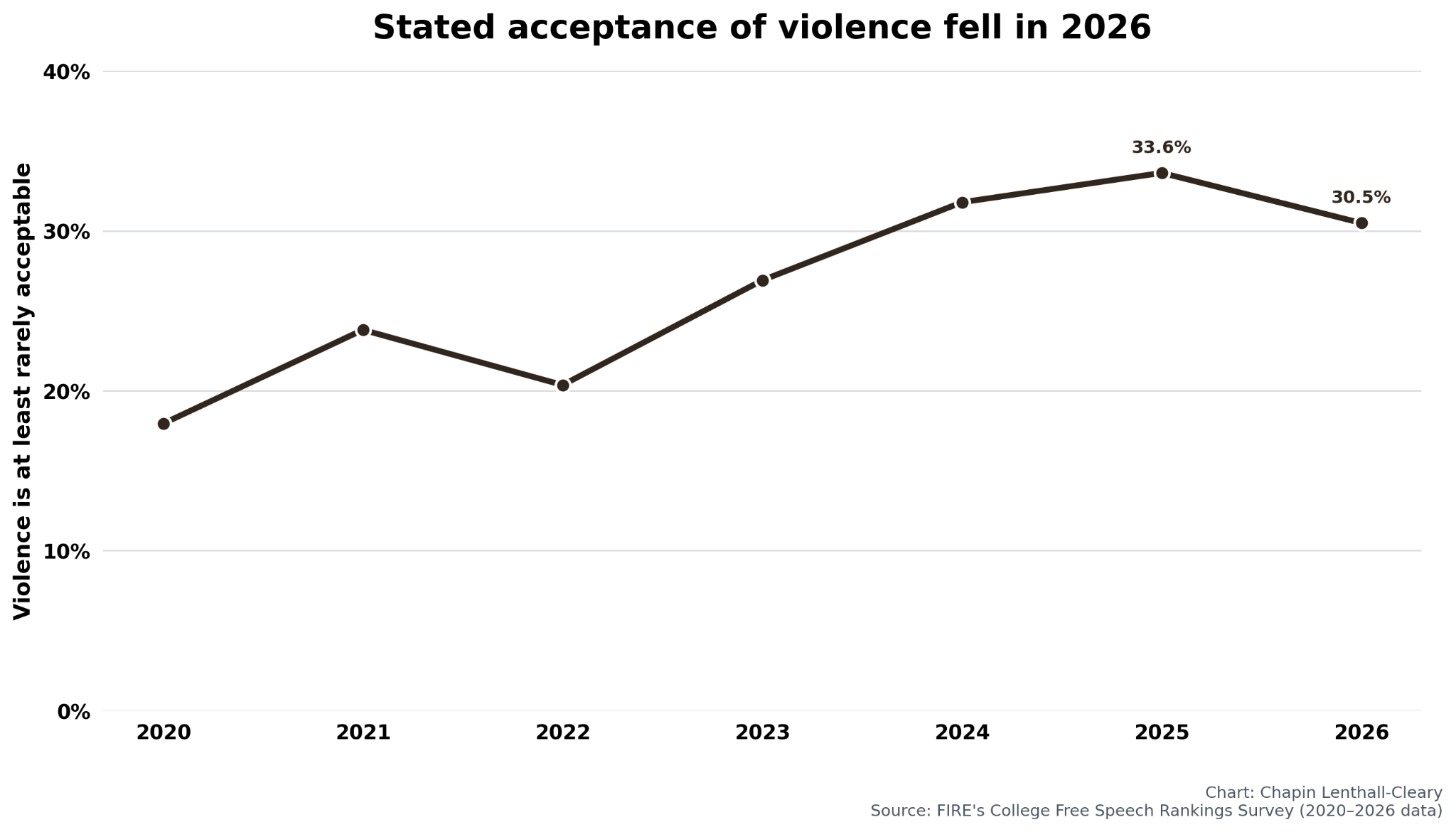
The share of students who said using violence to stop a campus speech is at least rarely acceptable fell from 33.6% in 2025 to 30.5% in 2026 — a 3.1-percentage-point decline and the first drop since 2022. Still, the 2026 estimate remains about 70% above the 2020 level, meaning nearly one in three students still endorse violence at least rarely. The decline also occurred among students on both the left and right.
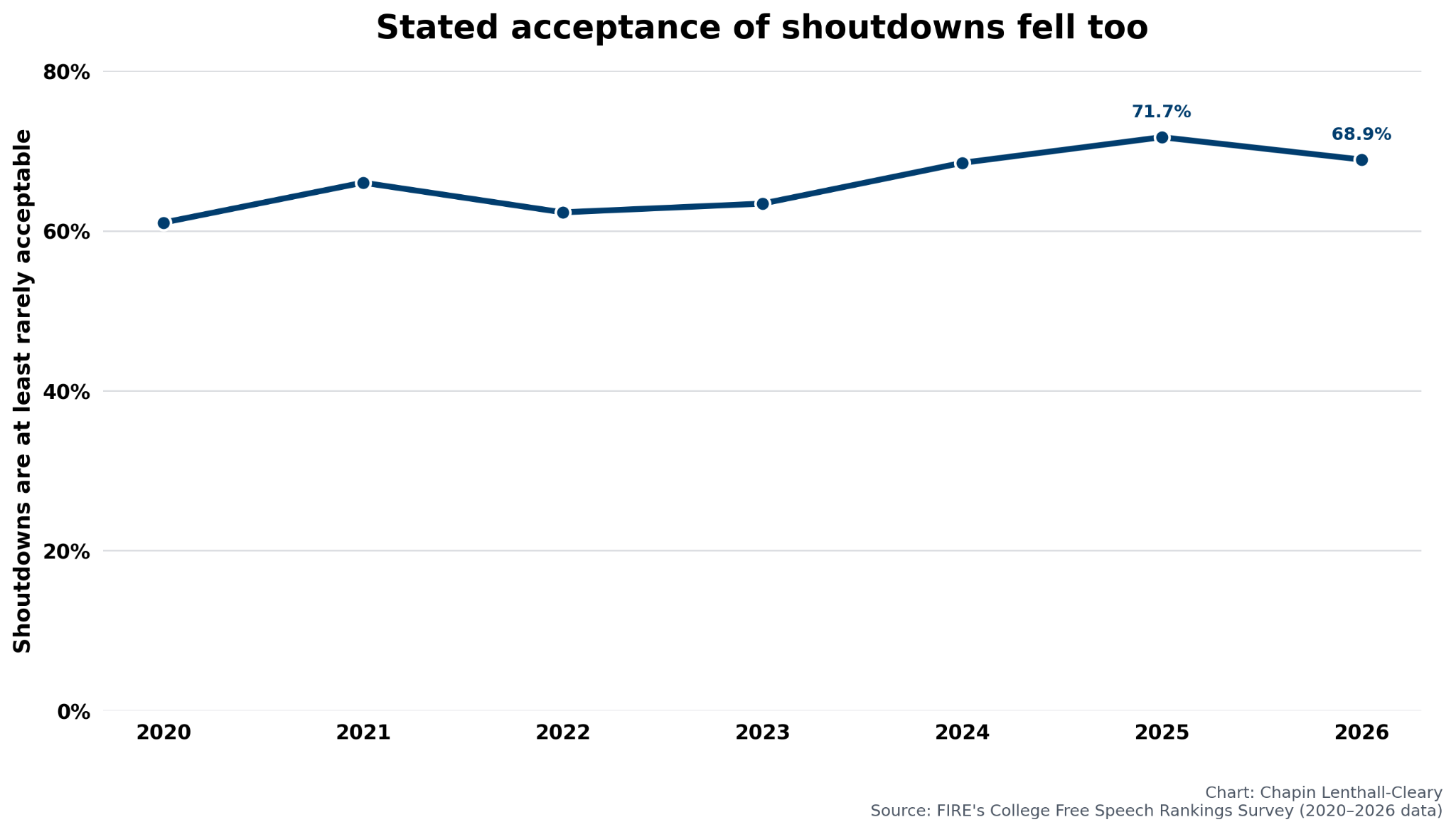
Acceptance of shouting down a speaker also fell, from 71.7% to 68.9%, breaking the steady rise from 2022 through 2025. Like the decline in violence, this shift appeared on both sides of the aisle. Still, more than two-thirds of students said a shoutdown can be acceptable at least rarely.
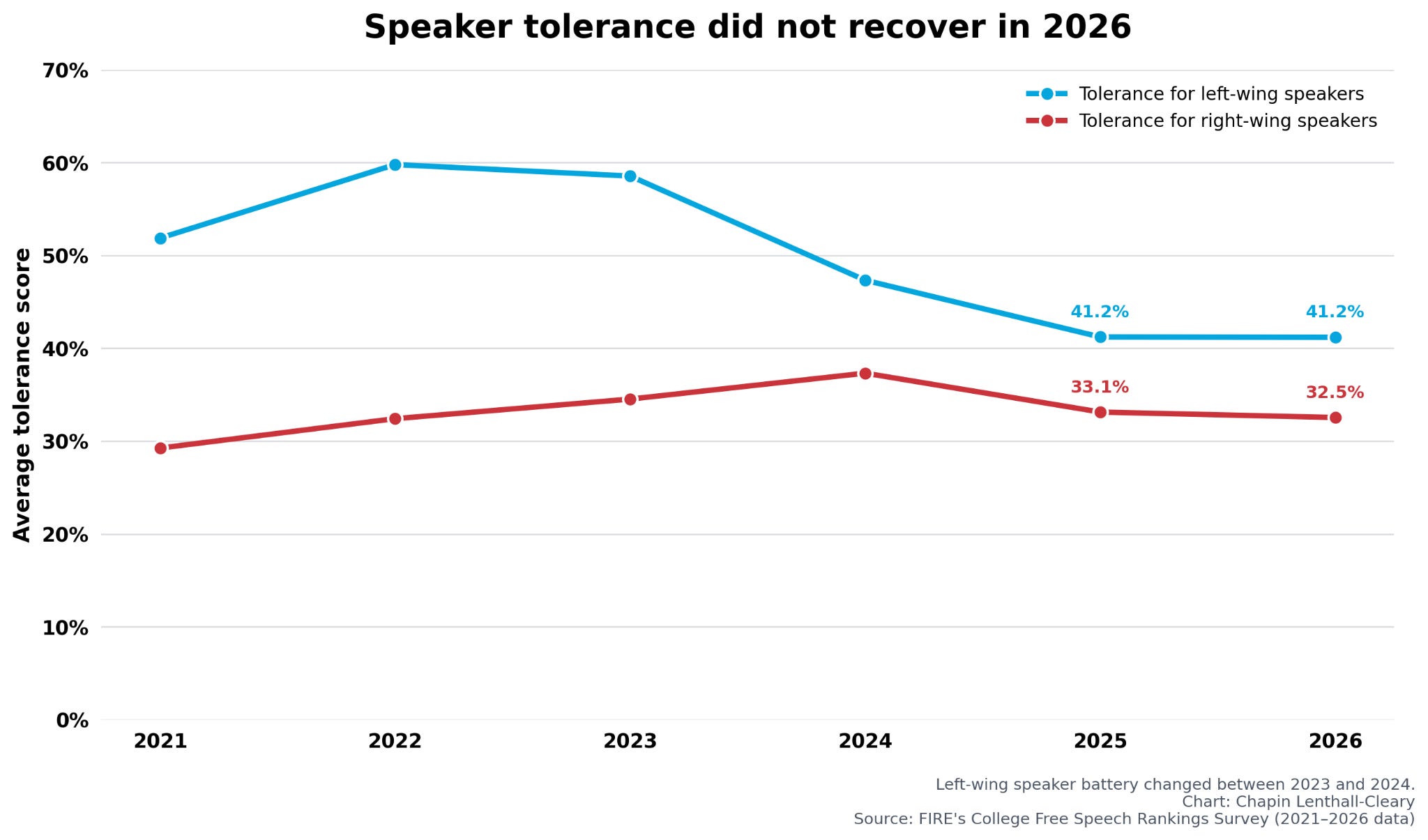
By contrast, speaker tolerance continued to worsen. Average tolerance for left-wing speakers was 41.2% — essentially unchanged from last year. Tolerance for right-wing speakers slipped again, from 33.1% to 32.5%.
As before, note that the left-wing questions changed between 2021 and 2022, and between 2023 and 2024. The drop in left-wing tolerance between 2023 and 2024 might be exaggerated by this change, but the longer-running trend of declining tolerance seems robust.
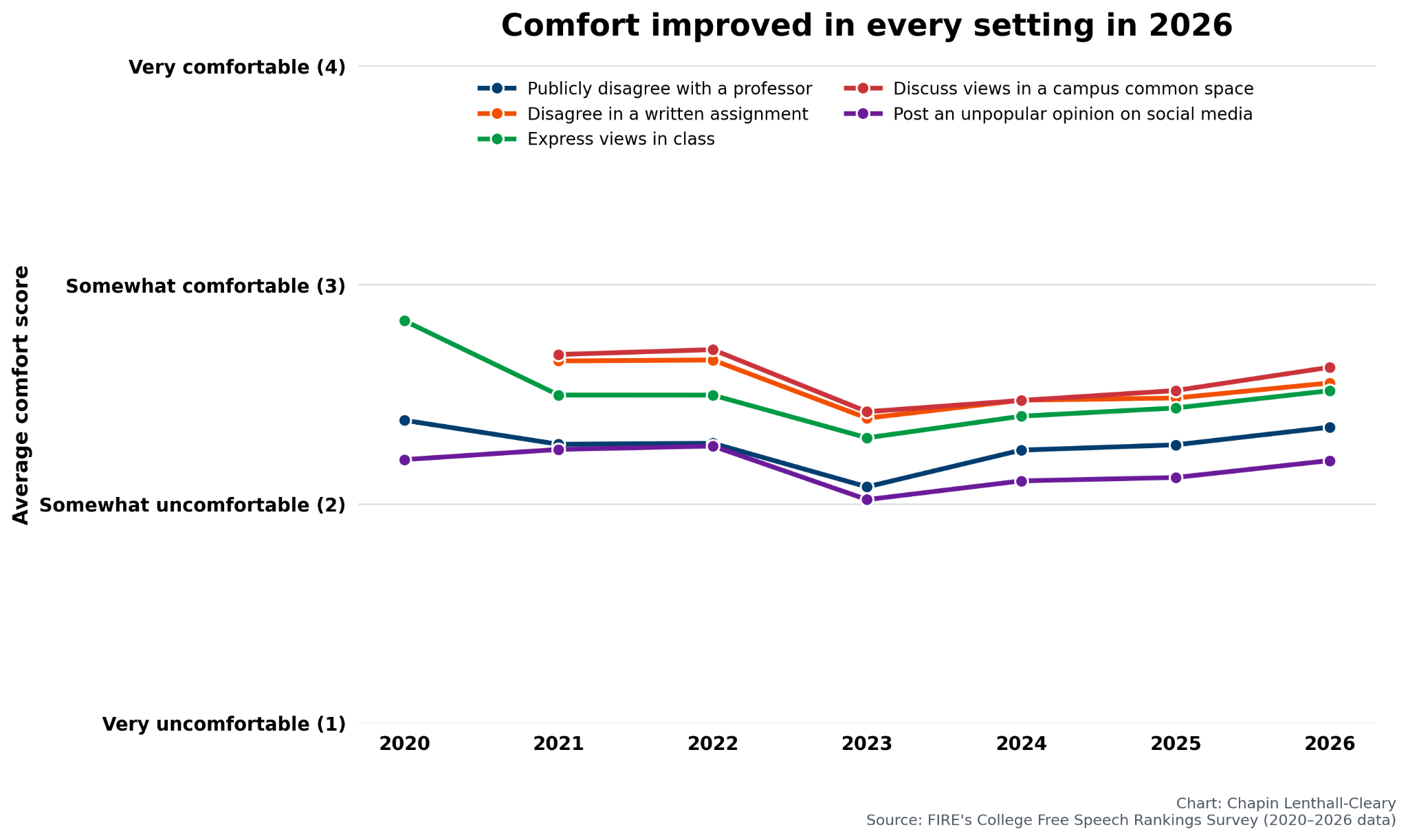
By contrast, all five comfort scores rose modestly in 2026, with gains from 0.07 to 0.11 points on the four-point scale. Students reported more comfort speaking in class, disagreeing with professors publicly and in writing, discussing views in common campus spaces, and posting an unpopular opinion on social media. Still, none of the comfort values have fully recovered to their respective highs in the early 2020s.
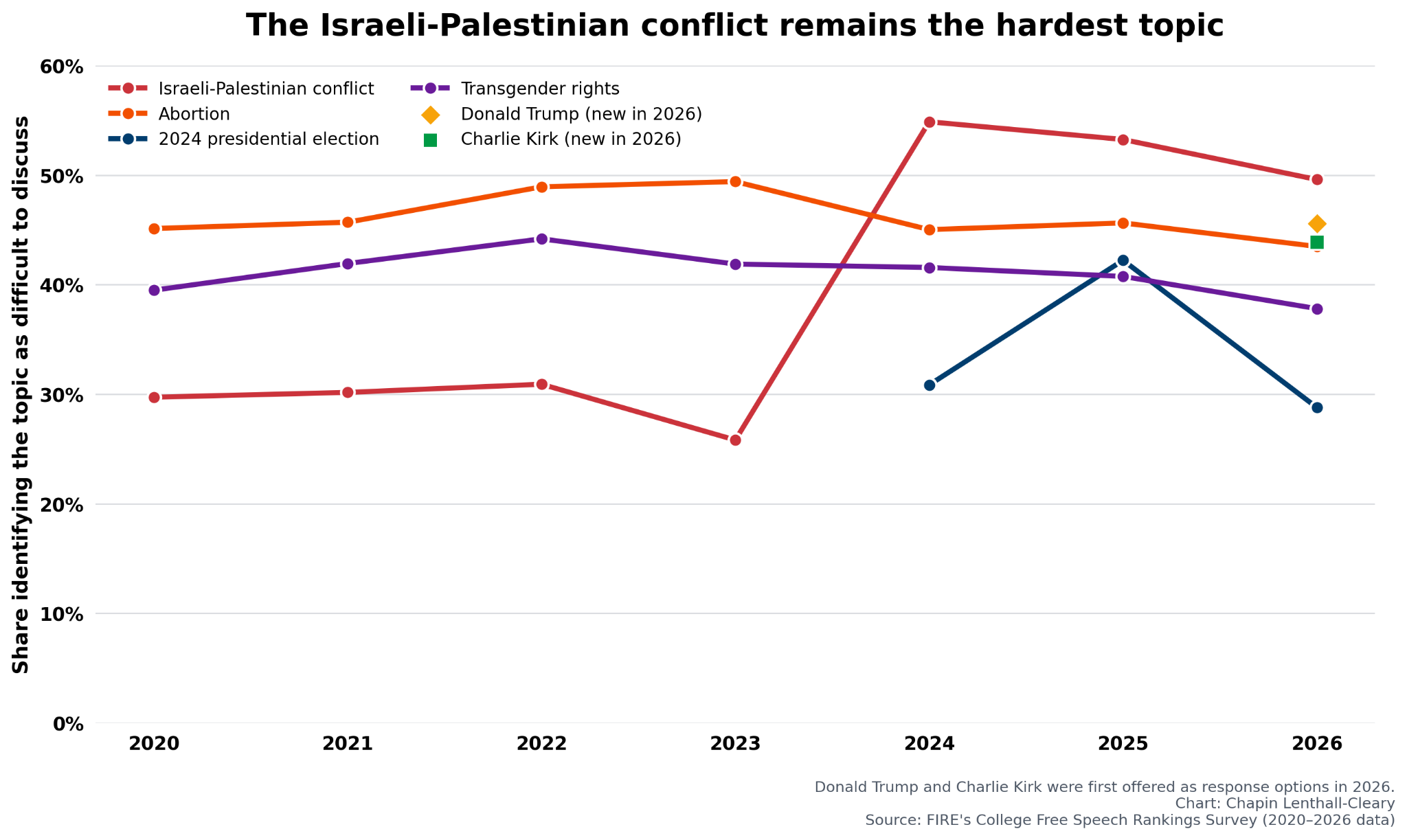
The Israeli-Palestinian conflict remained the most frequently selected difficult topic in 2026, but its share fell from 53.3% to 49.6%. It was still far harder to discuss than before Oct. 7, but after two years above 50%, fewer than half of students selected it. Each of the other three topics shown in last year’s chart also fell. Difficulty discussing the 2024 presidential election dropped especially sharply as the election receded.
The code used to generate these plots can be found here.
