


When you’re trying to see whether you understand a particular subject, it’s often helpful to see if you can predict how it will develop (or what current results you haven’t seen will look like). Obviously, predicting the future is very difficult, and even many smart people who understand a subject well are often wildly off.
Yes, I am aware that superforecasters exist. Part of the reason for their success is that, rather than just blindly giving numbers that match their intuitions, they often make models involving various data about the subject at hand.
But making predictions can force you to clarify details about your views or the reasons behind them, and seeing how your predictions err can reveal blind spots in your understanding. In that spirit, here are five trends from our college free speech rankings data through 2025.
Our spring 2026 data will be published when the 2027 Rankings are released on Sept. 8. (Yes, the 2026 data is used for the 2027 College Free Speech Rankings. Don’t shoot the messenger.) When that happens, we’ll publish an update on how these trends have progressed in 2026. What do you predict will have happened?
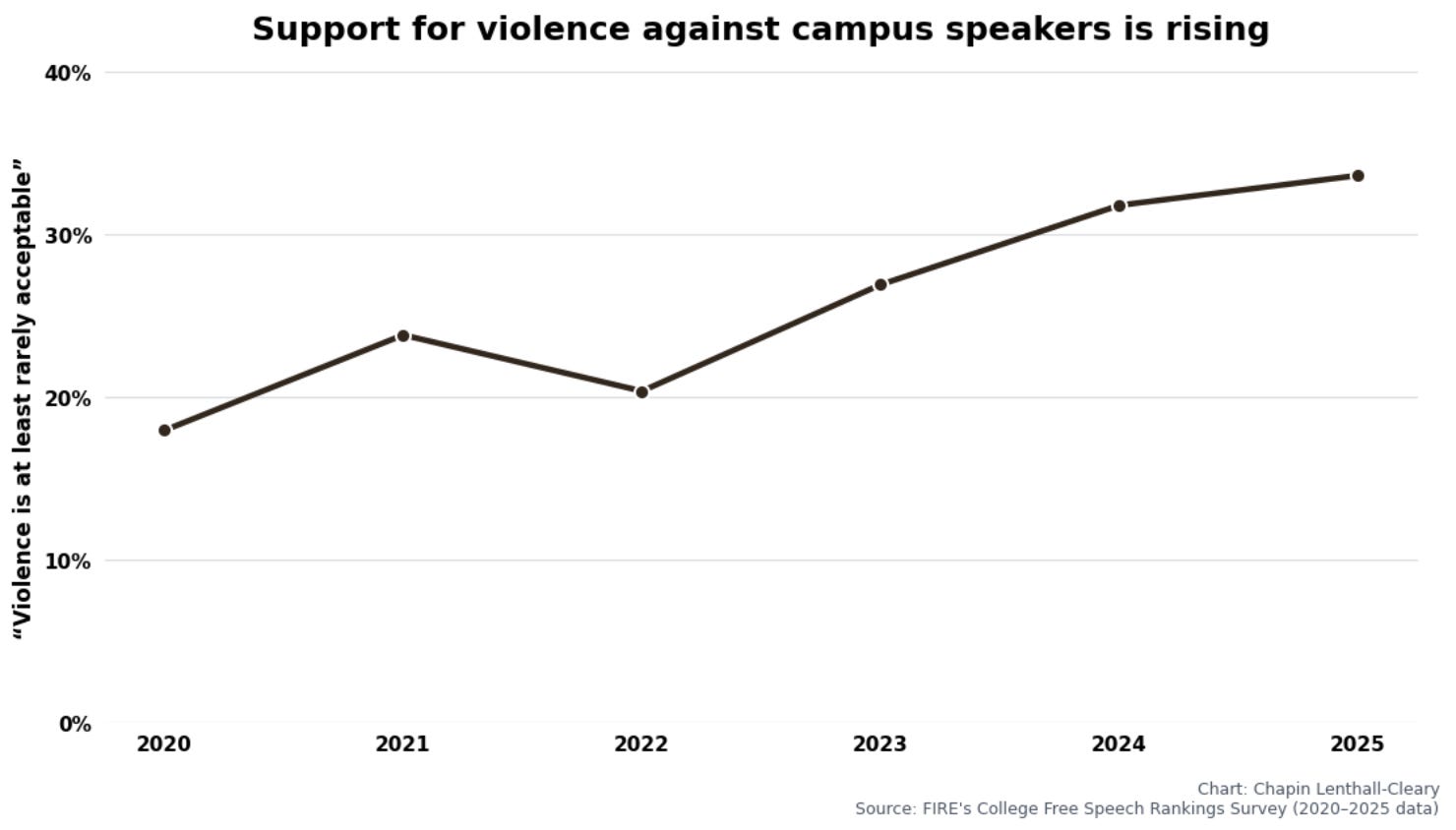
In 2020, 18% of students said that violence against speakers was at least rarely acceptable. By 2025, that number had nearly doubled, rising to 34%. Will this rise continue?
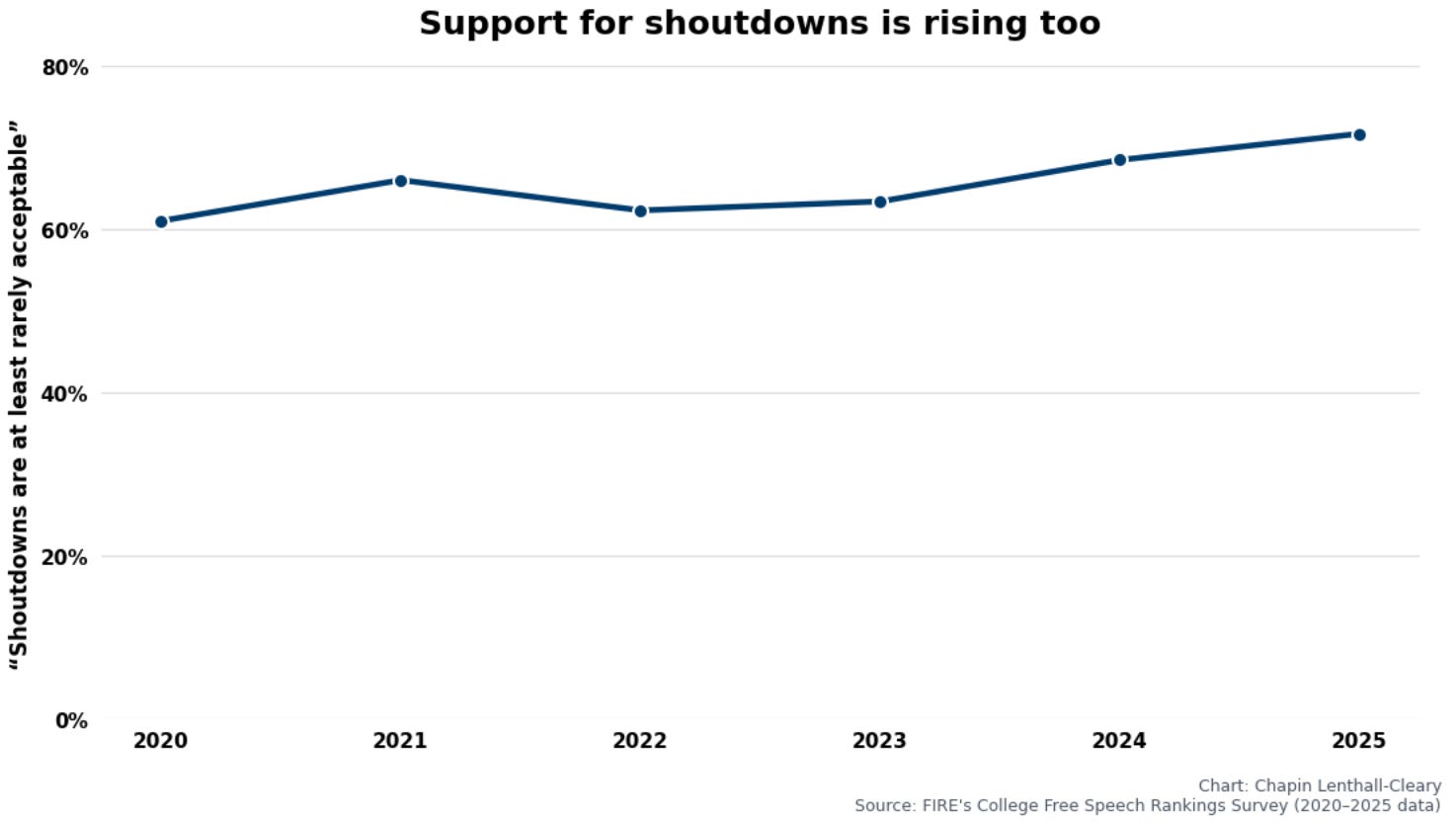
Unsurprisingly, support for shouting down a speaker has always been higher than support for violence. Though smaller than the increase in support for violence (after all, they can only go so much higher), shoutdowns show a similar increase, and now nearly three-quarters of students say they’re at least rarely acceptable. What will 2026 bring?
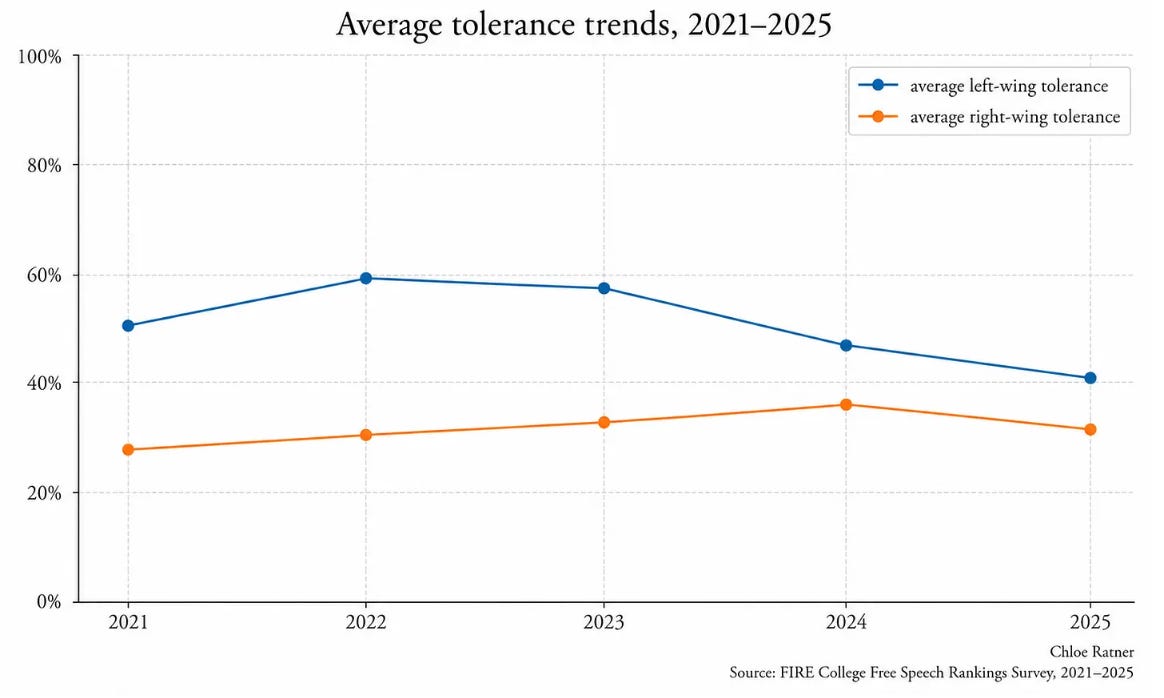
Meanwhile, tolerance for controversial speakers (i.e. willingness to allow them to speak on campus) has declined. Tolerance for left-wing speakers has declined for several years, and tolerance for right-wing speakers joined the party in 2025.
Note that we changed the left-wing questions we asked between 2023 and 2024, but the declines from 2022-2023 and 2024-2025 suggest that the decline from 2023-2024 is probably at least partly real.
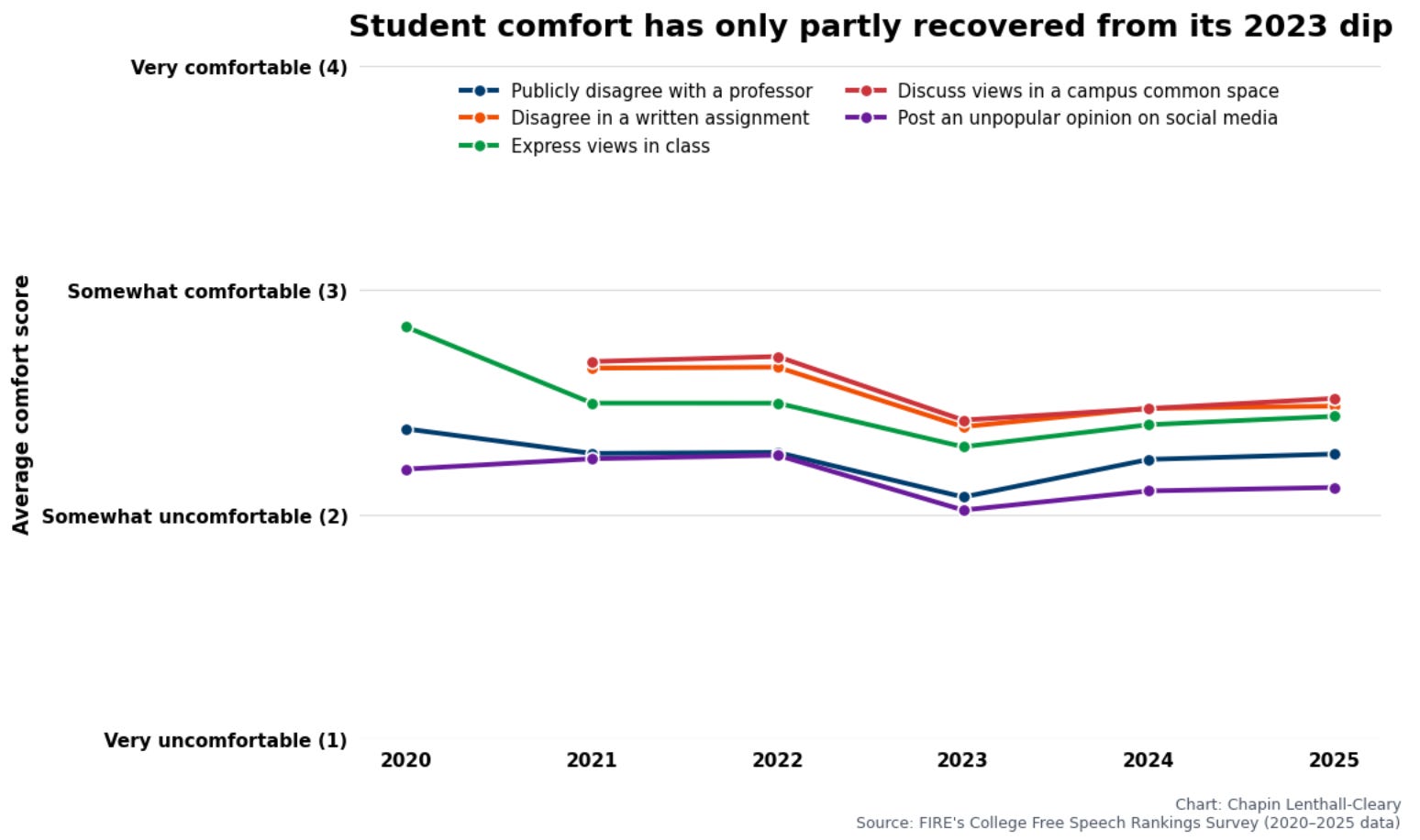
After a significant drop in student comfort in every setting we ask about from 2022 to 2023, comfort has inched back up a hair.
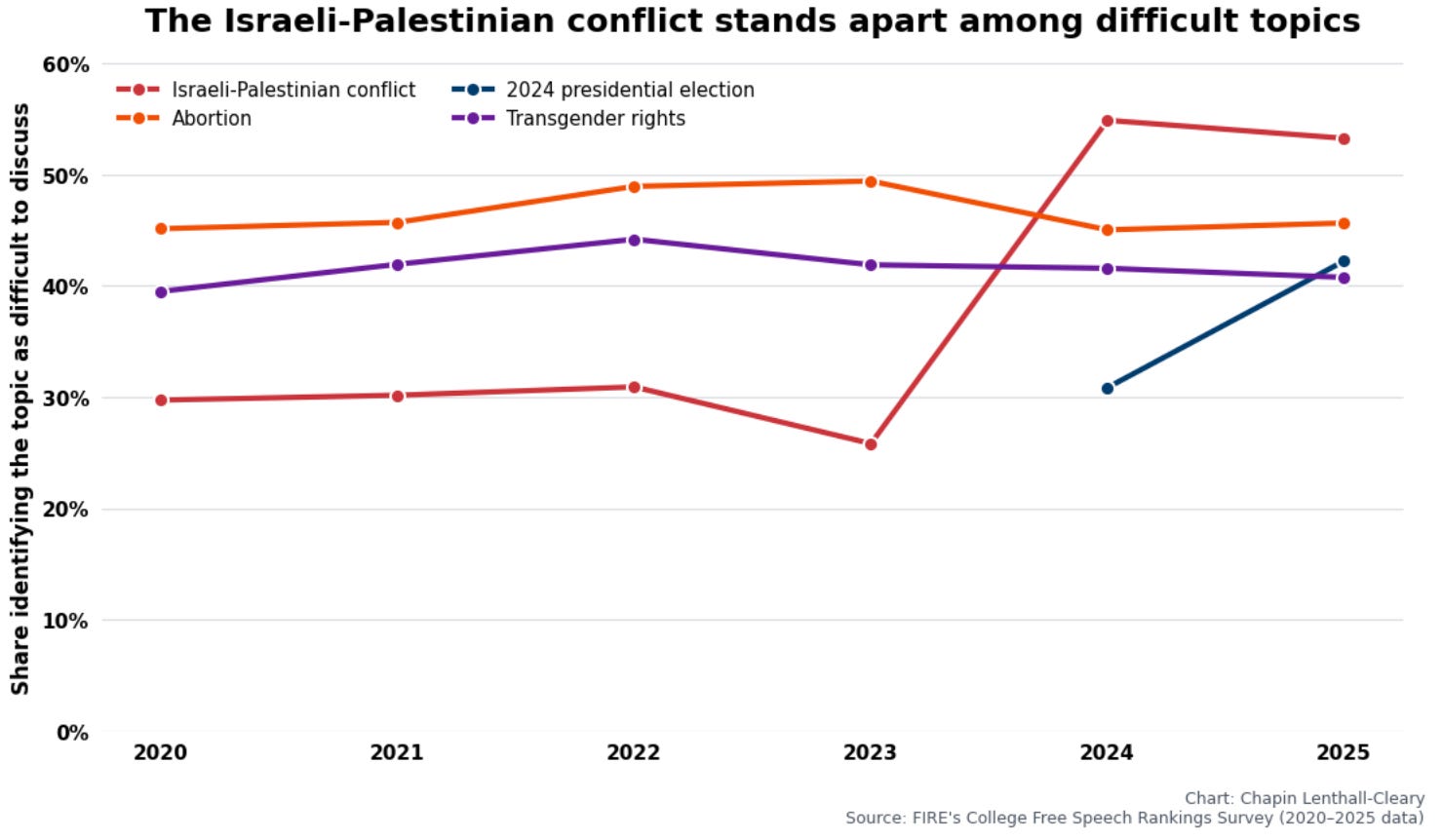
Following a massive rise in 2024 (presumably due to the effects of Oct. 7 — note that the data is collected in the spring each year), the Israeli-Palestinian conflict is the single most difficult topic for students to discuss. (Notably, this difficulty is driven especially by liberal students at very liberal schools.) Will it remain so difficult for students to discuss in 2026?
The code, data, and codebook used to create these plots are here.

Support for violence may be up, but violence itself is down this year—by a lot. I think this headline should be changed.
https://jasher.substack.com/p/the-2026-us-murder-rate-will-be-by?r=11j5s1&utm_campaign=post&utm_medium=web