“Free speech is tested by hard cases and, in this instance, the UK is failing.”
— Jemimah Steinfeld, CEO of Index on Censorship, on the UK banning Cenk Uygur and Hasan Piker from the country over fears of antisemitism.
Cenk Uygur and Hasan Piker banned from UK
Britain banned Cenk Uygur, founder and host of “The Young Turks,” as well as his nephew, Twitch streamer Hasan Piker, from entering the country to appear at events in London and Oxford, citing concerns that their visit could fuel antisemitism. But as Angel Eduardo explains:
The banning of scheduled speakers from entering your country also betrays an unwillingness or inability to engage with ideas and arguments on their merits. Barring their entry and thinking you’ve shut them down is like having your opponent killed in the locker room before a boxing match and declaring yourself the champion. This, particularly in the land that gave us John Stuart Mill, is pretty shameful behavior. And of course, preventing Uygur and Piker from entering will only increase the energy and attention surrounding their commentary . . . Keeping them from speaking on your shores isn’t going to silence them at all. It’s just going to give them even more to talk about.
Senator calls cops over Shrek dick pic
Ohio state Sen. Jerry Cirino, a powerful Republican who chairs the Senate Finance Committee, personally asked his local police chief to file criminal charges against progressive blogger D.J. Byrnes for texting him political commentary, insults including the nickname “Young Mussolini,” and a picture of Shrek’s dick.
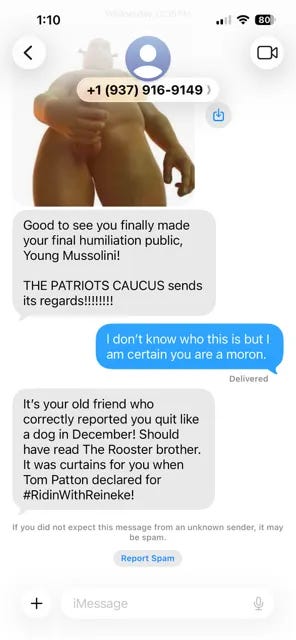
All this led to an investigation that largely consisted of reviewing Byrnes’ publication, The Rooster, and arresting him at the Ohio Statehouse. As Aaron Terr explains:
If all Byrnes did was send a handful of texts, this looks like protected speech. Remember, the First Amendment protects political critics even when they say harsh, crude, or offensive things about — or to — government officials, and harassment laws cannot be used as a backdoor way to punish someone when they offend you.
Below the fold
President Trump’s proposal that federal employees sign nondisclosure agreements could discourage whistleblowers from speaking about what happens in federal agencies and make it harder for journalists to cover government abuse.
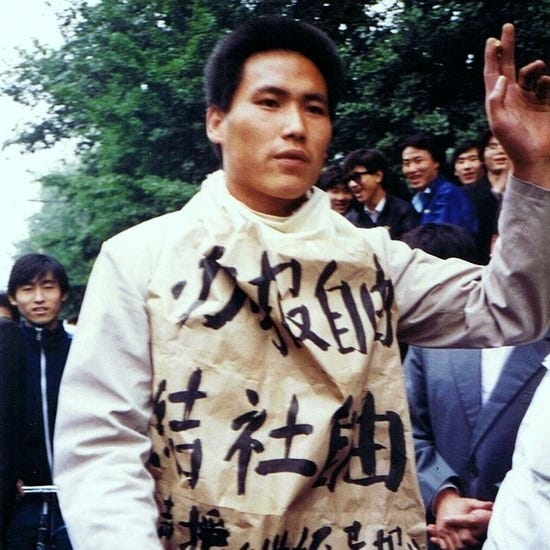
Hong Kong police stopped artist Sanmu Chen from tying a symbolic red thread to a street signpost in the Causeway Bay shopping district in memory of the Tiananmen Square massacre. They also arrested seven others, including activist Chan Po-ying.
A D.C. judge is allowing a local group to continue flying a banner that reads, “86 47,” rejecting the claim that it is a threat to Trump.
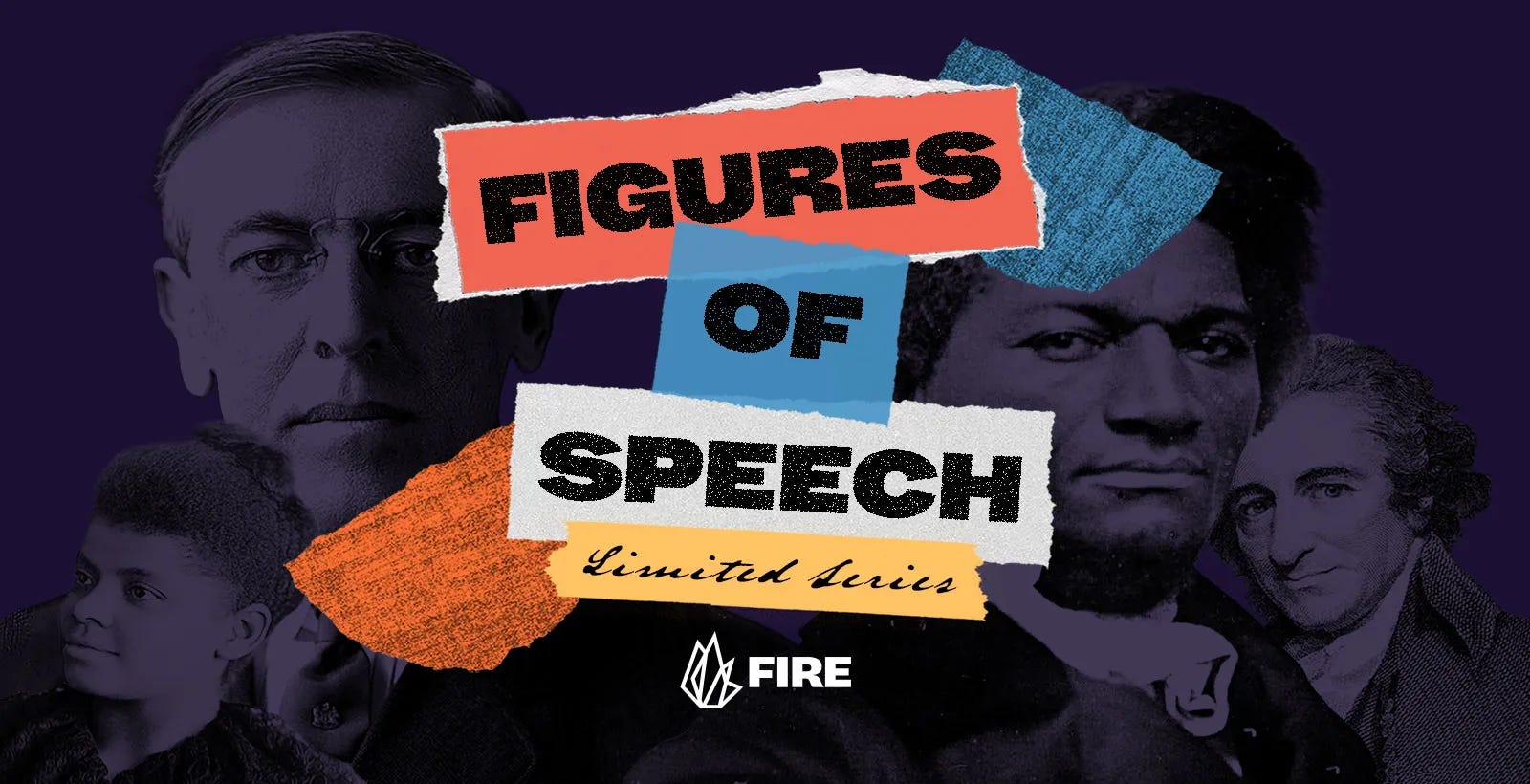
This year, the United States celebrates its 250th anniversary. To commemorate the occasion, FIRE is proud to present the limited series “Figures of Speech,” looking at the heroes and villains of free speech in American history. We began with Joseph McCarthy, the senator who scared America silent. Then we looked at Thomas Paine, American history’s winter soldier. Now we turn to Frank Kameny, a leader of the early gay rights movement.
Born in 1925 and raised in the Richmond Hill section of Queens, Kameny was provided with a solid middle-class upbringing by his father, an immigrant from Poland, and his mother, a secretary from the Lower East Side. As a child, Kameny looked to the stars at night and settled on becoming an astronomer to uncover the secrets of the universe. His own secret would stymie those plans, but his response to adversity changed the course of history. Continue reading…
In the frame
As America approaches the 250th anniversary of the Declaration of Independence, bestselling author and constitutional scholar Jeffrey Rosen is launching a new project aimed at deepening public engagement with the principles behind the American experiment. Rosen’s new podcast, The Blessings of Liberty, explores constitutional history, Supreme Court debates, the lives of the Founders, and the “American Idea.”
The show hopes to model the kind of civil dialogue that feels so rare in modern public life, and to begin, Rosen sat down with Supreme Court Justice Neil Gorsuch to discuss his career, his new book, and the state of America:

This week in history
On June 1, 1927, the Minneapolis tabloid the Saturday Press went to war with City Hall. According to editor Jay Near, gangsters, bootleggers, corrupt officials, and a Jewish mob were running the city from the shadows while public officials looked the other way. The paper quickly earned loyal readers and powerful enemies. Those enemies found a weapon in Minnesota’s 1925 Public Nuisance Law, the “Minnesota Gag Law,” which allowed judges to shut down any publication deemed “malicious, scandalous, and defamatory.” A local judge ordered the paper silenced and the case climbed all the way to the Supreme Court where, by a 5–4 vote, the Court disagreed.
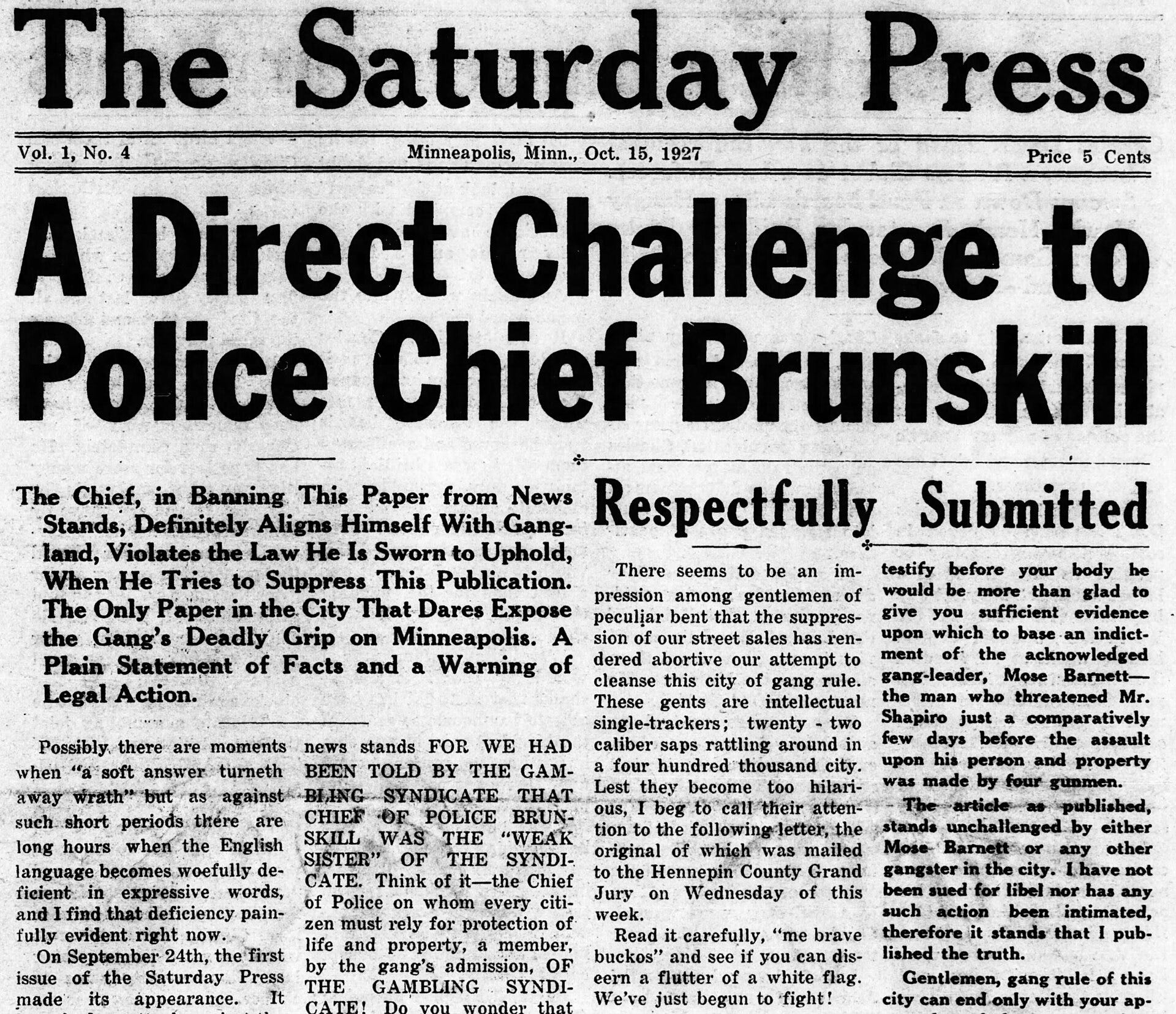
Writing for the majority, Chief Justice Charles Evans Hughes said the power to stop publication in advance was “the essence of censorship.” The First Amendment, he explained, was designed precisely to prevent such prior restraints. If a newspaper committed libel or defamation, that could be punished afterward through the courts. But the government could not slap a padlock on the printing press before the ink hit the page. The decision became a cornerstone of American press freedom. Four decades later, it protected the publication of the Pentagon Papers and helped shape modern First Amendment law.
By the numbers
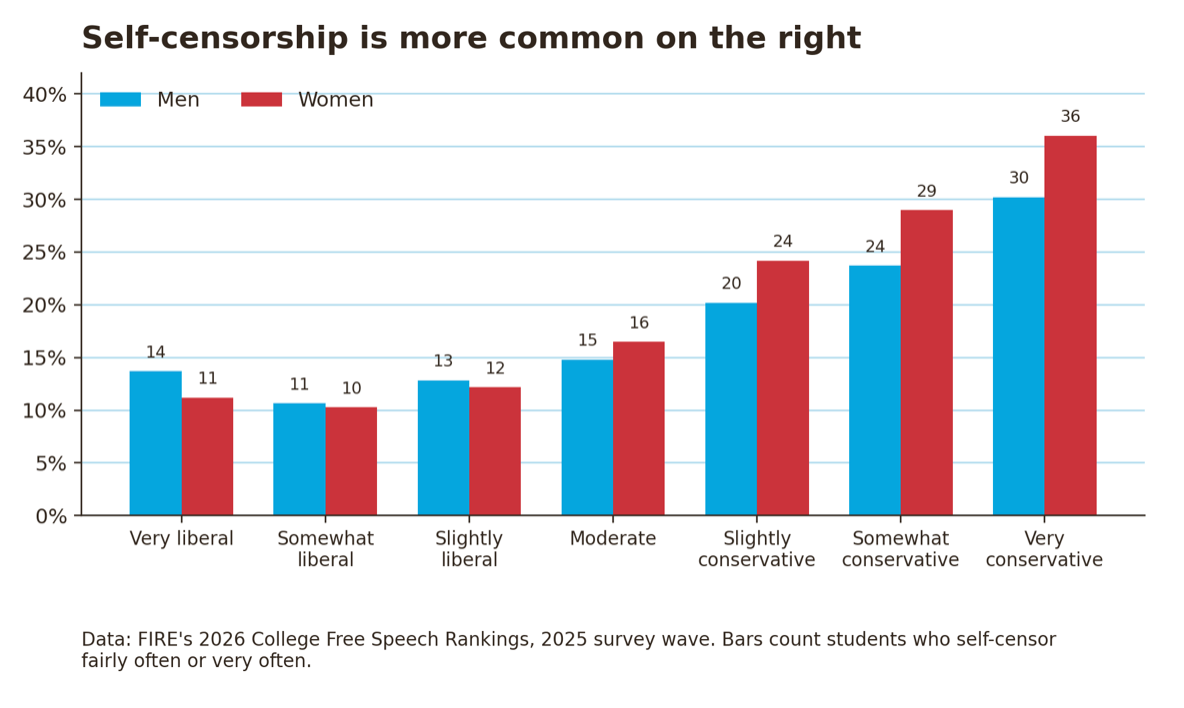
Our latest data shows conservatives self-censor far more than other students. Also, the biggest source of pressure isn’t professors but fellow students. And the place students feel least free to express themselves may not be where you think. They’re on social media, when publicly disagreeing with a professor, and in class discussions.