


Free Speech Dispatch covers censorship trends and challenges around the world. If you want to know where free expression is under attack and why it matters, subscribe now to get each edition delivered to your inbox.
In recent editions of the Free Speech Dispatch, I’ve discussed the use of borders as a censorship mechanism, and how governments try to use immigration rules and procedures specifically to target speakers and speech they dislike. The underlying notion is that if you can deport the speaker, you can deport the idea, too. (Results may vary.) Today’s edition covers a similar issue, but with a remarkable difference: It’s not just tourists or visa holders facing threats of censorship via immigration restrictions, but citizens too. We’re not just talking about deportation, but denaturalization.
Documentary kicks off denaturalization campaign in Israel
The creators behind the documentary NAZA were named winners of the Special Jury Prize at the Venice International Film Festival this month. And then they quickly earned a very different announcement: An Israeli cabinet minister called for revoking their citizenship.
NAZA, which just secured its U.S. release date, features interviews with 24 purported Israeli military and intelligence whistleblowers and accuses the Israel Defense Forces of determining an acceptable number of civilian deaths in its military campaigns in Gaza. Those allegations are provoking immense controversy in Israel — and backlash.

Israeli Minister of Culture and Sports Miki Zohar called the documentary a “betrayal of the state” and said he would “act immediately to revoke the Israeli citizenship of” directors Yuval Abraham and Rachel Szor. Zohar added that he contacted both the director general of the Population Authority and the director general of the Ministry of Interior to ask them to consider denaturalizing the filmmakers “for breach of trust for the country and cooperation with the enemy, and to examine how the materials were obtained, who is behind them and whether in the framework of their attainment or publication, actions have been carried out that can help the enemy in time of war.”
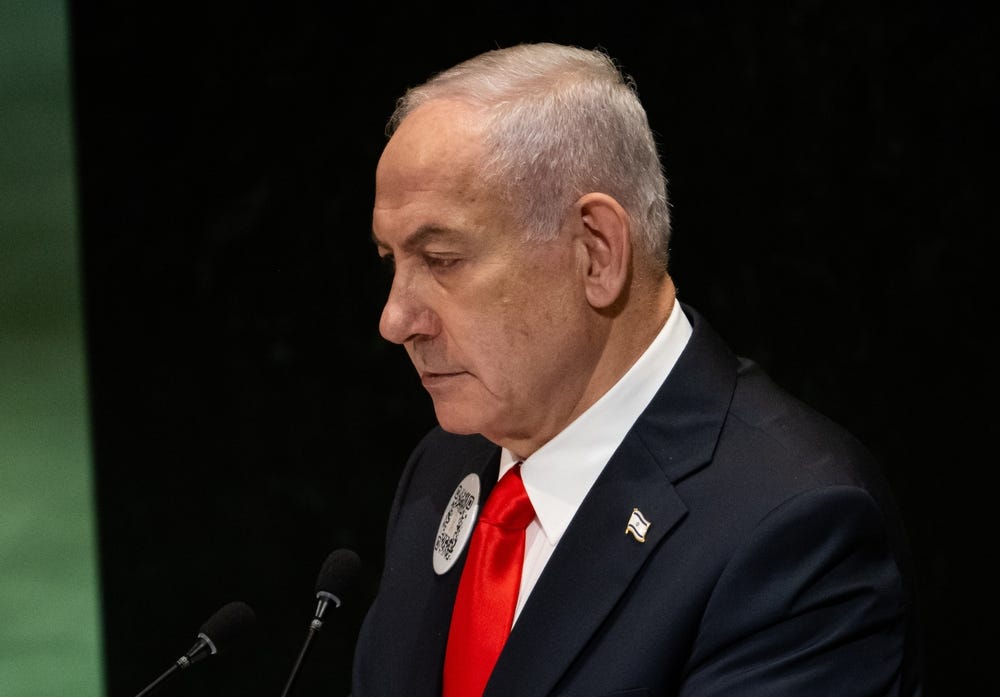
But the denaturalization threats didn’t stop there. Prime Minister Benjamin Netanyahu announced last week that he intends to introduce a bill to more broadly revoke the citizenship of those who “slander” the IDF. “Their place isn’t here,” Netanyahu said. He also promised a bill that would increase the financial penalties for those found guilty of such slander.
EU unveils age-gating KIDS Act
One of the ascendant speech stories of the year has been age verification on the internet: how it’s spreading rapidly around the world, how it doesn’t actually work at keeping kids offline, and how it diminishes adults’ privacy and speech rights. And that story is about to get much bigger. Last week, the European Commission announced the EU Kids Act, which would ban children under 13 from social media, set 15 as the minimum age across the EU for minors to open their own social media accounts, and prohibit “toxic or addictive features” for users under 18. The rules apply beyond traditional social media platforms like TikTok and Instagram and reach AI chatbots and online games, too. Fines for noncompliance could reach up to 6% of a company’s global sales.
Age will be “verified through certified solutions independent of the platforms, including a free EU age verification app and, in time, the European Digital Identity Wallet.” The bill now goes to the European Parliament and Council as it starts off the legislative process.
A busy time for media censorship
Left-wing UK news outlet The Canary has now had accounts frozen by a second bank, once again raising concerns about free speech and debanking. Earlier this summer, Lloyds closed the outlet’s accounts and now The Canary says Metro Bank has followed suit. Unable to operate, the site has since paused operations.
Reform UK is fielding criticism after the party banned some journalists from its events, including a Guardian editor who had reported on a £5 million personal gift Reform leader Nigel Farage accepted.
Authorities arrested Ugandan journalist Remmy Asiteza on “fake news” charges after Asiteza covered corruption allegations against the Minister for the Presidency Milly Babalanda.
Prime Minister Benjamin Netanyahu says he is suing the newspaper Haaretz for libel over its report alleging that he was warned ahead of time about the Oct. 7, 2023, Hamas-led terror attacks on Israel.
The director of Jordan’s General Intelligence Department reportedly led the effort to arrest American-Jordanian investigative journalist Ali Younes over “his alleged reposting of an article by Aaron Magid, published in The American Conservative, questioning U.S. aid to Jordan.”
Remember when I warned this summer about the threats to free speech posed by the United Nations Convention Against Cybercrime, and the spate of new “cybercrime” bills that are actually about free speech? Well, here’s another one. Bangladesh is considering amendments to its Cyber Protection Act that would create a new criminal offense for sharing “rumor” and “misinformation” online, punishable by up to a decade in prison. The risks to a free press are immense.
Canadian city council considers limits on abortion imagery
The council of Saskatoon, the largest city in the Canadian province of Saskatchewan, is debating new regulations after anti-abortion flyers provoked controversy in the region. In August, the Canadian Centre for Bio-Ethical Reform distributed pamphlets showing graphic imagery depicting abortions. Some residents complained, called police, and filed a petition with the city council that advocated a ban on displaying the imagery. Now Councillor Bev Dubois is calling for limits on the materials and a council study on how they could be regulated.

“I totally support free speech,” Dubois said. “But I also support, you know, our residents not being exposed to something like this as well. So there’s got to be that happy medium that we can look at.”
Japanese legislators call for lese-majeste restrictions
“The Group to Protect Japan’s Dignity and National Interests,” a group of legislators that includes members of the ruling Liberal Democratic Party, says more must be done to combat negative speech about the Imperial Family. The legislators are pushing for a revision to the criminal code so that alleged defamation and insult against the ruling family can be prosecuted even if no complaint is filed by targets of the speech as well as continuous reviews of the criminal code to find ways to protect the family from insult.
Rules punishing insults to the monarchy — lese-majeste laws — still exist in the world today and are a perennial source of censorship in certain countries, Thailand particularly. Weeks ago, a Thai court sentenced a 25-year-old activist to two years in prison on lese-majeste charges after she hosted a livestream in which she criticized police for breaking up a protest against the king’s motorcade.
U.S.-based web hosting company blocks human rights report in Russia
The Human Rights Foundation is criticizing Austin-based hosting company WP Engine for blocking the website for the organization’s Tyranny Tracker in Russia. Russian media regulator Roskomnadzor contacted WP Engine earlier this month to demand the block, which the company granted, despite HRF’s objections. HRF writes:
In doing so, WP Engine has departed from its own commitments. On Mar. 22, 2022, the company published a statement on its website, since deleted, condemning the Russian regime for its aggression against Ukraine and for “stifling free speech, curbing internet access, and censoring independent media,” and declaring that WP Engine “cannot allow the perpetrators of these attacks to also stifle access to information.” Four years later, WP Engine has done precisely that.
Similar blocks are hitting Hong Kong, too. The Committee for Freedom in Hong Kong Foundation’s website is apparently now inaccessible within Hong Kong, joining other human rights and democracy sites that have been blocked in response to ramped-up (and oppressive) national security laws.
David Green, head of UK communications for CFHK, said of the block:
If left uncontested, it’s only a matter of time before such blockages — of which there are already more than a few — multiply. Can we seriously expect the CCP to allow Hong Kongers continued access to the truth, now that they’ve criminalised remembrance of 4 June?
