“Free speech protections matter most when it comes to speech that is unpopular or offensive.”
— Joshua Pauze, on free speech on Texas campuses and FIRE’s College Free Speech Rankings
First things first
Every generation of officials comes predictably around to the belief that criticism of them, specifically, is different. Dissent in the abstract is fine, even healthy, but this particular reporter is lying. Or this particular insult is abuse. The Sedition Act of 1798 made the same promise, punishing only writing that was “false, scandalous, and malicious.” Sounds okay, except its targets turned out to be, almost without exception, newspapers opposed to the party in power.
The tell is that the definition of “too far” tracks the definer’s interests with suspicious precision. That’s why the principle has to be blunt. If the right to criticize the powerful depends on the powerful agreeing that the criticism is fair, then it isn’t really a right. Read carefully below and you’ll see that this instinct turns up in more than one place, and under more than one flag.
Trump bans press from White House
Over the weekend, President Trump banned CNN, MS NOW, and Politico from the White House over “fake news” and unsupported national security claims. Supporters of the decision are correct that the White House doesn’t have to create press facilities. But once it does, it cannot use arbitrary or viewpoint-based criteria to decide which journalists get access.
“If Trump can ban any outlet whose reporting he dislikes from the White House halls,” writes Jacob Gaba, “a future Democratic president could just as easily ban Newsmax, Fox News, or Breitbart. And it’s often the outlets a president perceives most hostile to his cause that stand to reveal the most about his administration.”
Below the fold
The University of Missouri opened an investigation into sociology professor Wayne Brekhus after a months-old undercover video resurfaced showing him saying the university’s retreat from DEI was “mostly cosmetic.”
Around the globe
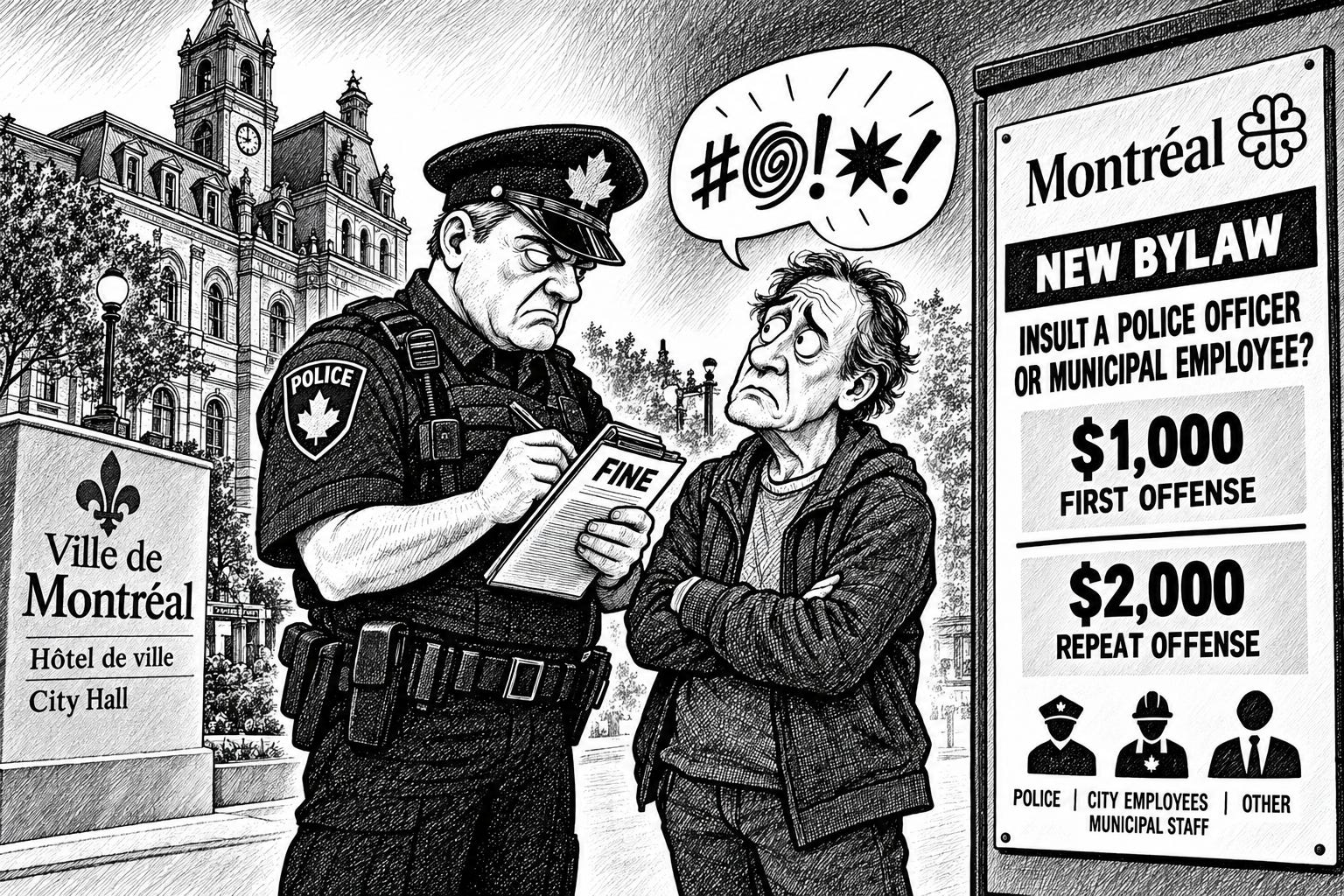
In Canada, Montreal’s city council voted 35-25 to let the government fine people who insult police officers or other municipal employees — as much as $1,000 for a first offense and $2,000 for repeat offenses.
“Whether in the U.S. or Canada or Australia or beyond,” writes Sarah McLaughlin, “the lesson is clear: You will not eliminate insults or criticism against government officials or employees by punishing those who voice them. Instead, you might just inspire a whole new class of critics.”
McLaughlin also reports this week that after the documentary NAZA, featuring purported Israeli military and intelligence whistleblowers, won a jury prize at the Venice International Film Festival, Culture Minister Miki Zohar called for directors Yuval Abraham and Rachel Szor to lose their citizenship, while Prime Minister Benjamin Netanyahu said he would pursue legislation allowing denaturalization of citizens who “slander” the Israel Defense Forces.
Now in tech
This week, John Coleman explains how David O’Brien’s 1966 draft-card burning — and the Supreme Court doctrine that followed — offers a surprisingly useful way to think about agentic AI: The constitutional question isn’t simply whether an AI “acts,” but whether government is regulating a nonexpressive function like driving or transferring money, or expression itself, such as drafting, creating, or communicating a political message.
This week in history with Sheridan Macy
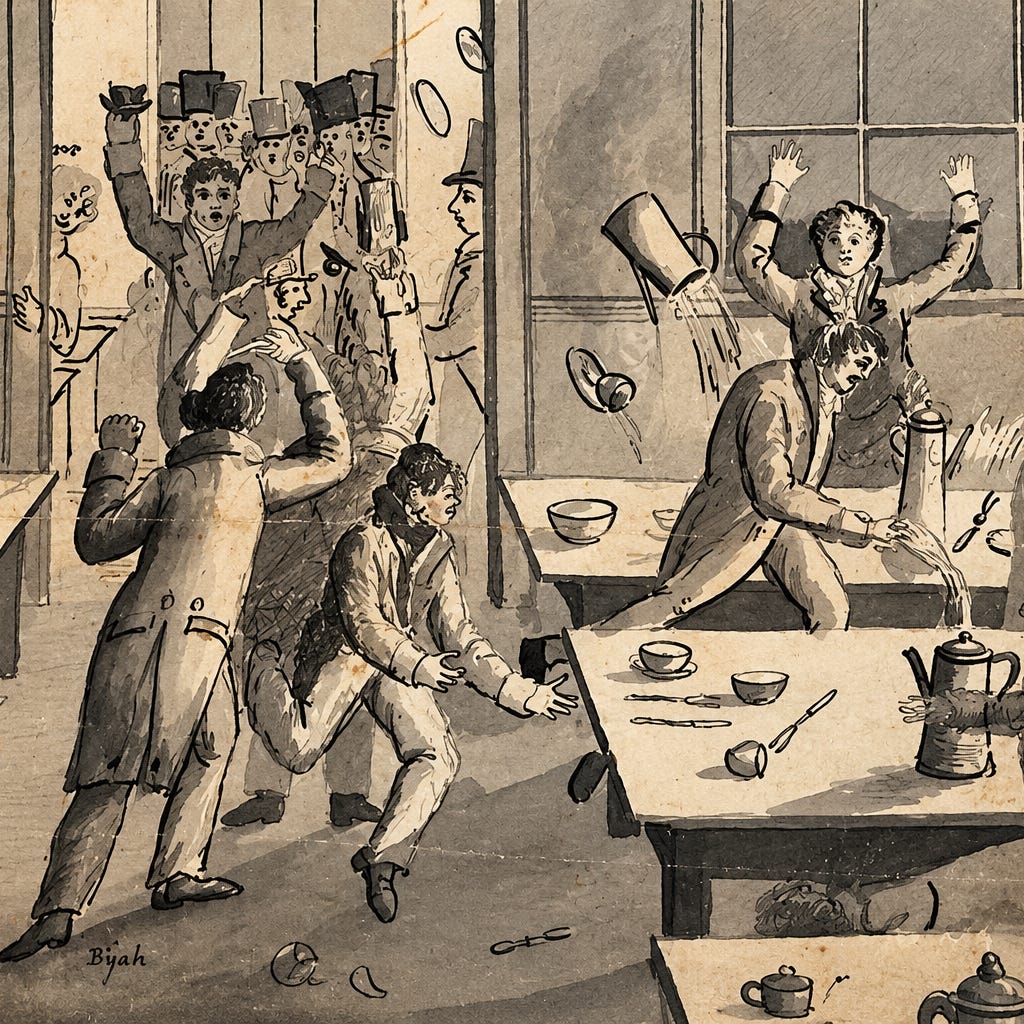
On Sept. 23, 1766, fed up with rancid food at Harvard College, senior Asa Dunbar climbed onto his chair in the dining hall and shouted, “Behold our butter stinketh! Give us therefore butter that stinketh not!”
When the college punished him for insubordination, his classmates walked out, cheered loudly in Harvard Yard, and went into town to eat. About a month of protests followed, and roughly half the student body was suspended. It ended only after Massachusetts Governor Francis Bernard addressed the students himself. The suspended students were reinstated, and the butter was replaced. Today, the Butter Rebellion is often cited as the first recorded student protest on an American campus.
By the numbers
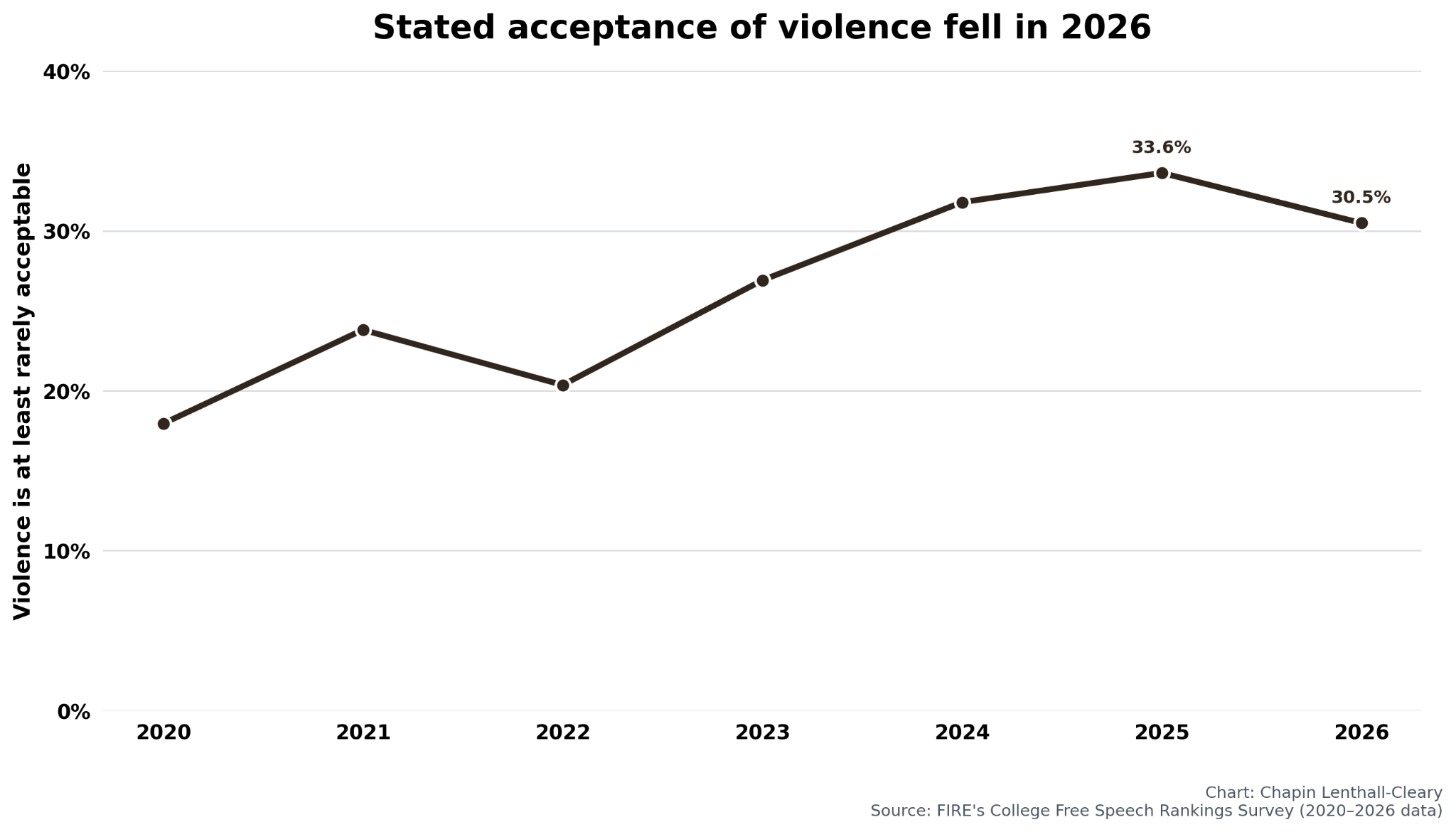
In 2026, student acceptance of violence and shoutdowns against campus speakers fell for the first time in years, and students reported feeling somewhat more comfortable expressing their views. Still, tolerance for controversial speakers kept declining, especially for right-wing speakers, and most measures remain worse than in the early 2020s.
Ink and opinion