



“I don’t tell people not to be offended. I tell them I don’t care if they are. Be offended if you want. It makes it funnier for me.”
— Ricky Gervais in a recent radio interview.
Minnesota woman convicted for racial slur
Minnesota woman Shiloh Hendrix was convicted of disorderly conduct after repeatedly saying “nigger” to a Somali man who challenged her to do so, in response to Hendrix directing the same slur to a black child who allegedly took an applesauce pouch from her diaper bag.
“A public argument does not become a crime because a speaker used a particular word,” writes Aaron Terr. “Yes, that means we must sometimes tolerate speech we find repugnant. But that’s the only way to ensure the speech we value remains free.”
The man who wants back into San Quentin
After 14 years teaching literature at San Quentin, Bill Smoot was fired for writing a novel about a prison teacher who helps an inmate escape. In a gripping new essay, William Harris explores whether Mount Tamalpais College’s security concerns can be reconciled with its stated commitment to academic freedom — and why Smoot, who holds no grudge, still hopes to return to the classroom where he gave incarcerated students “a seat at the cultural table.”
Bias response teams are disappearing
Bias response teams appear to be disappearing from campuses, according to FIRE’s 20th Spotlight on Speech Codes. FIRE has long argued that these systems often encourage students and faculty to report one another for protected speech, creating a chilling effect on campus. While the report doesn’t quantify the decline, our annual review of nearly 500 campus policies suggests many institutions are eliminating or reforming these systems, and increasingly replacing them with narrower processes focused on unlawful discrimination and harassment.
The report is packed with other encouraging news, including a record-low number of institutions earning our worst “red light” rating. What else did we find? Read the full report to see how campus free speech policies continue to change across the country.
Below the fold
Student journalists are asking publications to remove bylines or delete politically sensitive work as the Trump administration’s targeting of international students for pro-Palestinian speech fuels fears of deportation and visa revocation.
A Pennsylvania court challenge could force the University of Pittsburgh Police Department to disclose records under the state’s open-records law, after freelance journalist Henry Bard was denied information about officers’ use of less-lethal munitions during the university’s 2024 pro-Palestinian encampment.
International
In this week’s Free Speech Dispatch, Sarah McLaughlin reports that Georgia’s new Division for Combating Hate Speech sent 150 cases to court in its first month, including that of journalist Vakho Sanaia, who was fined and jailed for sarcastically telling Facebook users not to call two politicians “dicks.”
Georgia joins Germany, France, and Italy in punishing insults aimed at public officials — a temptation now visible in the United States, where FIRE sued after federal agents warned a man for comparing the head of ICE to a Nazi.
McLaughlin also writes this week that UK police are reviewing an Instagram post briefly shared by Green Party leader Zack Polanski because one image showed a man wearing a guillotine T-shirt reading “We’re only making plans for Nigel.” Reform UK called it incitement against Nigel Farage and demanded arrests. This follows the murder of Ann Widdecombe and arrest of a woman who celebrated her death online.
Tech
In his latest on AI and free speech, Tyler Tone explains how lawmakers are rushing to regulate political deepfakes, but many AI-generated ads — candidates in throuples, dresses, foxholes, or pugil-stick duels — are merely the latest form of political satire.
Courts have repeatedly protected fabricated quotations and ridiculous depictions, including a Hustler ad suggesting evangelist Jerry Falwell drunkenly lost his virginity to his unconscious mother in an outhouse. Fraud, defamation, and impersonation are already covered by current law. For everything else, lawmakers should stop treating every digital joke like democracy’s last gasp.
Culture
Lou Koller, the 59-year-old lead singer and co-founder of New York hardcore band Sick of It All and an unlikely free speech champion, has died. Reason senior editor Damon Root remembers Koller, praises the band for blending punk, metal, and hip-hop, and recalls its raucous 1990s shows, focusing on a 1992 controversy after mass shooter Wayne Lo appeared in court wearing a Sick of It All shirt.
When The New York Times suggested Lo’s embrace of hardcore music helped explain his violence, Koller and his bandmates publicly mounted a forceful defense of artistic expression and rejected the claim as shoddy scapegoating that unfairly demonized musicians for a listener’s crimes. Rock on, Lou.
Podcasts
The Blessings of Liberty explores constitutional history, Supreme Court debates, and the “American Idea,” hosted by bestselling author and constitutional scholar Jeffrey Rosen.
In this episode, esteemed presidential historian Stephen Knott joins to discuss his most recent book, Conspirator in Chief: The Long Tradition of Conspiracy Theories in the American Presidency. Knott takes readers on a sobering tour of how presidents have engaged in reckless conspiracy-mongering about their political opponents.
So to Speak takes an uncensored look at the world of free expression through the law, philosophy, and stories that define free speech — hosted by FIRE’s Nico Perrino.
In this episode, Nico covers the Office of Management and Budget’s proposed changes to how the federal government awards billions in research grants. Supporters say the plan would curb waste and fraud, but critics warn it would politicize funding by giving political appointees more control over which projects receive support.
Joining to discuss the proposal and its implications are Yale professor Evan D. Morris, Harvard senior fellow Catharine Young, and FIRE research director Ryne Weiss.
Today in history with Sheridan Macy
On July 28, 1917, the Silent Parade was organized by a coalition of civil rights groups led by the recently formed NAACP. The silent march was intended to draw national attention to the racial violence and discrimination faced by black Americans, in direct response to racist attacks in 1916 and 1917, including the East St. Louis massacre and lynchings in Waco and Memphis. The marchers hoped the federal government would enact anti-lynching legislation, and many called directly on President Woodrow Wilson, who had just pledged to make the world safe for democracy, to take action.
Aside from the sound of drums leading the procession, the march was entirely silent. Several hundred children marched at the front of the parade, followed by several thousand women dressed in white. Many men wore military uniforms. An estimated 10,000 people marched down Fifth Avenue in New York City.
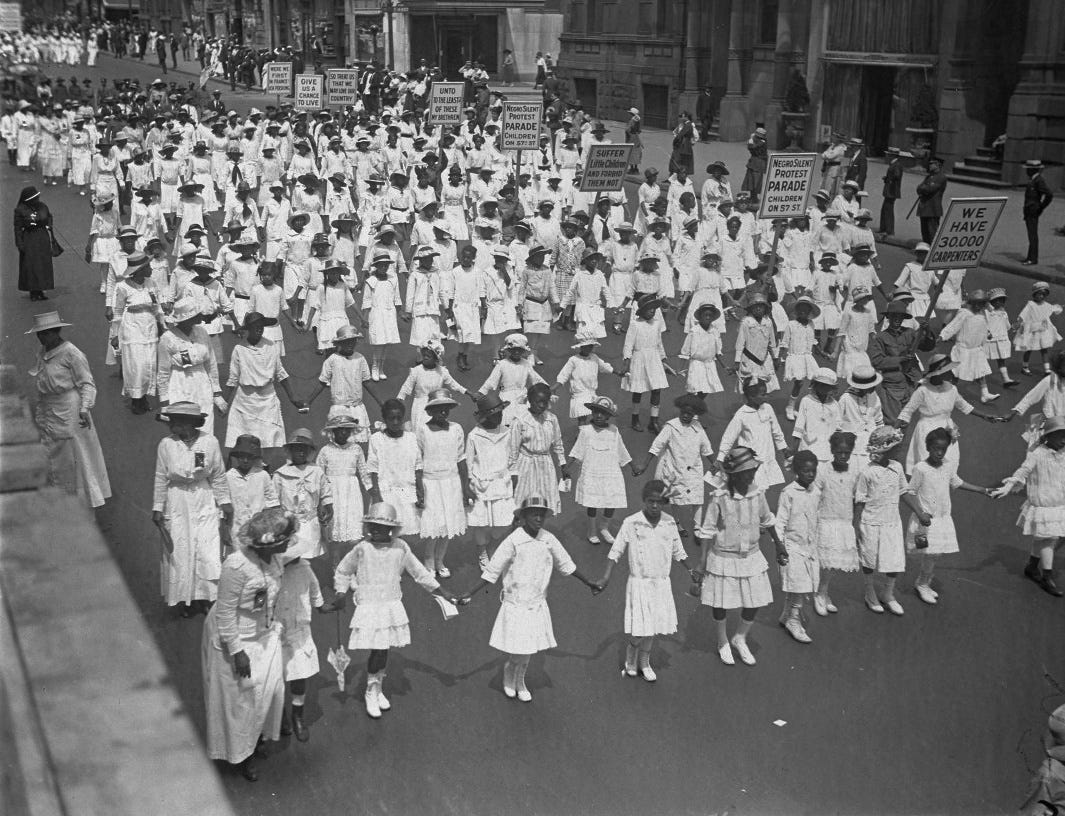
Newspapers across the country covered the march, raising public awareness of lynchings and other acts of racist violence. The protest also increased the visibility of the NAACP. The Silent Parade was the first large protest in New York organized exclusively by black Americans and is considered one of the most important early events in the civil rights movement for demonstrating the power of organized mass protest.
By the numbers
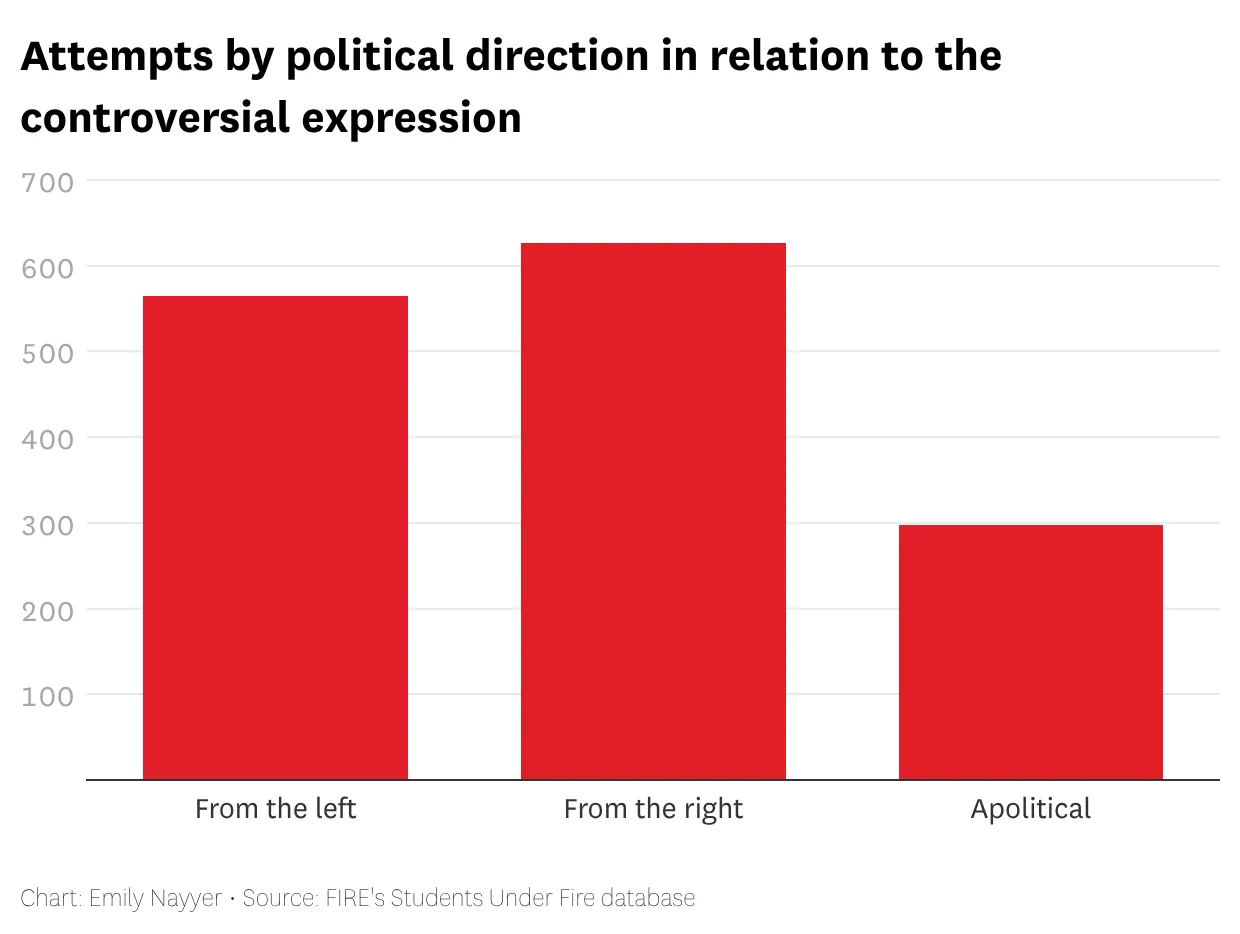
Student-censorship campaigns tend to come from the left on campus, and from the right off campus, reports Logan Dougherty, but both exert substantial influence over university administrators. Faculty-led efforts succeed most often, producing punishment 48% of the time, followed by student-led efforts at 42%, political pressure at 41%, and activist campaigns at 26%.
Administrators also react differently depending on who applies the pressure: They are more likely to condemn the targeted speech when students or faculty demand action, but off-campus campaigns by politicians or activists are more likely to produce severe sanctions such as suspension, expulsion, or loss of recognition or funding.
Whatever the source, universities should resist demands to punish constitutionally protected expression.
What I found interesting in an “equal protection under the law” sense is that Ms Hendrix wasn’t the only person to say the word in the video.
So this makes speech identity and context driven more than free expression driven.
This almost becomes an argument about property rights then, where the state can “confiscate” language as a property based on identity.
It has, in effect, turned language into an asset class and regulated the ownership/licensing of that language into a kind of scarcity based upon identity class.
So Ms Hendrix punishment was in effect, a licensing fee for use of the property.
**What is more interesting is that the private market has valued this “verbal asset” as far higher than the state, donating $850K to Ms Hendrix for her “right” to the asset.
So like with anything, when the state gets involved, the value of the asset skyrockets in price.