
You’re reading the FIREwire, our weekly roundup of the latest news in free speech.
“Our business is to answer back wisely, modestly, and yet grandly.”
— Frederick Douglass, on renewed attacks on black Americans after Reconstruction.
First things first
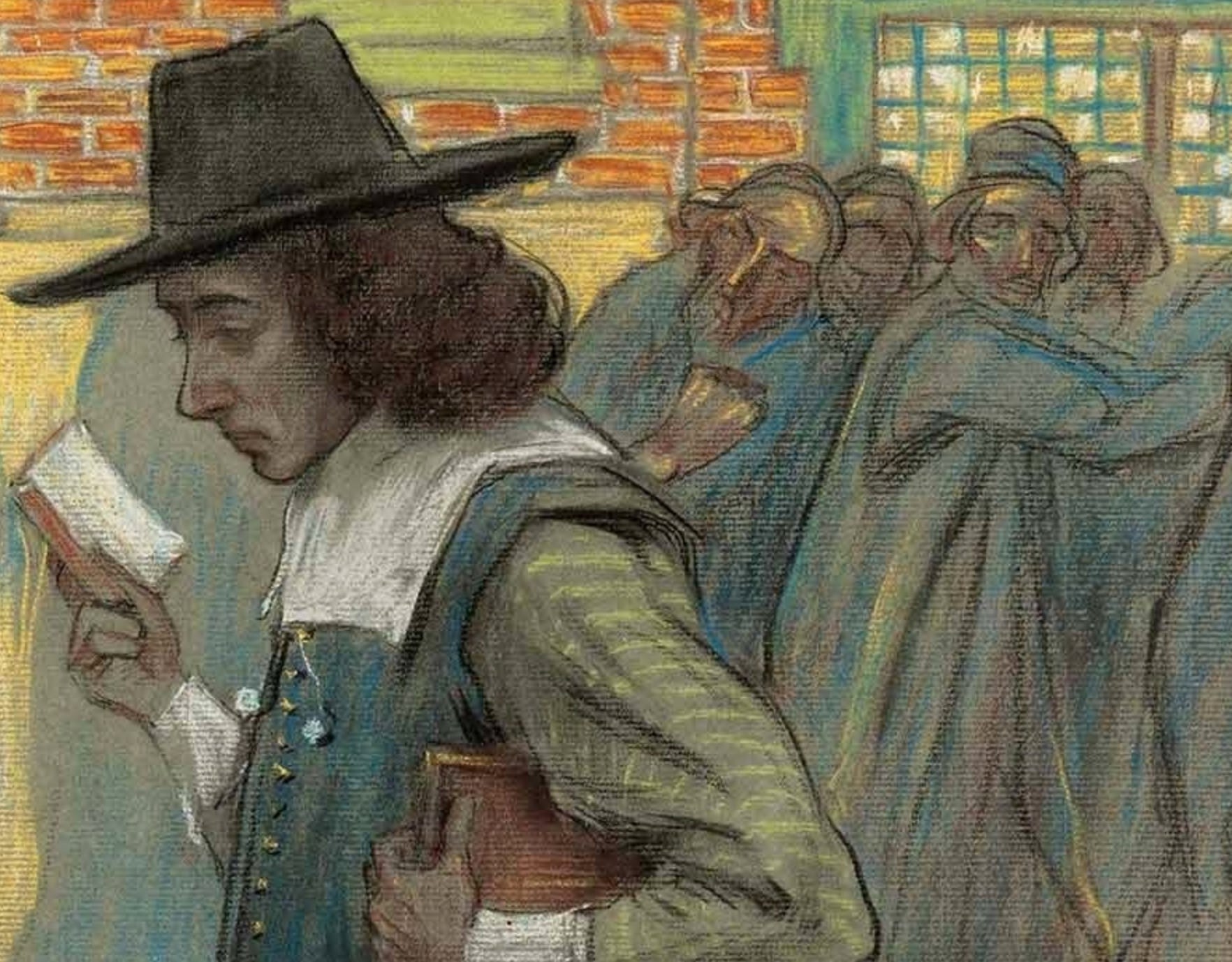
In 1672, a Dutch mob murdered two brothers accused of treason, stripped them naked, strung them upside down, mutilated their bodies, and reportedly ate pieces of their organs. Horrified, philosopher Baruch Spinoza wrote a placard that read Ultimi barbarorum, “the worst of barbarians,” to display at the scene.
But according to a famous account, Spinoza’s landlord locked him inside, fearing the mob would murder him too. Spinoza was 39 at the time, and already familiar with the dangers of free speech. At 23, he had been excommunicated for questioning Scripture. At 37, two years before the murders, he had published a controversial defense of intellectual freedom, Theological-Political Treatise, declaring that “the true purpose of the state is in fact freedom.” Spinoza believed governments exist to protect freedom, but what happens when fear frightens us into silence before government even acts?
Meta’s $25 billion penalty
A New Mexico court ordered Meta to pay a staggering $25 billion after a jury found the company had violated the state’s consumer protection law by misleading users about its privacy practices, data control, and content moderation — FIRE takes no positions on the privacy or data-protection findings.
“If not overturned,” writes Trace Mitchell, “this verdict will have a massive chilling effect on what platforms say about their content moderation practices. The safest course of action for any platform may be to say as little as possible about how it moderates content, to as few people as possible.”
Below the fold
A student journalist stood her ground when a Maryland congressman called for the cops over her recording a public press conference. Rep. Andy Harris cited the state’s all-party consent law, but as Marie McMullan explains, private conversations and public events are two different things.
Around the world
Four British police officers arrested a 15-year-old over a joke on social media, Sarah McLaughlin reports, after he posted an edited photo of a local politician wearing bunny ears and called him a “rent boy,” or young male prostitute.
McLaughlin also takes us to Turkey, where authorities blocked more than 1,270 X accounts, France where an activist was criminally convicted for saying “women . . . are obliged to be wary of people with penises,” and Saudi Arabia where a court overturned a migrant worker’s death sentence for a Facebook post insulting the prophet Muhammad.
The long view
Frederick Douglass’ defense of free expression survived even bitter betrayal, as Jacob Mchangama explains in the fourth and final installment of his compelling series on the life and philosophy of the famed abolitionist and writer.
The freedoms that enabled Black Americans to challenge white supremacy also protected a Klansman’s right to express his repugnant beliefs. Douglass understood free speech and equality as mutually reinforcing. His response to the betrayal of emancipation’s promises was to insist on the freedom to expose injustice, organize and answer back. Those who now treat free speech and racial equality as mutually exclusive should reckon with that history.
Podcasts
The Blessings of Liberty explores constitutional history, Supreme Court debates, and the American idea, hosted by bestselling author and constitutional scholar Jeffrey Rosen.
In “Hamilton vs. Jefferson,” Rosen discusses Alexander Hamilton’s belief in a strong national government, Thomas Jefferson’s emphasis on states’ rights and limited federal power, and how the tension between them still shapes American politics today.
So to Speak takes an uncensored look at free expression through the law, philosophy, and stories that define free speech, hosted by FIRE’s Nico Perrino.
In “Why you should talk to strangers,” Nico talks with Fin Colleton and Kratima Divakar of American Dialogues, a project that brings folding chairs into New York City parks and invites complete strangers to discuss politics and culture, and whether face-to-face conversations can bridge political divides.
Required reading
Cybersecurity researcher Joshua Michael mapped more than 170,000 Flock surveillance cameras across the country using data he says was public. Flock Safety’s response? Its representatives demanded he take down the website, alleging trademark infringement, then accused him of unauthorized computer access.
Matthew Harwood examines Flock’s legal threats, including an earlier trademark dispute with another camera-mapping project, and explains how companies can use intellectual property law to intimidate researchers who bring matters of public concern to light.
Preorder: Free Speech Generation

Today, free speech is among America’s most powerful values. But for most of the nation’s history, the First Amendment’s guarantee of free speech did little to protect those who challenged power or offended public morals. A newspaper publisher could be prosecuted for ridiculing the president. A birth-control advocate could be gagged by Boston’s mayor. Pr…
Today in history with Sheridan Macy
On Oct. 21, 2019, Australian newspapers ran front pages covered in black bars as a protest against government secrecy and threats to press freedom. The campaign was led by Australia’s Right to Know Coalition and was supported by TV, radio, and online outlets, as well. The protest was sparked by police raids on journalists investigating alleged war crimes in Afghanistan and government surveillance. A 2019 survey by the Coalition found that while 87% of Australians said the country should be a free, open, and transparent democracy, only 37% said it actually was.
By the numbers
Two new FIRE analyses paint a troubling picture of free expression on campus. Sean Stevens reports that attempts to cancel campus speakers have reached an all-time high, topping 200 for the first time, with government officials increasingly taking part.
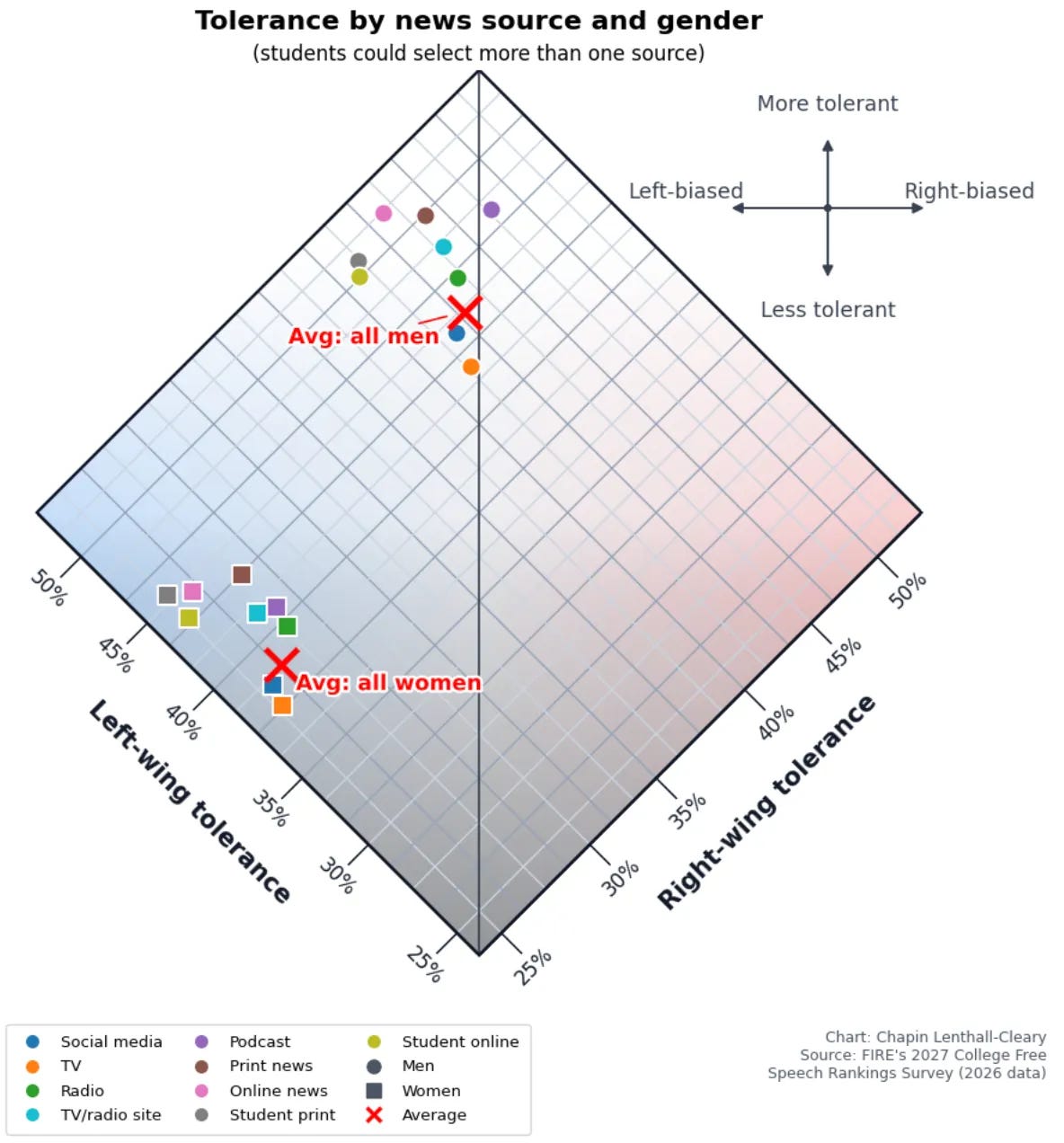
Meanwhile, Chapin Lenthall-Cleary finds students who get their news exclusively from social media are substantially less tolerant of controversial campus speakers, but that female students are far less tolerant than males, regardless of where they get their news.