


“Free speech is a constitutional right that we must all stand up and protect.”
— Rep. Pramila Jayapal, commenting on the University of Washington’s decision to cancel a speaking event featuring communist influencer Hasan Piker.
First things first
There are many ways to put speech on a leash. Sometimes it’s bureaucratic, such as when government officials try to punish reporters for asking hard questions. Or sartorial, such as when university officials threaten to punish students for not “dressing right.” Sometimes, it’s just a friendly call from the police. The theme in this week’s stories, it seems, is control. Control of reporters, clothing, graduation, AI, even Hermione Granger’s extremely unauthorized love life.
There is one encouraging wrinkle. Americans who seemingly cannot agree on the color of the sky are converging on something remarkable: Higher education has become a left-wing echo chamber. And if the rest of the week’s news gets too depressing, just remember that somewhere out there, a federal judge has read 6,000 pages of paranormal romance so you don’t have to.
The Pentagon wants reporters on a leash
The Pentagon has spent more than a year tightening access for journalists, threatening their credentials, moving them outside the building, and forcing them to go through escorts all while fighting The New York Times in court over whether the Constitution lets the government yank credentials away for asking hard questions.
Yes, the Pentagon can protect classified information and secure sensitive areas. But what it cannot constitutionally do is make favorable coverage the cost of entry. Rather than bend the knee, more than 30 outlets surrendered their badges — then went right back to reporting on the military. This week, Willa Mack breaks down the whole story.
Tuskegee says suit up — and forget the durag
Tuskegee University’s new dress code says durags, bonnets, baseball caps, bedroom slippers, sagging pants, and clothing depicting everything from profanity and sex to alcohol and tobacco are banned in classrooms, the cafeteria, and at university events.
Tuskegee is private, so they are within their rights, but the university also promises students expressive freedom, and as Dylynn Lasky argues, those promises are hard to square with telling adults what they can wear to grab lunch. Lasky doesn’t claim scuff slippers are as professional as black leather pumps. “But,” she says, “teaching students how to dress for a job interview doesn’t require turning the cafeteria into one.”
Below the fold
A federal judge dismissed the Trump administration’s Title VI lawsuit against Harvard, holding that DOJ had not plausibly alleged Harvard was currently engaged in systemic discrimination against Jewish or Israeli students.
The Department of Homeland Security launched an infiltration and surveillance operation earlier this year in Minneapolis, targeting progressive organizations, labor unions, and groups protesting immigration enforcement.


International
Sarah McLaughlin reports that the UN Convention Against Cybercrime, which is supposed to help governments team up against serious online crime, may give oppressive governments more tools to pursue speech they already criminalize — and may encourage them to criminalize even more speech under “cybercrime” laws.
Tech
Here’s a new nightmare for your AI bingo card: American chatbots are importing authoritarian taboos along with their training data. The Wall Street Journal reports some U.S.-made AI systems are more hesitant to criticize authoritarian leaders such as China’s Xi Jinping, compared to democratic political figures. Researchers point to possible contamination from state propaganda in the training data.
AI systems are trained to sound more human by reading enormous amounts of material from books, websites, and other sources. They learn patterns from that material rather than checking each claim for truth. So if a lot of state propaganda appears in the training material, the AI can absorb some of its assumptions or biases and then repeat them in its answers.
Culture
The Dramione-to-bookstore pipeline has now produced the free-speech legal question nobody knew civilization was approaching. Namely, how much Draco Malfoy can be in your novel before J.K. Rowling’s lawyers get interested? This week, Ally Duong takes up the increasingly commercial world of fanfiction “filing off the serial numbers,” where writers turn stories built around copyrighted characters into original novels by changing the details. Fifty Shades of Grey famously began as Twilight fanfiction. Ali Hazelwood’s The Love Hypothesis began with Rey and Kylo Ren.
Other examples of fanfiction:
Virgil’s Aeneid — an expansion of the Iliad/Odyssey universe
Milton’s Paradise Lost — a massive literary reimagining of Genesis
Jean Rhys’s Wide Sargasso Sea — a prequel to Jane Eyre
James Joyce’s Ulysses — structurally riffs on Homer’s Odyssey
One federal judge had to read more than 6,000 pages in a paranormal-romance copyright battle before deciding author Tracy Wolff is not guilty and arriving at the judiciary’s greatest contribution to literary criticism: Nobody dast blame this woman. A romantasy is got to have hot paranormal boys. It comes with the territory.
Podcasts
The Blessings of Liberty explores constitutional history, Supreme Court debates, and the “American Idea,” hosted by bestselling author and constitutional scholar Jeffrey Rosen.
In this episode, Pulitzer Prize-winning historian Beverly Gage joins to discuss her most recent book, This Land is Your Land: A Road Trip Through U.S. History. In this book, Gage recounts her travels to the museums, historic sites, roadside attractions, reenactments, and souvenir shops where Americans learn and fight about our history. From the birth of the nation in Philadelphia to Disneyland and the California dream, This Land Is Your Land offers a guided tour of 13 places and 13 key moments that define America’s greatest successes and challenges.
So to Speak takes an uncensored look at the world of free expression through the law, philosophy, and stories that define free speech — hosted by FIRE’s Nico Perrino.
Long before the First Amendment, John Peter Zenger stood trial for publishing criticisms of New York’s then colonial governor. Although the law seemed to guarantee a guilty verdict, a jury refused to convict him. Zenger’s trial was an early indication that the American colonists harbored a view of liberty more expansive than that offered to them by the British Crown.
Few people are better suited to explain the case than Michael Tigar. Over a legendary legal career spanning more than six decades, Tigar has argued before the Supreme Court (multiple times), represented civil rights activists and other controversial clients, taught generations of lawyers, and written what has become the definitive stage play about the Zenger trial. In this episode, Nico speaks with legendary criminal defense attorney Michael Tigar about the Zenger trial and his own remarkable career, from the Berkeley Free Speech Movement and the Chicago Eight trial to jury nullification and lawyers’ First Amendment rights.
Today in history with Sheridan Macy
On Aug. 11, 1984, Congress passed the Equal Access Act (Title VIII), which says that if a public secondary school allows noncurricular student clubs, it cannot pick and choose among them based on their views. The Act followed the Supreme Court’s 1981 ruling in Widmar v. Vincent, which held that a public university could not allow student groups while also excluding one because it met for religious worship or discussion. Christian groups pushed for the law in part to protect students who wanted to hold Bible studies and other religious meetings at school. Since then, the Act has also protected gay-straight alliances, religious clubs, and secular groups.
By the numbers
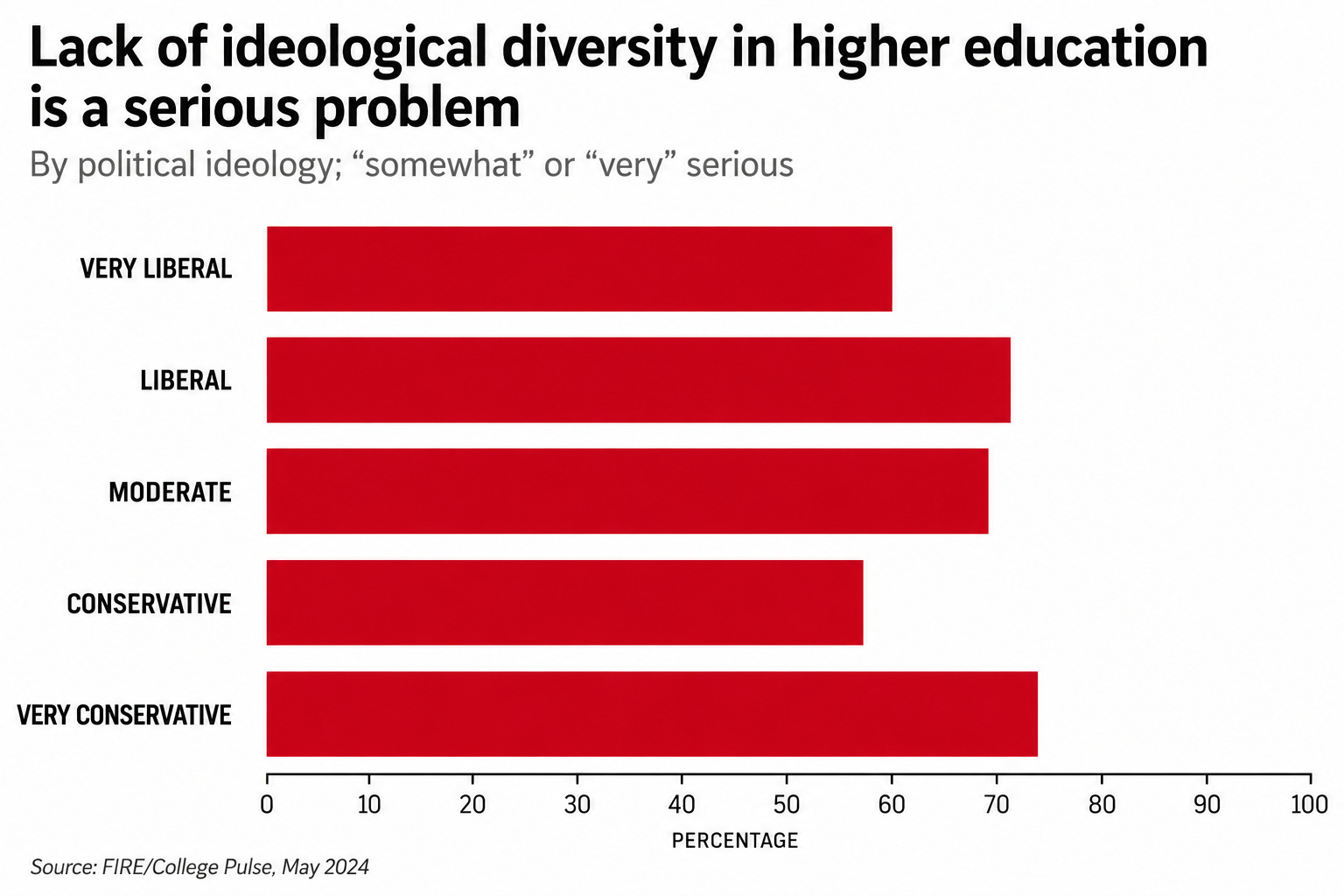
Here is a sentence you don’t encounter often in 2026: Liberals, moderates, and conservatives agree about something. FIRE’s latest National Speech Index finds 57% of Americans consider the lack of ideological diversity in higher education a somewhat or very serious problem. That includes half of very liberal Americans and 62% of liberals.
The intriguing question isn’t whether professors lean left — that’s been documented for decades. It’s why so many liberals now see the imbalance as a problem themselves. Sean Stevens dives into the data, and explains that we shouldn’t get too excited. There’s still a lot of disagreement and vision. But agreeing that intellectual monocultures are unhealthy is at least a solid starting point.
From the feed
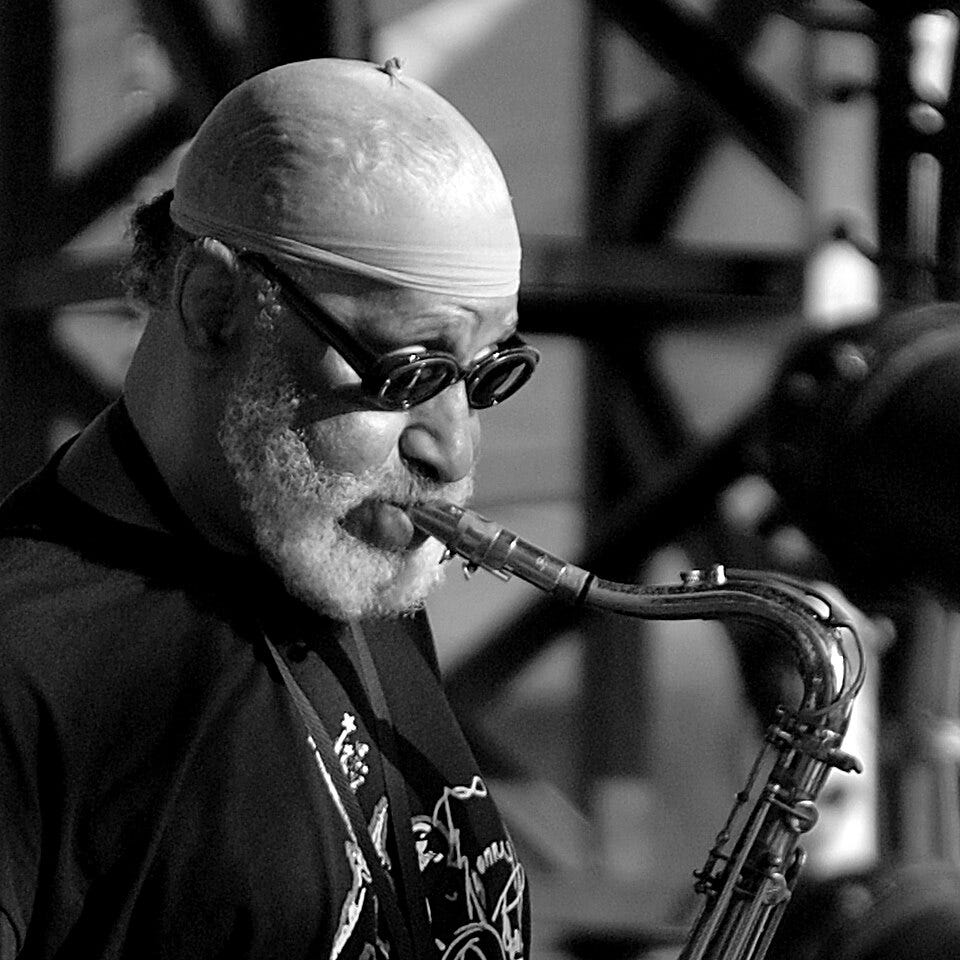
Finally, because today’s hero image features the incredible Sonny Rollins in durag, you know I have to drop his most FIRE-friendly song ever. Have a good weekend, folks.